
What Is the Password Combination Calculator?
This tool calculates the total number of unique passwords that can be formed given a character set size and a password length. It also reports the entropy in bits, a standard measure of password strength. The more possible combinations, the harder a password is to crack by brute force.
How to Use It
Enter the character set size — the number of distinct characters allowed (for example 10 for digits, 26 for lowercase letters, 62 for letters and digits, or about 94 if symbols are included). Then enter the password length, the number of characters in the password. The calculator returns the total combinations and the entropy.
The Formula Explained
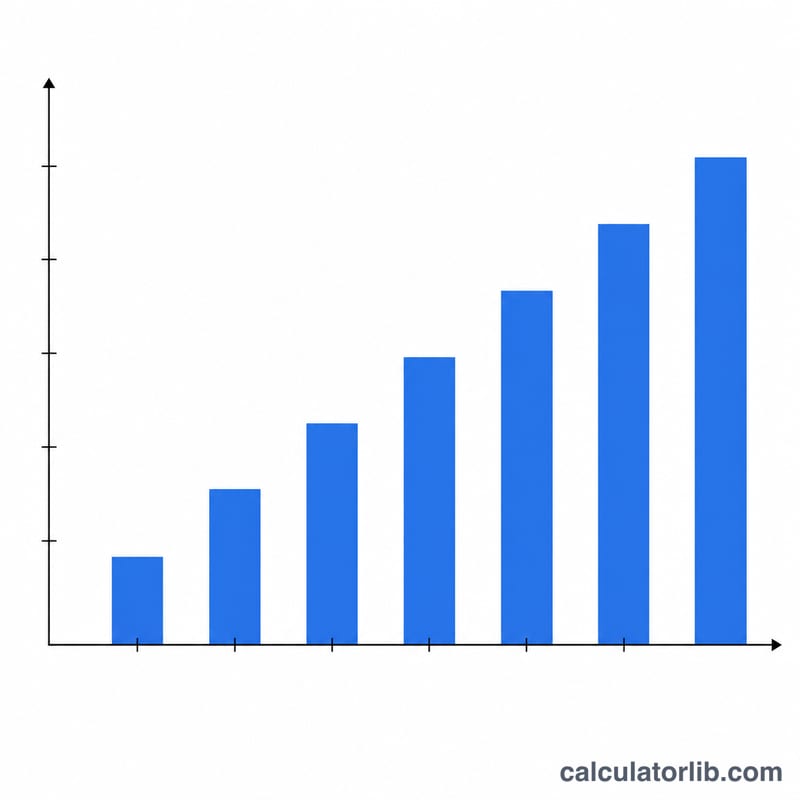
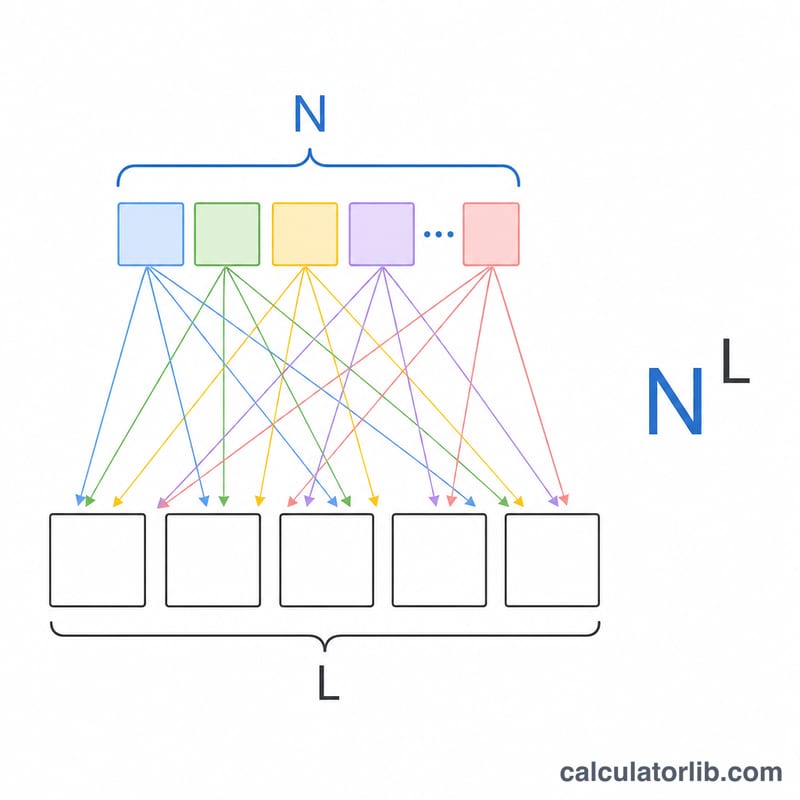
The number of combinations is simply the character set size raised to the power of the length: \(C = N^{L}\). Each of the L positions can independently be any of the N characters, so the totals multiply. Entropy follows from $$E = L \times \log_{2}(N)$$ expressing the search space size as bits. Each extra bit doubles the work required to brute-force the password.
Worked Example
Suppose you use lowercase letters and digits (N = 62) and an 8-character password (L = 8). The combinations are $$62^{8} = 218{,}340{,}105{,}584{,}896$$ — over 218 trillion possibilities. The entropy is \(8 \times \log_{2}(62) \approx 47.63\) bits, which is moderate; security experts often recommend 60+ bits for sensitive accounts.
FAQ
What character set size should I use? Use the count of all characters your password could contain: 10 (digits), 26 (one case of letters), 52 (mixed case), 62 (mixed case + digits), or ~94 (adding common symbols).
How many bits of entropy is "strong"? A common guideline is 50–60 bits for everyday accounts and 80+ bits for high-value secrets. Longer passwords add entropy faster than larger character sets.
Does this guarantee my password is secure? No. This measures theoretical brute-force resistance only. Predictable words, reuse, and leaks can compromise even high-entropy passwords.