
What Is the Percentage Return Calculator?
The Percentage Return Calculator tells you how much an investment, asset, or any value has grown or shrunk in relative terms. Instead of just knowing you gained $250, you learn that $250 represents a 25% return — a far more meaningful figure when comparing different investments of different sizes.
How to Use It
Enter the Initial Value (what you started with, such as your purchase price or opening balance) and the Final Value (what it is worth now, or your selling price). The calculator instantly returns the percentage return along with the absolute gain or loss. A negative result means you lost value.
The Formula Explained
The percentage return is calculated as:
$$\text{Return \%} = \frac{\text{Final Value} - \text{Initial Value}}{\text{Initial Value}} \times 100$$
You subtract the starting value from the ending value to get the absolute change, divide by the starting value to express it relative to your original stake, then multiply by 100 to turn the decimal into a percentage.
Worked Example
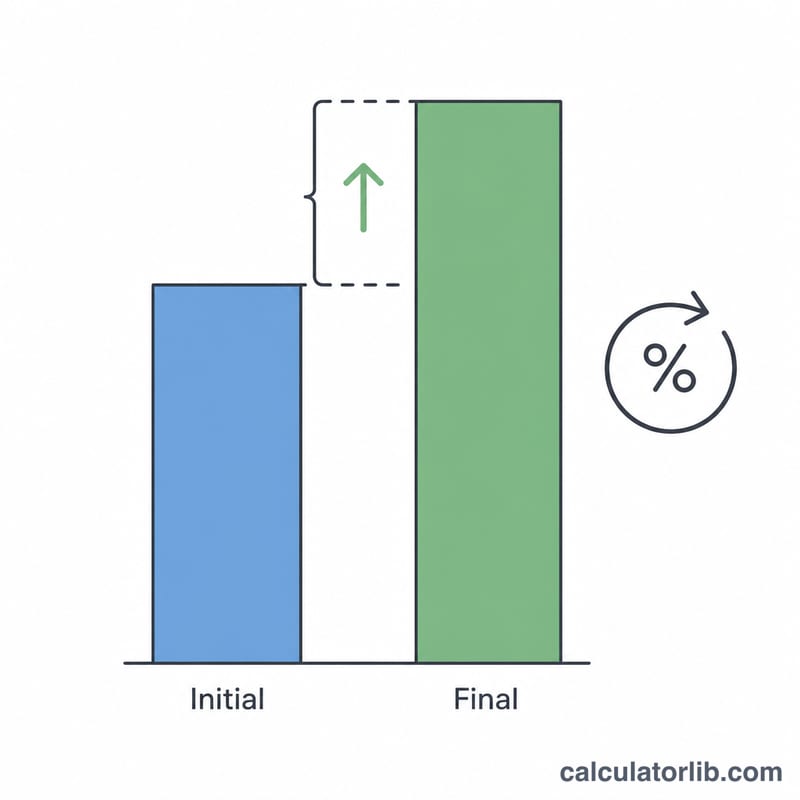
Suppose you buy shares for $1,000 and later sell them for $1,250. The gain is \(\$1{,}250 - \$1{,}000 = \$250\). Dividing by the initial $1,000 gives 0.25, and multiplying by 100 gives a 25% return. If instead the value fell to $800, the return would be:
$$(800 - 1000) \div 1000 \times 100 = -20\%$$
FAQ
Does this account for time? No. This is a simple total (cumulative) return, not an annualized return. For multi-year comparisons you'd convert to an annual rate (CAGR).
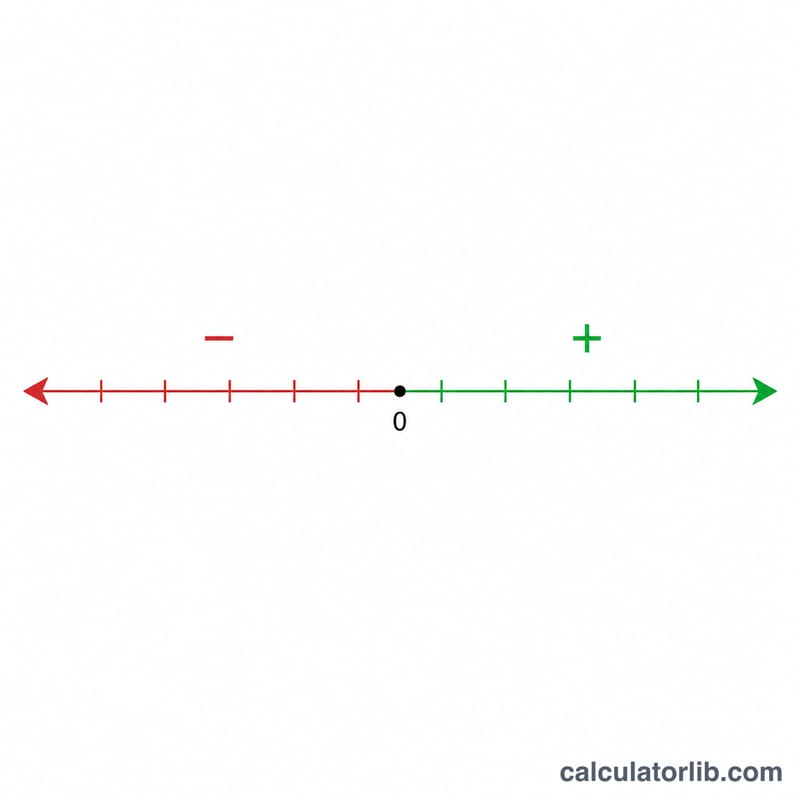
Can the result be negative? Yes. A negative percentage indicates a loss — the final value is lower than the initial value.
What if my initial value is zero? Percentage return is undefined when the initial value is zero, since you cannot divide by zero. Enter a positive starting value.