
What Is a Piece Rate Pay Calculator?
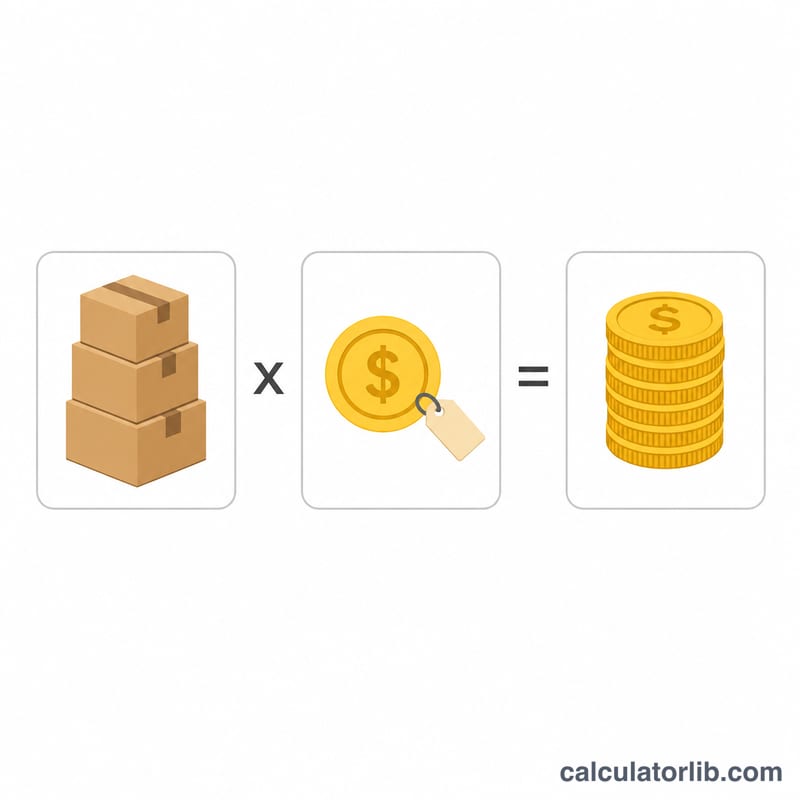
A piece rate pay calculator works out how much a worker earns when pay is based on output rather than hours. Instead of an hourly wage, piecework pays a fixed amount for each completed unit — a stitched garment, a harvested crate, a packed box, or a finished call. Multiply the number of units by the rate per unit and you have the gross pay.
How to Use It
Enter the total number of units produced and the agreed rate paid for each unit. The calculator instantly returns the gross earnings. Use the same currency for the rate and the result. For mixed jobs with different rates, calculate each task separately and add the totals.
The Formula Explained
The core equation is simply
$$\text{Pay} = \text{Units Produced} \times \text{Rate per Unit}$$If you complete 250 units at $0.40 each, your pay is \(250 \times 0.40 = \$100\). The rate can be any precision — fractions of a cent are common in high-volume manufacturing — and the calculator keeps that detail.
Worked Example
Suppose a seamstress sews 320 shirts in a week at a piece rate of $1.25 per shirt. Gross pay =
$$320 \times 1.25 = \mathbf{\$400.00}$$If she sews 360 the following week at the same rate, she earns \(360 \times 1.25 = \$450.00\).
FAQ
Does piece rate pay include overtime? In many jurisdictions piece-rate workers are still entitled to minimum wage and overtime; check local labor law. This tool computes only the raw piecework earnings.
Can the rate be a fraction of a cent? Yes — enter values like \(0.0025\) and the calculator handles them.
How do I find my effective hourly rate? Divide the total piece rate pay by the hours worked.