
What is a Per Diem Calculator?
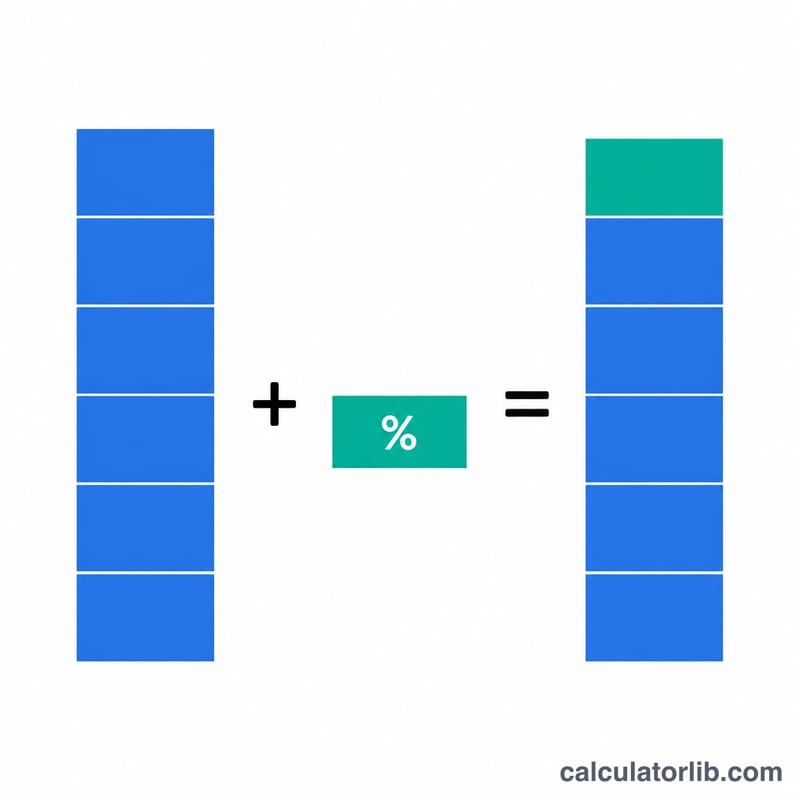
A per diem ("per day") allowance is a fixed daily amount an employer or organization pays to cover travel expenses such as meals, lodging and incidentals. This calculator adds up the total allowance for a trip by combining full days paid at 100% of the daily rate with travel days (typically the first and last day) paid at a reduced percentage.
How to use it
Enter the daily rate in dollars, the number of full days on the trip, the number of travel days (usually 2 — departure and return), and the travel day rate as a percentage. Many policies — including the U.S. GSA's "first and last day of travel" rule — reimburse travel days at 75%. Adjust the percentage to match your own policy.
The formula explained
The total is calculated as:
$$\text{Total} = (\text{Rate} \times \text{Full Days}) + \left(\text{Rate} \times \frac{\text{Travel \%}}{100} \times \text{Travel Days}\right)$$The first term covers complete days at the full rate, while the second applies the partial-day percentage to the travel days. The two parts are summed for the trip total.
Worked example
Suppose the daily rate is $100, you have 3 full days, 2 travel days, and travel days are reimbursed at 75%. Full days = \(100 \times 3 = \$300\). Travel days = \(100 \times 0.75 \times 2 = \$150\). Total = \(\$300 + \$150 = \$450\) across 5 days.
$$\text{Total} = (100 \times 3) + \left(100 \times \frac{75}{100} \times 2\right) = \$300 + \$150 = \$450$$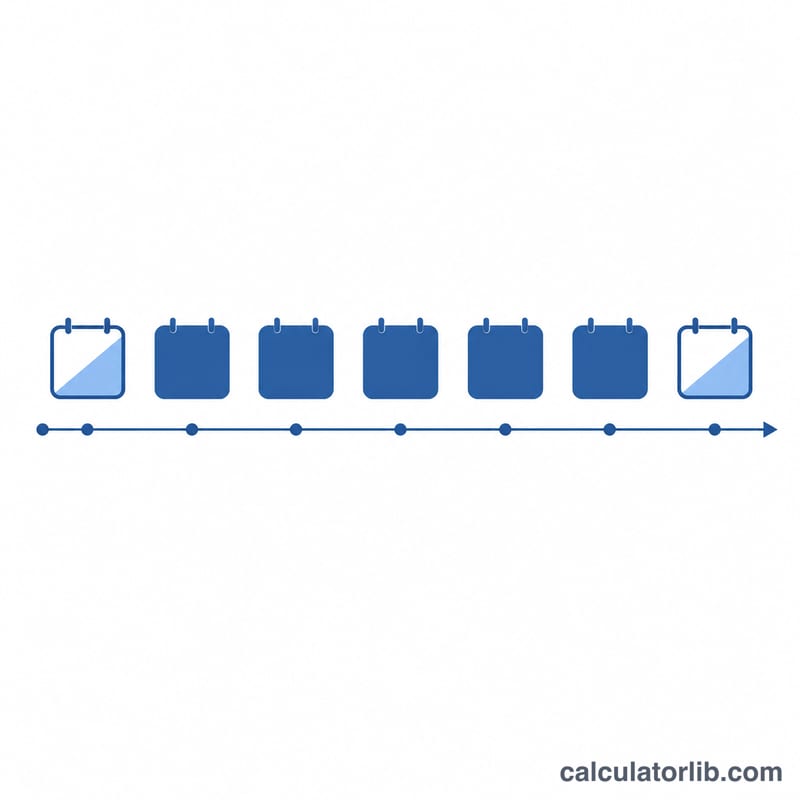
Per Diem Totals Across Common Scenarios
Each row uses the same formula: \(\text{Total} = \text{Rate} \times \text{Full Days} + \text{Rate} \times \frac{ \text{Travel \%}}{100} \times \text{Travel Days}\). The daily rates are illustrative, not official rates for any location.
| Scenario | Daily rate | Full days | Travel days | Travel % | Total |
|---|---|---|---|---|---|
| 1 full day + 2 travel days | $100 | 1 | 2 | 75% | $100 × 1 + $100 × 0.75 × 2 = $250.00 |
| 3 full days + 2 travel days | $150 | 3 | 2 | 75% | $150 × 3 + $150 × 0.75 × 2 = $450 + $225 = $675.00 |
| 5 full days + 2 travel days at full rate | $200 | 5 | 2 | 100% | $200 × 5 + $200 × 1.00 × 2 = $1,000 + $400 = $1,400.00 |
| No travel days | $120 | 4 | 0 | 75% | $120 × 4 + $120 × 0.75 × 0 = $480.00 |
With zero travel days, the travel percentage has no effect, so the total is just the rate times the full days.
Per Diem Terms Explained
- Per diem: Latin for "per day". A fixed daily allowance paid for travel costs instead of reimbursing each receipt.
- Daily rate: The amount allowed for one full day of travel. It may be a single combined figure or the sum of lodging and M&IE.
- Full day: A day spent entirely at the travel location, paid at 100% of the daily rate.
- Travel day: A day when you depart or return, usually the first and last day of a trip. Policies often pay a reduced share of the rate for these days.
- Travel-day percentage: The share of the daily rate paid on a travel day. This calculator applies one percentage to every travel day you enter.
- M&IE (meals and incidental expenses): The part of a per diem that covers meals and small costs such as tips and fees.
- Lodging vs. M&IE: Many per diem systems split the rate into a lodging component and an M&IE component. Lodging is typically reimbursed on actual cost up to a cap or handled separately, while M&IE is paid as a flat daily amount.
- GSA rate: The per diem rate set by the U.S. General Services Administration for federal travel. It applies to U.S. government travel and is often used as a benchmark by other organizations. It is specific to the United States.
Note on the 75% rule: Under U.S. federal (GSA) rules, the 75% travel-day reduction applies to the M&IE portion only, not to lodging. This calculator applies one percentage to the entire daily rate. If your rate includes lodging, enter the M&IE-only rate here, or calculate lodging separately.
Interpreting Your Per Diem Total
The result is the allowance amount produced by the rate, day counts and travel percentage you entered. It is not a measure of what you actually spent, and it does not verify that any specific expense occurred.
- Source of the rate: For U.S. federal travel, GSA sets the rates. Within the continental U.S. (CONUS) there is a standard rate, plus higher location-specific rates for certain destinations. Rates are reviewed periodically, so check the figure for your destination and travel dates.
- Components: A published rate can include lodging plus M&IE. Make sure the rate you enter matches what your policy intends to pay, such as M&IE only or the combined figure.
- Travel-day reductions: The percentage for first and last days is set by the paying organization's policy. U.S. federal rules use 75% of M&IE, but other employers or clients may use different values.
- Tax and substantiation: Whether per diem payments are taxable depends on the rules that apply, such as U.S. IRS accountable plan requirements covering business purpose, timing and substantiation of travel. Rules differ by country and by arrangement.
This is general information, not tax or legal advice. Confirm the details with your employer's travel policy or a qualified professional.
FAQ
Why are travel days paid less? On departure and arrival days you are usually traveling for only part of the day, so policies reduce the meals & incidentals portion (commonly to 75%).
Can I set travel days to 0? Yes. If every day is a full day, set travel days to 0 and the total is simply \(\text{rate} \times \text{full days}\).
Is this tied to a specific country? No. The math is universal, though the 75% travel-day default mirrors the U.S. GSA convention. Use whatever percentage your policy specifies.