
What Is Retroactive Pay?
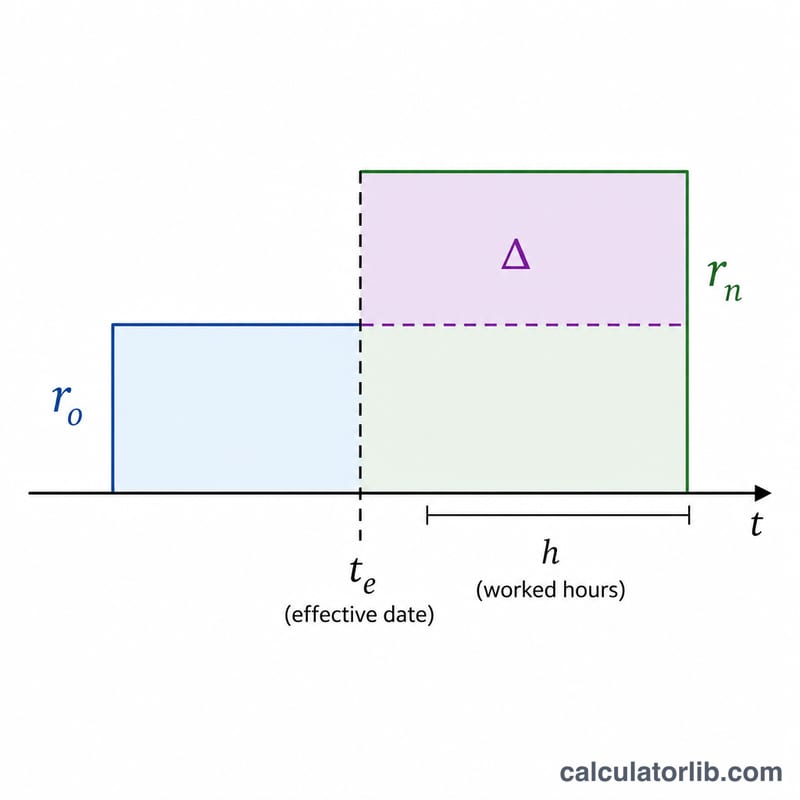
Retroactive pay (also called back pay or "retro pay") is the difference between what an employee was actually paid and what they should have been paid after a delayed raise, a new contract, or a payroll correction. When a pay increase has an effective date that is earlier than the date it first appears on a paycheck, the employer owes the worker the gap for all hours worked in between.
How to Use This Calculator
Enter your old hourly rate, your new (corrected) hourly rate, and the total number of hours you worked between the effective date of the raise and the date your pay was actually adjusted. The calculator returns the gross retroactive pay you are owed before taxes and deductions.
The Formula Explained
The math is straightforward: $$\text{Retro Pay} = (\text{New Rate} - \text{Old Rate}) \times \text{Hours Worked}$$ The first part finds how much extra you earn per hour, and multiplying by hours worked since the effective date totals the shortfall across the whole back-pay period.
Worked Example
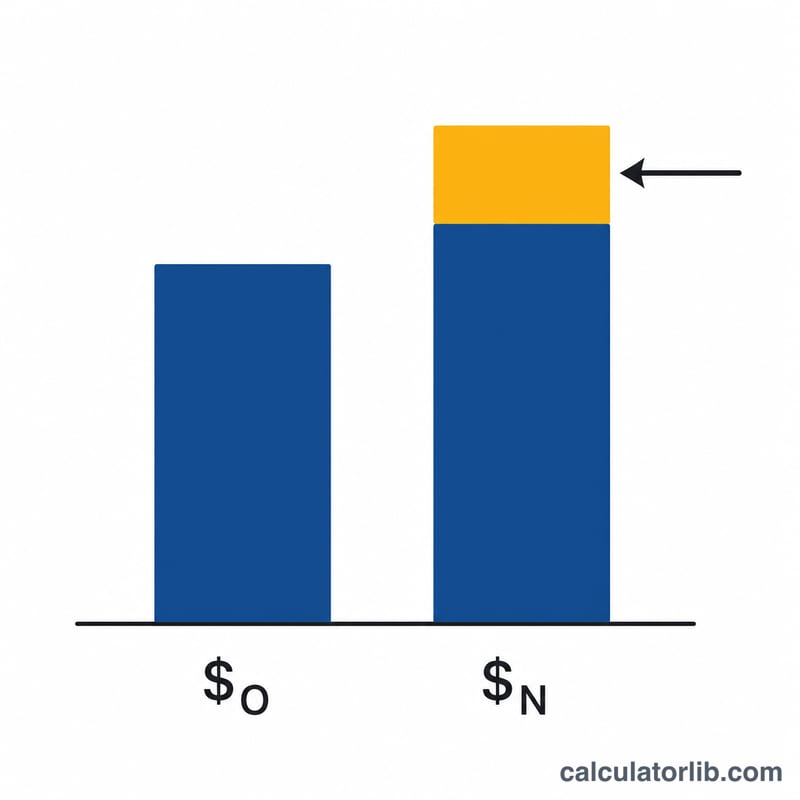
Suppose your rate rose from $20.00 to $23.00 per hour, and you worked 160 hours after the effective date before payroll caught up. The hourly difference is \(\$23.00 - \$20.00 = \$3.00\). Multiplied by 160 hours gives $480.00 in gross retroactive pay.
$$(\$23.00 - \$20.00) \times 160 = \$480.00$$
FAQ
Is retro pay taxed? Yes. Retroactive pay is taxable wages and is usually subject to income tax withholding and payroll taxes, often as supplemental wages. This tool shows the gross amount before taxes.
What if I have overtime? If some of those hours were overtime, calculate retro pay separately for regular and overtime hours using the appropriate (often \(1.5\times\)) rate difference, then add them together.
Does this work for salaried employees? Convert your salary increase to an effective hourly (or per-pay-period) rate first, or compute retro pay as the per-period raise multiplied by the number of affected pay periods.