
What Is Pump Hydraulic Horsepower?
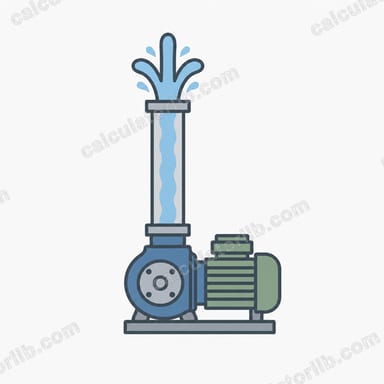
Hydraulic horsepower (HHP), also called water horsepower, is the useful power a pump delivers to the fluid it moves. It represents the rate of energy transferred to the liquid based on how much fluid is flowing and how high (or against what pressure) it is being lifted. HHP is always less than the brake horsepower the motor must supply, because real pumps lose energy to friction and inefficiency. Knowing the hydraulic horsepower is the first step in sizing a motor, comparing pumps, and estimating operating costs.
How to Use This Calculator
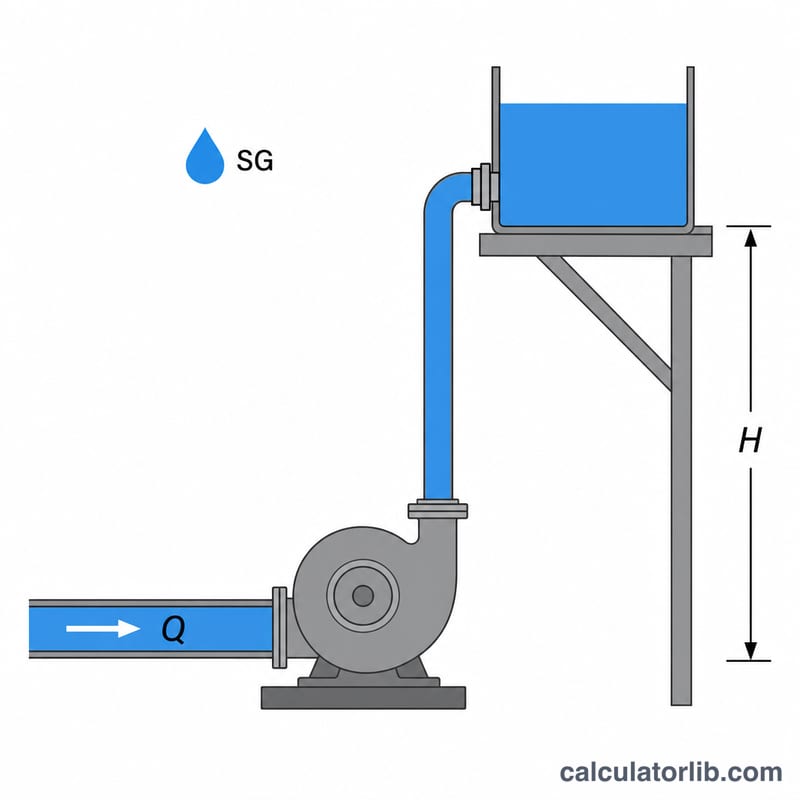
Enter three values: the flow rate in US gallons per minute (GPM), the total head in feet (the vertical lift plus friction and pressure head the pump must overcome), and the specific gravity of the fluid. Water has a specific gravity of 1.0; denser liquids are higher and lighter fluids are lower. Click calculate to see the hydraulic horsepower and its equivalent in kilowatts.
The Formula Explained
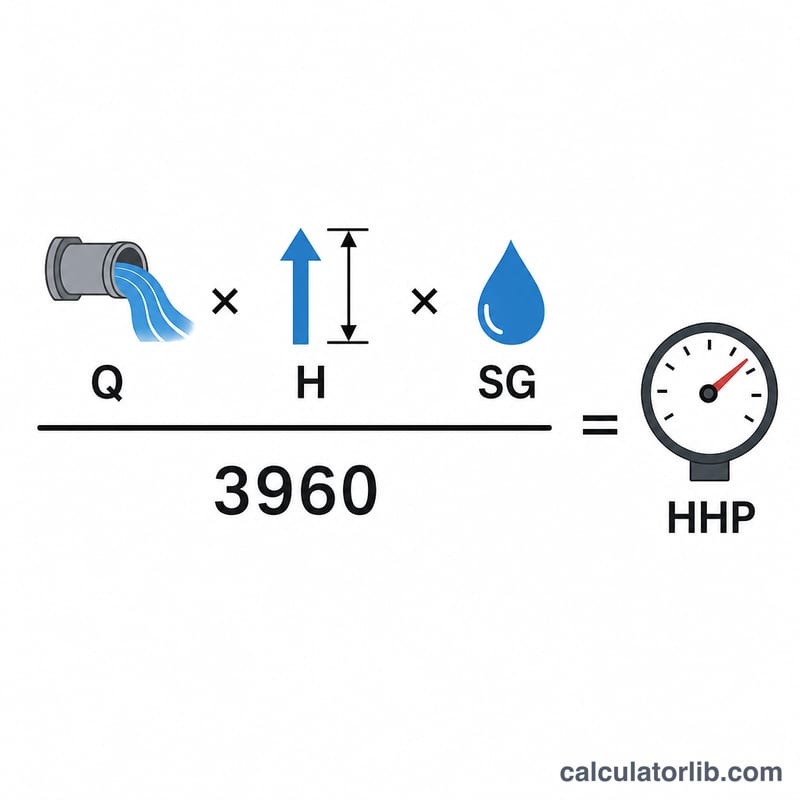
The standard imperial equation is:
$$\text{HHP} = \frac{\text{Flow (GPM)} \times \text{Head (ft)} \times \text{Specific Gravity}}{3960}$$
The magic number 3960 bundles together the conversion factors: 1 horsepower equals 33,000 ft\(\cdot\)lb/min, and one gallon of water weighs about 8.34 lb, so \(33{,}000 \div 8.34 \approx 3960\). Multiplying by specific gravity corrects the weight of the gallon for fluids other than water.
Worked Example
Suppose a pump moves 500 GPM of water (SG = 1.0) against a total head of 120 feet. $$\text{HHP} = \frac{500 \times 120 \times 1.0}{3960} = \frac{60{,}000}{3960} \approx 15.15 \text{ hydraulic horsepower}$$ To convert: \(15.15 \times 0.7457 \approx 11.30\) kW. To find the motor (brake) horsepower, divide this HHP by the pump efficiency — for example, at 75% efficiency you would need about 20.2 brake horsepower.
FAQ
What is the difference between hydraulic and brake horsepower? Hydraulic horsepower is the power delivered to the fluid; brake horsepower is the power the motor must supply. \(\text{Brake HP} = \text{HHP} \div \text{pump efficiency}\).
What specific gravity should I use? Use 1.0 for water at room temperature. For brines, oils, or slurries use the fluid's actual specific gravity, which shifts the result proportionally.
Does this work for metric units? No — this formula expects US GPM and feet of head. Convert metric inputs to these units first, or use a metric hydraulic power equation.