
What Is the Apartment Occupancy Rate?
The apartment occupancy rate measures the share of rental units in a building or portfolio that are currently occupied. It is one of the most important performance metrics in property management and real estate investing, because it directly affects rental income, valuation, and operating decisions. A high occupancy rate signals strong demand and healthy cash flow, while a falling rate may point to pricing, marketing, or maintenance issues.
How to Use the Calculator
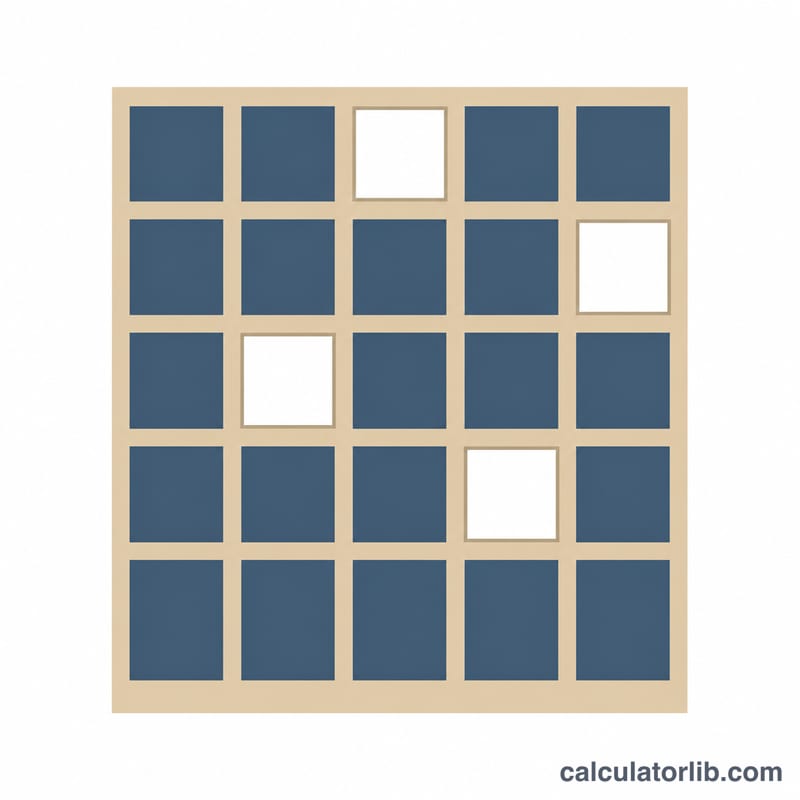
Enter the number of occupied units (units currently leased and generating rent) and the total units in the property. The calculator returns the occupancy rate as a percentage, along with the vacancy rate and the count of vacant units.
The Formula
The occupancy rate is the ratio of occupied units to total units, expressed as a percentage:
$$\text{Occupancy Rate} = \frac{\text{Occupied Units}}{\text{Total Units}} \times 100\%$$The vacancy rate is simply the remaining share, where \(\text{Vacancy} = 100\% - \text{Occupancy}\).
Worked Example
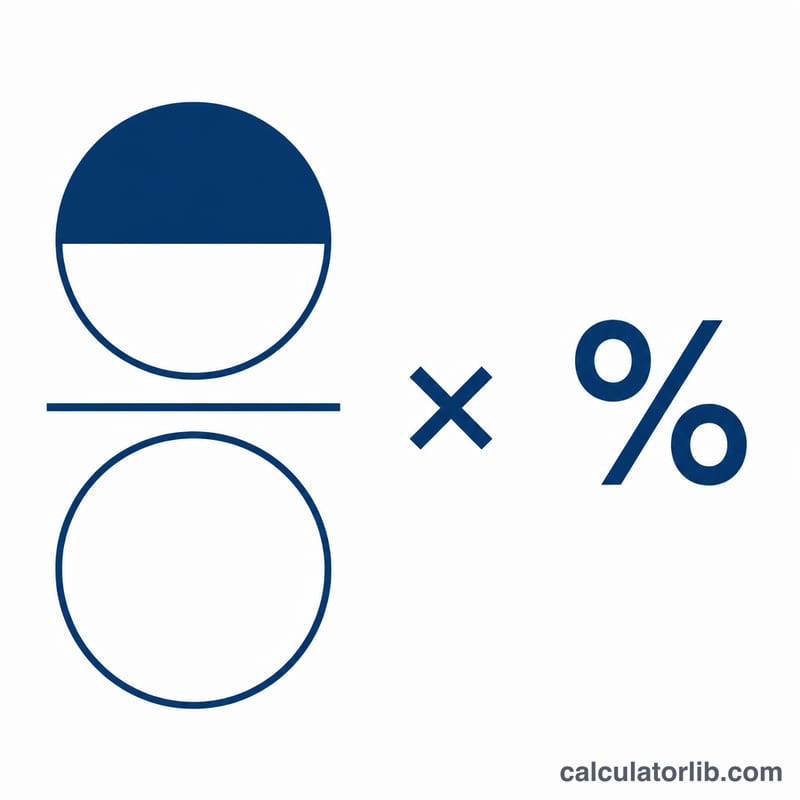
Suppose a building has \(100\) total units and \(92\) are occupied. The occupancy rate is:
$$\text{Occupancy Rate} = \frac{92}{100} \times 100\% = 92\%$$The vacancy rate is \(100\% - 92\% = 8\%\), meaning \(8\) units are empty.
Interpreting Your Occupancy Rate
Occupancy rate measures the share of a property's units that are currently leased and occupied. The simplest version, physical occupancy, counts bodies in units; the more rigorous version, economic occupancy, measures the rent actually being collected against the rent the property could collect if every unit paid full market rate. A building can show 96% physical occupancy yet far lower economic occupancy if many leases carry concessions, discounts, or unpaid balances. Read both numbers together before drawing conclusions.
As a worked example, a 200-unit community with 186 occupied units has an occupancy rate of 93%, which sits squarely in the stabilized range. The corresponding vacancy rate is 7%.
The following bands reflect how property managers and asset managers commonly interpret physical occupancy for conventional market-rate apartments:
| Occupancy Band | Typical Interpretation |
|---|---|
| Below 90% | Often signals soft demand, asking rents above what the local market will bear, deferred maintenance, marketing or leasing-execution gaps, or seasonal turnover. Warrants a review of pricing, lead flow, and unit-readiness. |
| 90%–93% | Approaching stabilization but still leaving measurable income on the table; commonly seen during lease-up, post-renovation, or after a turnover spike. |
| 93%–96% | Generally regarded as stabilized and healthy. Enough natural vacancy exists to turn units, perform make-ready work, and capture rent growth on new leases. |
| Above 97% | Very strong leasing, but persistently high occupancy can indicate rents are priced below market. Near-zero vacancy may mean the property could raise rents on renewals and new leases without losing residents. |
Context matters: lease-up properties, affordable/regulated housing, student housing, and seasonal markets each have different “normal” ranges, and a single snapshot is less meaningful than a trend over several months. This is general property-management information, not financial or investment advice.
Key Terms & Definitions
- Occupancy Rate
- The percentage of a property's units that are currently leased and occupied, calculated as occupied units divided by total units, multiplied by 100.
- Vacancy Rate
- The percentage of units that are not occupied. It is the complement of occupancy rate: \(\text{Vacancy Rate} = 100\% - \text{Occupancy Rate}\).
- Physical Occupancy
- An occupancy measure based on the number of units physically occupied by residents, regardless of how much rent is being paid.
- Economic Occupancy
- An occupancy measure based on rent actually collected versus gross potential rent. It accounts for concessions, discounts, loss-to-lease, and delinquency, so it is usually lower than physical occupancy.
- Occupied Units
- The number of units that have a resident in place under a current lease. This is the numerator in the occupancy-rate formula.
- Total Units
- The total number of rentable units in the property, occupied or not. This is the denominator in the occupancy-rate formula.
- Down Units
- Units that are temporarily not rentable—due to major repairs, renovation, fire/water damage, or model/office use—and are often excluded from leasable inventory when calculating occupancy.
- Concessions
- Rent discounts or incentives offered to attract or retain residents, such as one month free or reduced rent. Concessions lower economic occupancy even when physical occupancy is high.
- Stabilized Occupancy
- The occupancy level a property is expected to maintain over the long run once initial lease-up is complete, commonly in the 93%–96% range for conventional market-rate apartments.
FAQ
What is a good occupancy rate? Most stabilized apartment communities target 93-96%. A rate above 96% may suggest rents are set too low.
Is occupancy the same as the rent-collected rate? No. Occupancy counts leased units regardless of whether rent was paid; economic occupancy adjusts for concessions and uncollected rent.
Should I count units under renovation? Typically yes, in total units. You may track "down" units separately for a physical-vacancy view.