
What Is a Cap Rate?
The capitalization rate (cap rate) is a core metric in real estate investing that measures the unleveraged annual rate of return a property generates relative to its value or purchase price. It lets you compare income-producing properties on an apples-to-apples basis, regardless of how they are financed.
How to Use This Calculator
Enter the property's annual Net Operating Income (NOI) — gross rental income minus operating expenses such as taxes, insurance, maintenance, and management, but excluding mortgage payments. Then enter the property value or purchase price. The calculator returns the cap rate as a percentage.
The Formula Explained
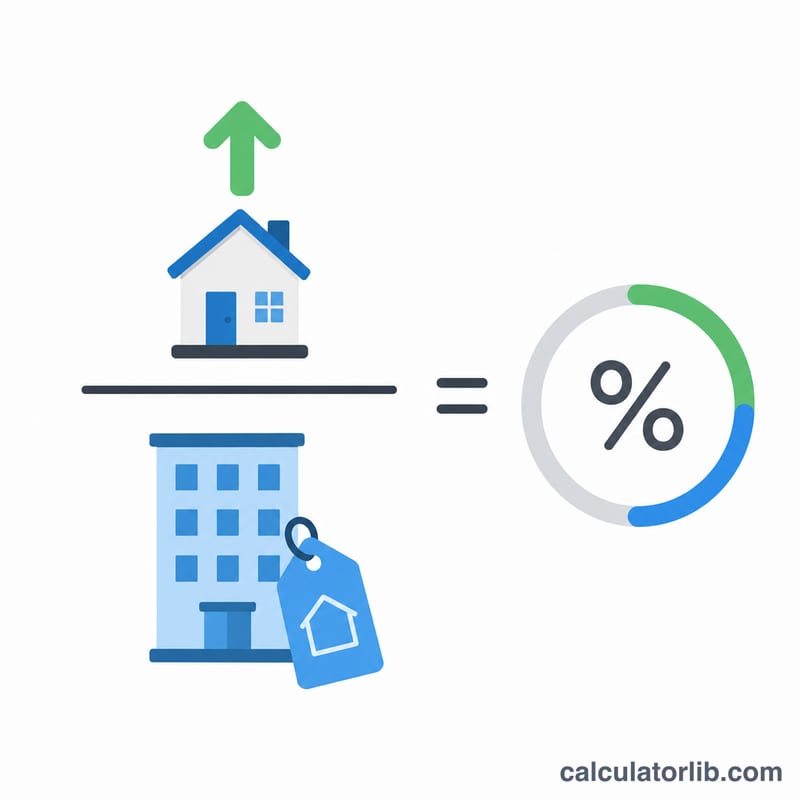
Cap rate is calculated as:
$$\text{Cap Rate} = \frac{\text{Net Operating Income}}{\text{Property Value}} \times 100\%$$
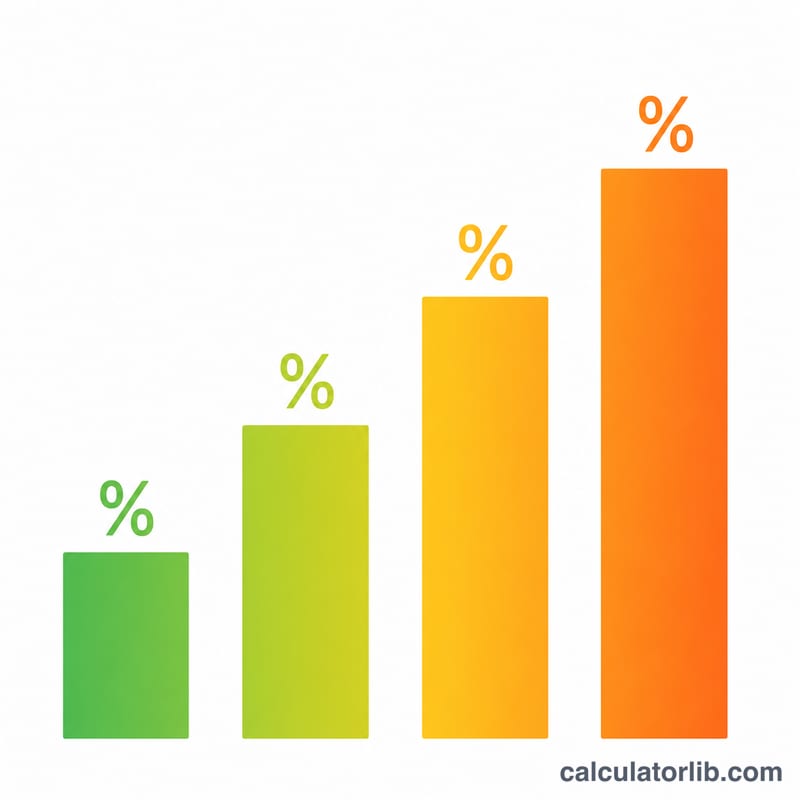
A higher cap rate generally signals higher potential return but often more risk; a lower cap rate suggests a more stable, premium asset. Typical cap rates range from about 4% to 10% depending on market and property type.
Worked Example
Suppose a property generates $60,000 in annual NOI and is valued at $750,000. The cap rate is $$\$60{,}000 \div \$750{,}000 = 0.08,$$ or 8%. This means the property yields an 8% return on its value before financing.
FAQ
Does cap rate include the mortgage? No. NOI excludes debt service, so cap rate measures the property's performance independent of financing.
What is a good cap rate? It depends on the market and your goals. Investors seeking stability often accept 4–6%, while those seeking yield may target 8%+ in higher-risk areas.
Can I find property value from cap rate? Yes — rearrange the formula: \(\text{Property Value} = \text{NOI} \div (\text{Cap Rate} / 100)\).