
What this calculator does
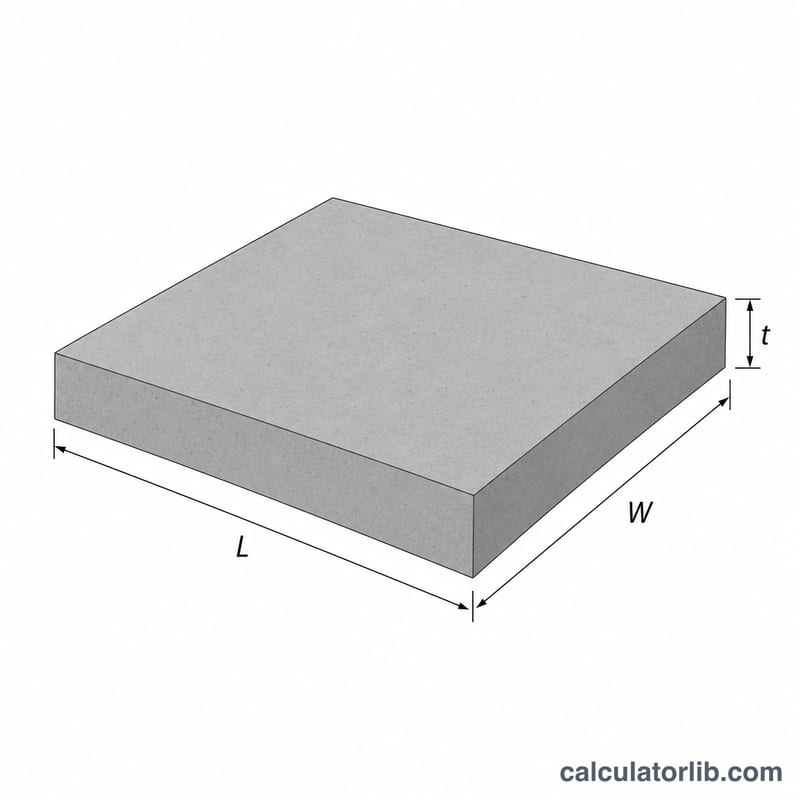
The Concrete Slab Calculator estimates how much concrete you need to pour a rectangular slab, footing or pad. It returns the volume in both cubic yards (how ready-mix is sold and priced) and cubic feet, and then tells you how many bags of dry mix to buy if you are mixing it yourself.
How to use it
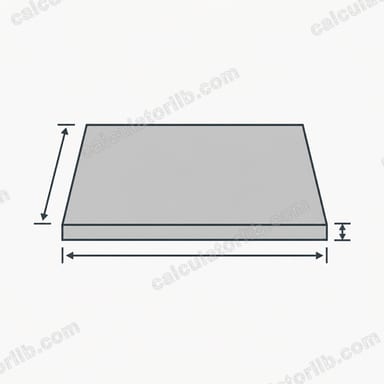
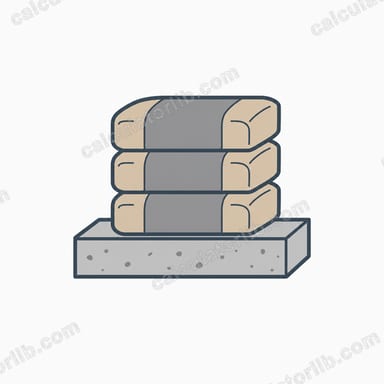
Enter the slab length and width in feet and the thickness in inches. Pick the bag size you plan to use — the calculator already knows the typical yield: an 80 lb bag makes about 0.60 cu ft, a 60 lb bag about 0.45 cu ft, a 50 lb bag about 0.375 cu ft, and a 40 lb bag about 0.30 cu ft. Click calculate to see volume and bag count. It is always wise to add 5–10% extra for spillage, uneven subgrade and over-excavation.
The formula explained
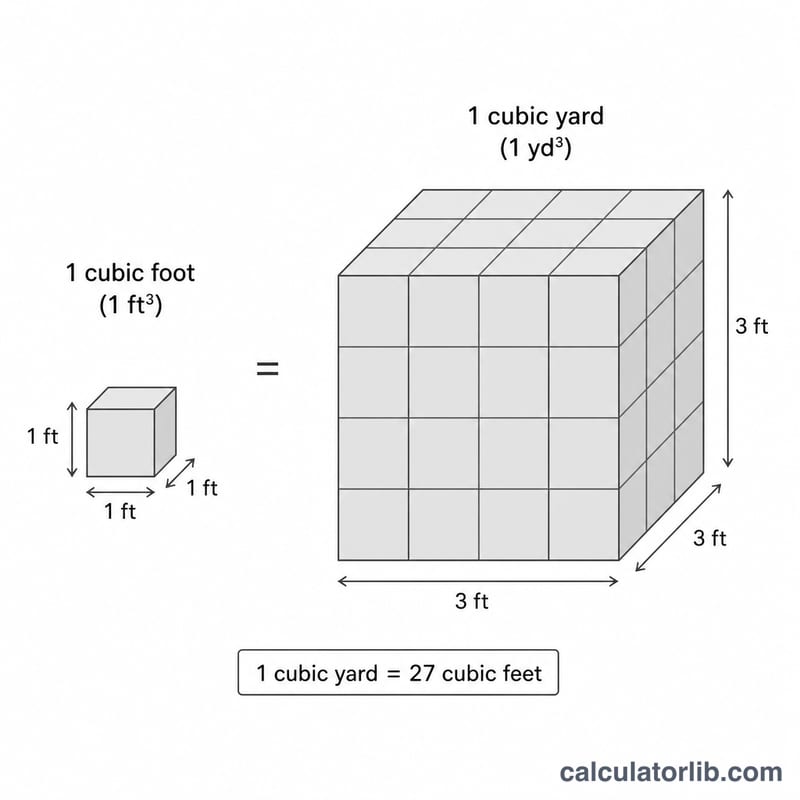
Volume is length × width × depth, but the three measurements must share the same unit. Thickness is given in inches, so we divide it by 12 to convert to feet: $$\text{cu ft} = L \times W \times (t/12)$$ There are 27 cubic feet in a cubic yard, so dividing by 27 gives cubic yards. Bags are found by dividing the cubic-foot volume by the yield of one bag, then rounding up because you cannot buy a partial bag.
Worked example
For a 10 ft × 10 ft slab that is 4 in thick: depth = 4/12 = 0.333 ft, so volume:
$$V = 10 \times 10 \times 0.333 = 33.33 \text{ cu ft} = \frac{33.33}{27} = \textbf{1.23 cubic yards}$$Using 80 lb bags at 0.60 cu ft each: \( 33.33 / 0.60 = 55.6 \), rounded up to 56 bags.
FAQ
Should I order ready-mix or bags? Past roughly 1 cubic yard, bagged concrete becomes labor-intensive and pricey; ready-mix delivery is usually more economical.
How much extra should I buy? Add about 10% to cover waste, settling and slight depth variation.
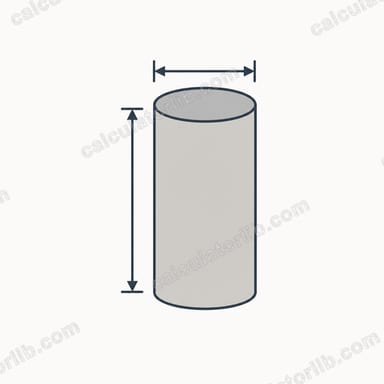
Does this work for footings or columns? It is built for rectangular slabs. For round columns or irregular shapes, calculate each section separately.