
What is CPA (Cost Per Acquisition)?
CPA, short for Cost Per Acquisition (also called Cost Per Action), is a core marketing metric that tells you how much you spent in advertising to win a single conversion. A "conversion" might be a purchase, a sign-up, a lead form, an app install, or any action you define as valuable. CPA is a universal metric — it works the same way in any country and any currency.
How to use this calculator
Enter your total advertising cost for the campaign or period, then enter the number of conversions you achieved during that same period. The calculator divides the spend by the conversions to give you the average cost of each acquisition. Use the same currency for the cost field; the result is expressed in that currency per conversion.
The formula explained
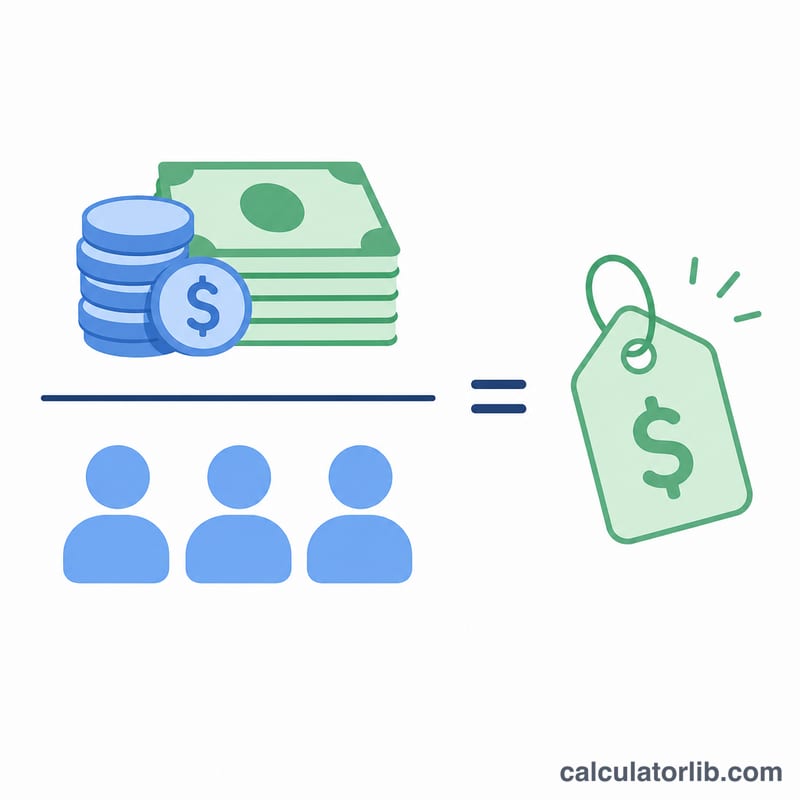
The math is simple: $$\text{CPA} = \frac{\text{Advertising Cost}}{\text{Number of Conversions}}$$ If conversions is zero the result is undefined, because you cannot divide by zero — practically it means the campaign produced no acquisitions, so its cost per acquisition is infinite. A lower CPA means more cost-efficient marketing.
Worked example
Suppose you spent 1,200 in ads and earned 10 conversions. Then $$\text{CPA} = \frac{1{,}200}{10} = 120$$ Each acquisition cost you 120 currency units. In a larger example, 50,000 in spend with 80 conversions gives $$\text{CPA} = \frac{50{,}000}{80} = 625$$ per conversion.
FAQ
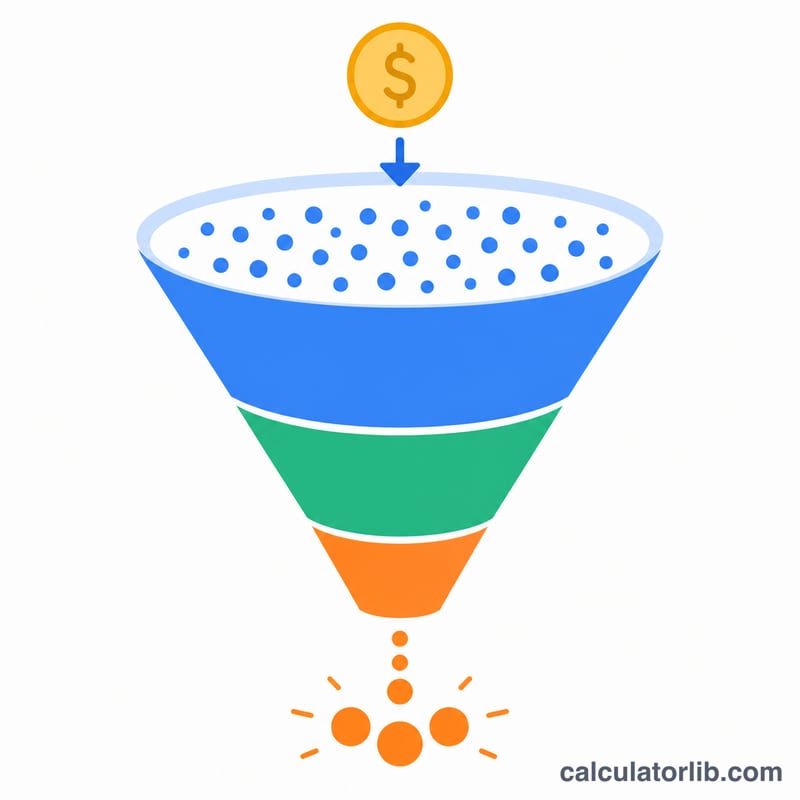
How is CPA different from CPC and CPM? CPC (cost per click) measures the cost of each click, and CPM measures the cost per thousand impressions. CPA goes further down the funnel and measures the cost of a completed conversion or action.
What is a good CPA? It depends on your industry and the value of each conversion. As a rule, your CPA should be comfortably below the profit you earn per converted customer.
Can conversions be a decimal? The formula accepts any positive value, but conversions are usually whole numbers since you count completed actions.