
What This Calculator Does
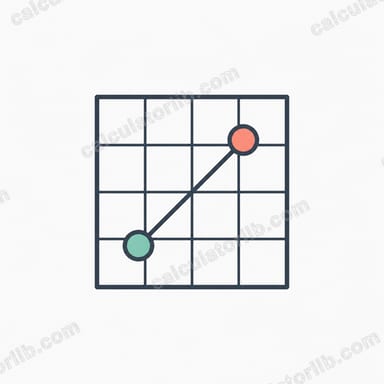
The Distance Between Two Points Calculator finds the straight-line (Euclidean) distance between any two points on a two-dimensional coordinate plane. Enter the coordinates of the first point (x₁, y₁) and the second point (x₂, y₂), and the tool instantly computes how far apart they are. This is one of the most fundamental tools in coordinate geometry, used in math homework, physics, engineering, computer graphics, and mapping.
How to Use It
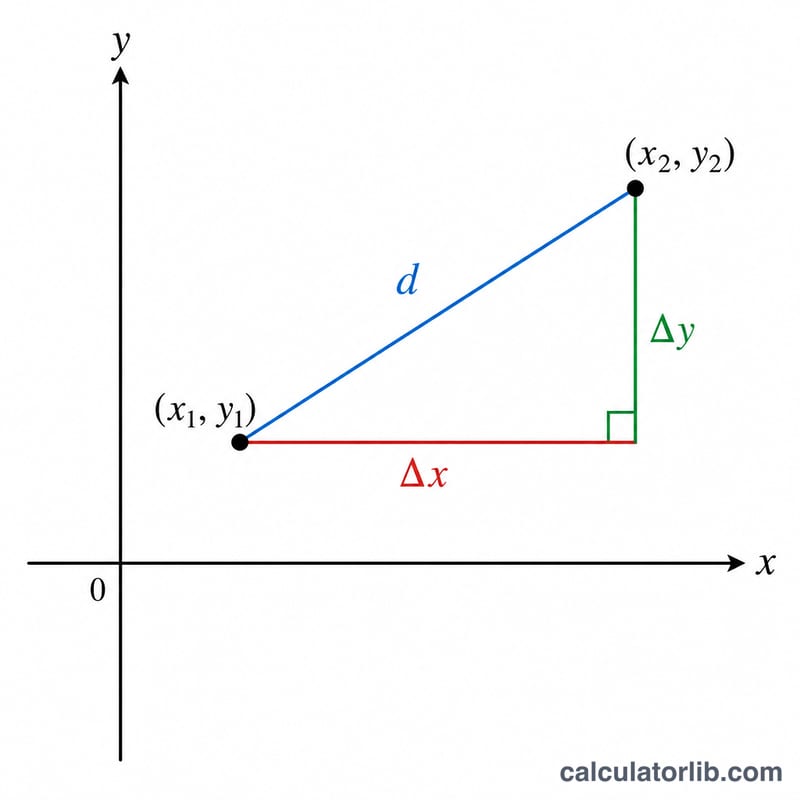
Type the X and Y coordinates for each of your two points into the four input boxes. Coordinates may be positive, negative, or decimal values. Click calculate and the result shows the distance plus the horizontal (Δx) and vertical (Δy) differences so you can see exactly how the answer was built.
The Formula Explained
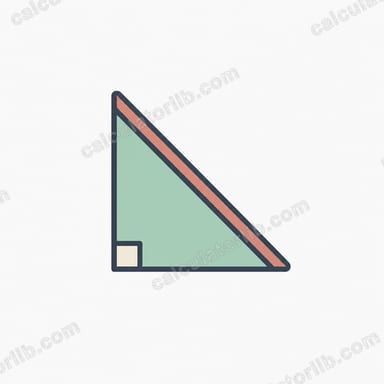
The distance formula is a direct application of the Pythagorean theorem. The two points form the endpoints of the hypotenuse of a right triangle whose legs are the horizontal difference (x₂ − x₁) and the vertical difference (y₂ − y₁):
$$d = \sqrt{(x_2 - x_1)^2 + (y_2 - y_1)^2}$$
Squaring each difference removes any negative sign, so the order in which you enter the points does not change the result.
Worked Example
Suppose Point 1 is (1, 2) and Point 2 is (4, 6). The horizontal difference is \(\Delta x = 4 - 1 = 3\) and the vertical difference is \(\Delta y = 6 - 2 = 4\). Then $$d = \sqrt{3^2 + 4^2} = \sqrt{9 + 16} = \sqrt{25} = 5.$$ The two points are exactly 5 units apart — the classic 3-4-5 right triangle.
FAQ
Does the order of the points matter? No. Because the differences are squared, swapping the two points gives the same distance.
Can I use negative coordinates? Yes. Any real number works for each coordinate, including negatives and decimals.
What units is the answer in? The distance is in the same units as your input coordinates — if x and y are in meters, the distance is in meters.