
What Is the Electricity Bill Calculator?
This calculator estimates your total electricity bill from three simple inputs: the number of units (kilowatt-hours, kWh) you consumed, the price charged per unit, and any flat fixed or standing charge added by your supplier. It works with any currency — just enter the rate in your local money. The tool is universal and not tied to any single country, though the exact tariff structure you copy from your bill is what makes the estimate accurate.
How to Use It
Read your latest electricity statement. Enter the units consumed during the billing period (kWh), the rate per unit (cost of one kWh), and the fixed or standing charge for that period. The calculator multiplies units by rate to get the energy charge, then adds the fixed charge to give your total bill.
The Formula Explained
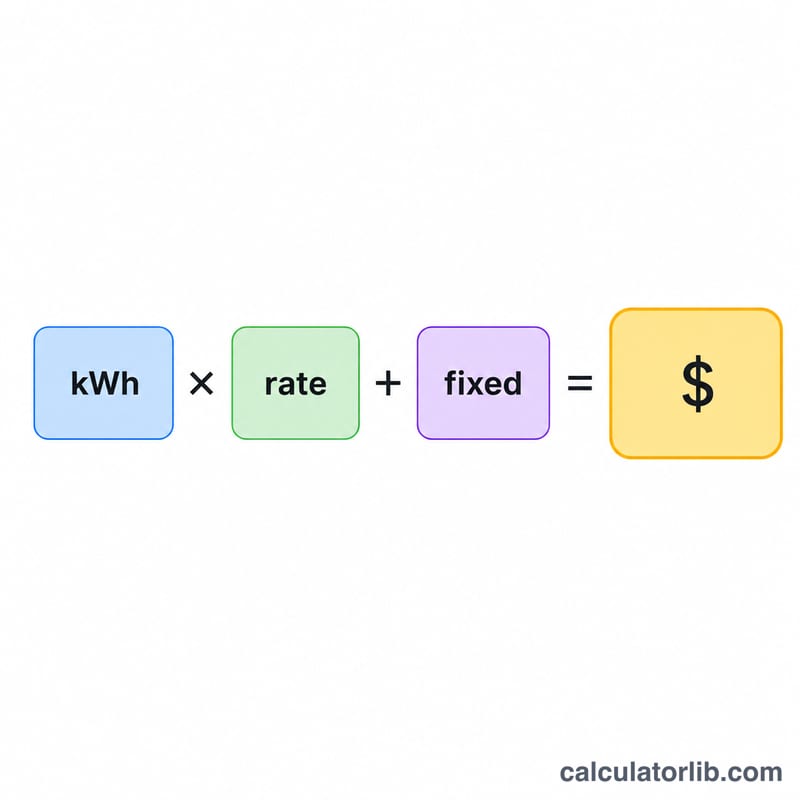
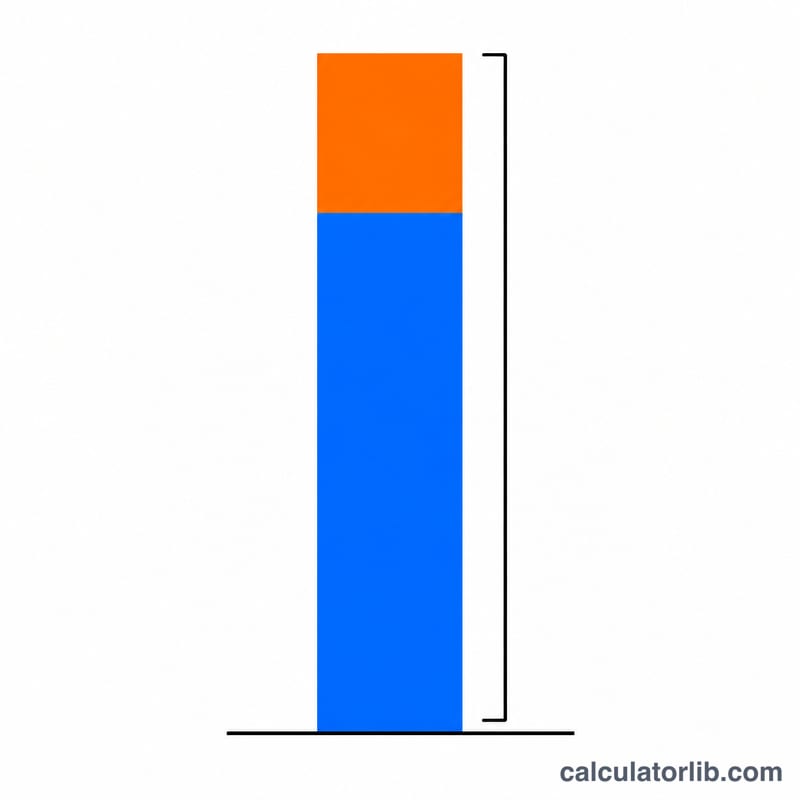
The math is straightforward: $$\text{Bill} = \text{Units (kWh)} \times \text{Rate} + \text{Fixed Charge}$$. The first term, \(\text{Units} \times \text{Rate}\), is the variable energy charge that grows with how much electricity you use. The fixed charge is a constant amount billed regardless of consumption, covering metering and grid access. Together they form your total payable amount.
Worked Example
Suppose you used 300 kWh in a month, your rate is 0.15 per kWh, and the fixed charge is 10. The energy charge is $$300 \times 0.15 = 45.$$ Adding the fixed charge: $$45 + 10 = \mathbf{55}.$$ So your estimated bill is 55 in your currency.
FAQ
Where do I find my units consumed? Your bill shows kWh used, usually as the difference between the current and previous meter readings.
What if I have tiered or slab rates? This calculator uses a single flat rate. For tiered tariffs, use a blended average rate or calculate each slab separately.
Does it include taxes? No — add taxes or surcharges to the fixed charge field, or treat the result as a pre-tax estimate.