
What Is the Epoxy Circle Calculator?
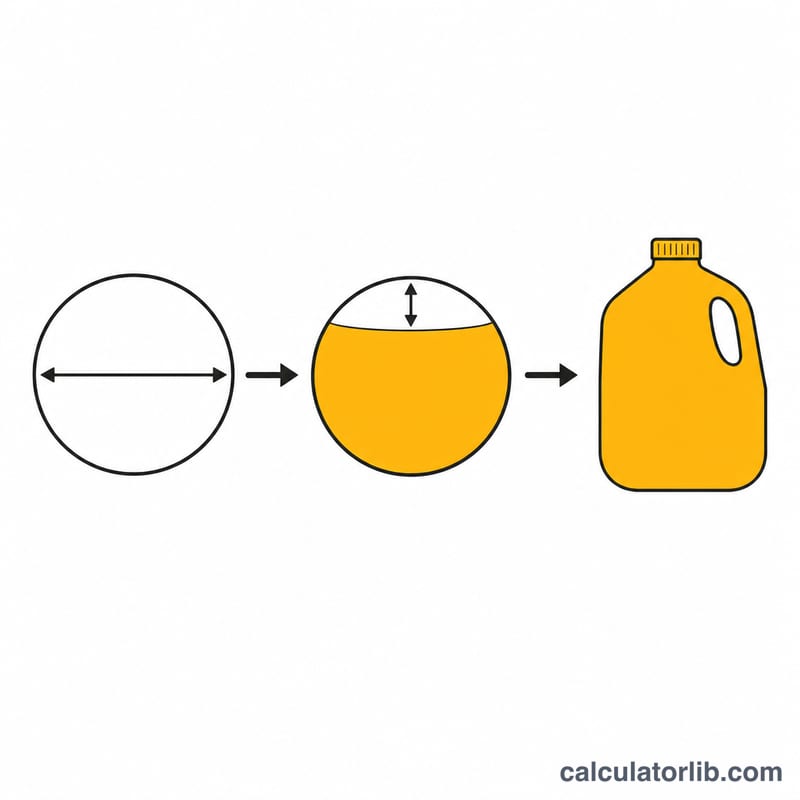
The Epoxy Circle Calculator helps you work out exactly how much resin you need to fill a round surface or mold. Whether you're sealing a circular tabletop, casting a coaster, building a river table with rounded ends, or pouring a decorative wall clock, guessing the amount of epoxy almost always leads to either a costly overpour or a frustrating shortage halfway through a job. This tool removes the guesswork by turning two simple measurements — diameter and pour depth — into the radius, surface area, total volume, and the number of gallons of mixed resin you'll need.
How to Use It
Measuring a circle accurately is the key to a clean result. Follow these steps:
- Diameter: Measure straight across the widest point of the circle, edge to edge.
- Depth: Decide how thick your epoxy layer should be. Flood coats are usually 1/8" to 1/4", while deep casts and molds can be 1" or more (always check your resin's maximum pour depth).
- Enter both values in the same units, then read off the radius, area, volume, and gallons required.
It's smart to add about 10% extra to cover spills, drips, and the resin left clinging to your mixing cup.
The Formula Explained
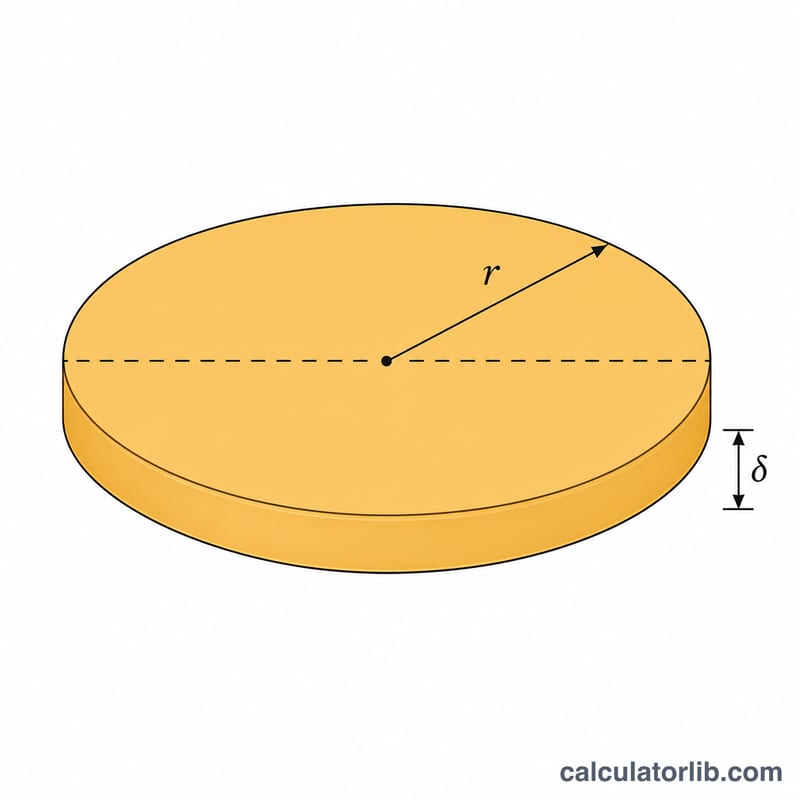
The calculator uses the volume of a cylinder, since a circular pour of even depth is simply a short cylinder:
- Radius = \(\text{Diameter} \div 2\)
- Area = \(\pi \times \text{Radius}^2\)
- Volume = \(\text{Area} \times \text{Depth}\)
- Gallons = \(\text{Volume (in cubic inches)} \div 231\)
The figure 231 is the number of cubic inches in one US gallon, so the gallon result follows US measurements.
Worked Example
Suppose you're flood-coating a round table that is 24 inches across with a 1/8" (0.125") layer:
- Radius = \(24 \div 2 = 12 \text{ in}\)
- Area = \(\pi \times 12^2 = 452.4 \text{ sq in}\)
- Volume = \(452.4 \times 0.125 = 56.5 \text{ cubic inches}\)
- Gallons = \(56.5 \div 231 \approx 0.24 \text{ gallons}\)
So you'd mix roughly a quarter gallon, plus a little extra for waste.
FAQ
Does this account for both resin and hardener? Yes — the volume figure is the total mixed epoxy. Combine resin and hardener per your product's ratio to reach that amount.
What if my surface isn't perfectly flat? Use your average intended depth. Dips and high spots will even out as the epoxy self-levels.
Can I calculate in liters? The gallon result is US-based. To get liters, multiply gallons by 3.785.