
What Is the Estate Tax Calculator?
This tool gives a simplified estimate of the estate (or "death") tax that may be owed when assets pass to heirs. It subtracts an exemption amount from the gross estate to find the taxable estate, then applies a flat tax rate. Estate tax rules vary widely by jurisdiction — the United States uses a federal exemption (the basic exclusion amount is $15,000,000 per individual for deaths in 2026, up from $13,990,000 in 2025) with a top rate of 40%, while many countries and several US states have their own thresholds and rates. This is a federal-only estimate; state estate or inheritance taxes are not included. Always enter the exemption and rate that apply to your situation and confirm details with a qualified estate planner or tax professional.
How to Use It
Enter three values: the gross estate value (the total fair-market value of all assets), the exemption amount that applies in your jurisdiction, and the estate tax rate as a percentage. The calculator instantly shows the taxable estate, the estimated tax, and the net amount left to your heirs.
The Formula Explained
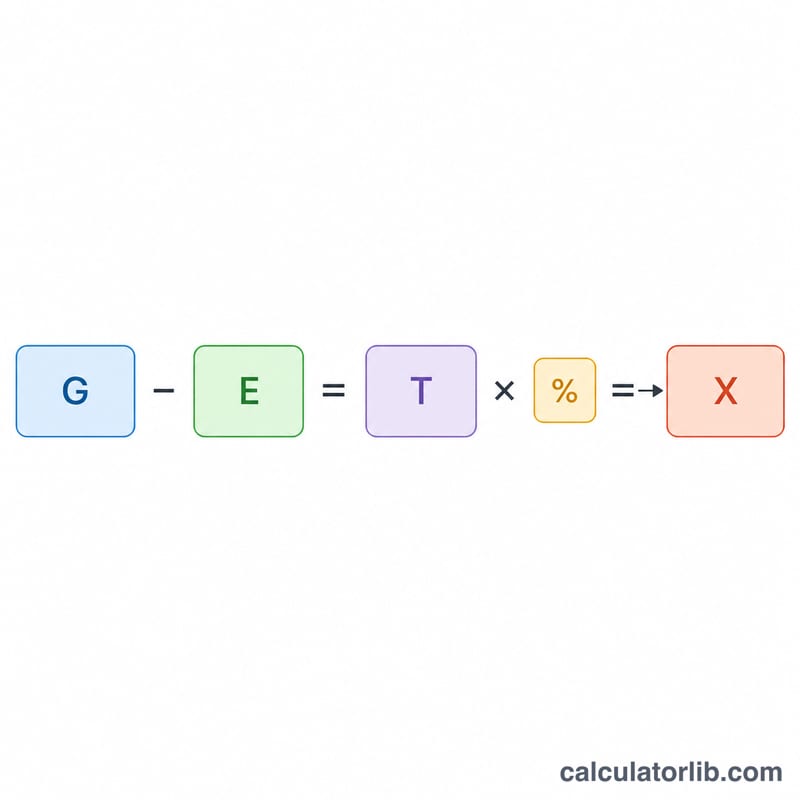
First, taxable estate = gross estate − exemption, with a floor of zero (no negative tax). Then estate tax = taxable estate × (rate ÷ 100). If the gross estate does not exceed the exemption, the taxable estate is zero and no tax is due.
$$\text{Taxable Estate} = \max(0,\ \text{Gross Estate} - \text{Exemption})$$$$\text{Estate Tax} = \text{Taxable Estate} \times \frac{\text{Rate}}{100}$$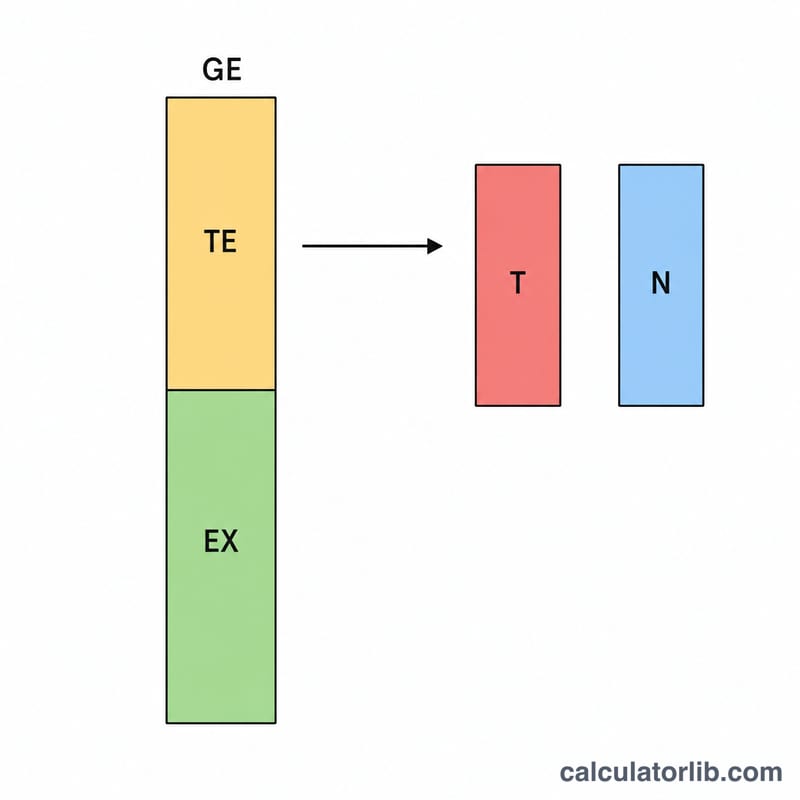
Worked Example
Suppose the gross estate is $20,000,000, the exemption is $15,000,000, and the rate is 40%. Taxable estate = \(20{,}000{,}000 - 15{,}000{,}000 = \$5{,}000{,}000\). Estate tax = \(5{,}000{,}000 \times 0.40 = \) $2,000,000. Net to heirs = \(20{,}000{,}000 - 2{,}000{,}000 = \$18{,}000{,}000\).
FAQ
Is this calculation exact? No. It uses a single flat rate and one exemption. Real estate tax uses graduated brackets, deductions (debts, charitable gifts, marital transfers), and portability rules. Treat the result as a planning estimate.
What exemption should I enter? Use the figure for your country or state and tax year. For US federal purposes in 2026 it is $15,000,000 per person.
Does the spouse exemption apply? Transfers to a surviving spouse are often fully deductible, so the taxable estate may be much lower. Adjust your inputs to reflect this.