
What Is an Expense Ratio?
An expense ratio is the annual fee that mutual funds, index funds, and ETFs charge investors, expressed as a percentage of your invested assets. For example, an expense ratio of 0.5% means you pay $5 per year for every $1,000 invested. These fees cover management, administration, and operating costs and are deducted automatically from the fund's returns — you never see a separate bill, which is exactly why they are so easy to overlook.
How to Use This Calculator
Enter your total investment amount in dollars and the fund's expense ratio as a percentage (you can find it in the fund's prospectus or fact sheet). The calculator instantly shows the annual dollar cost of those fees and what your balance looks like after a single year of fees, assuming no other changes.
The Formula Explained
The math is simple: $$\text{Annual Cost} = \text{Investment} \times \frac{\text{Expense Ratio (\%)}}{100}$$ Dividing by 100 converts the percentage into a decimal multiplier. A 0.20% ratio becomes 0.002, so a $50,000 investment costs $100 a year.
Worked Example
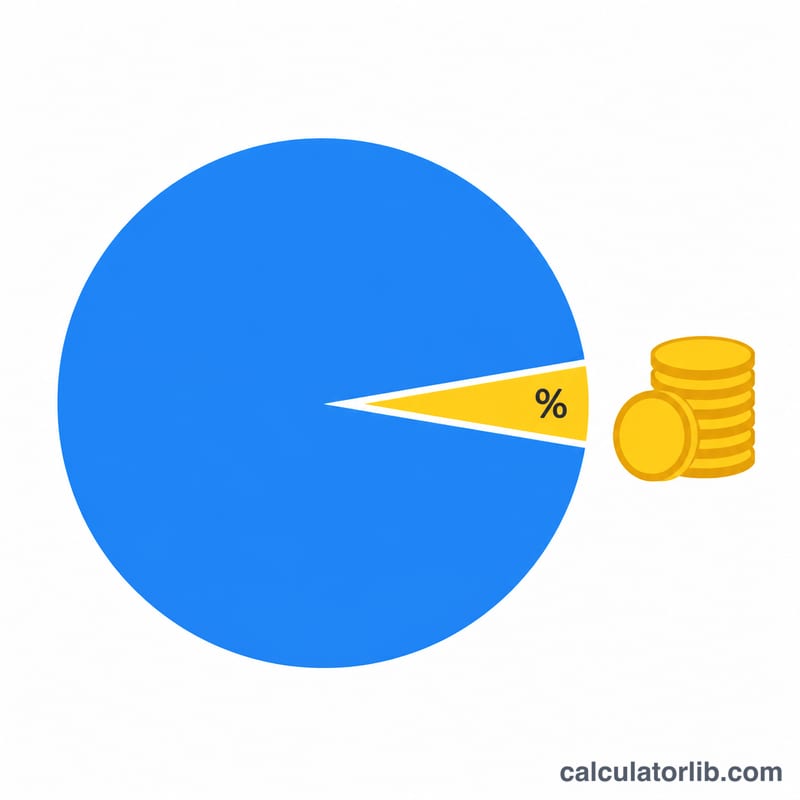
Suppose you invest $10,000 in a fund with a 0.50% expense ratio. The annual cost is $$10{,}000 \times \frac{0.50}{100} = 10{,}000 \times 0.005 = \$50$$ After fees, your year-one balance is $9,950 before any market gains. Over decades, even a fraction of a percent compounds into thousands of dollars of lost growth.
FAQ
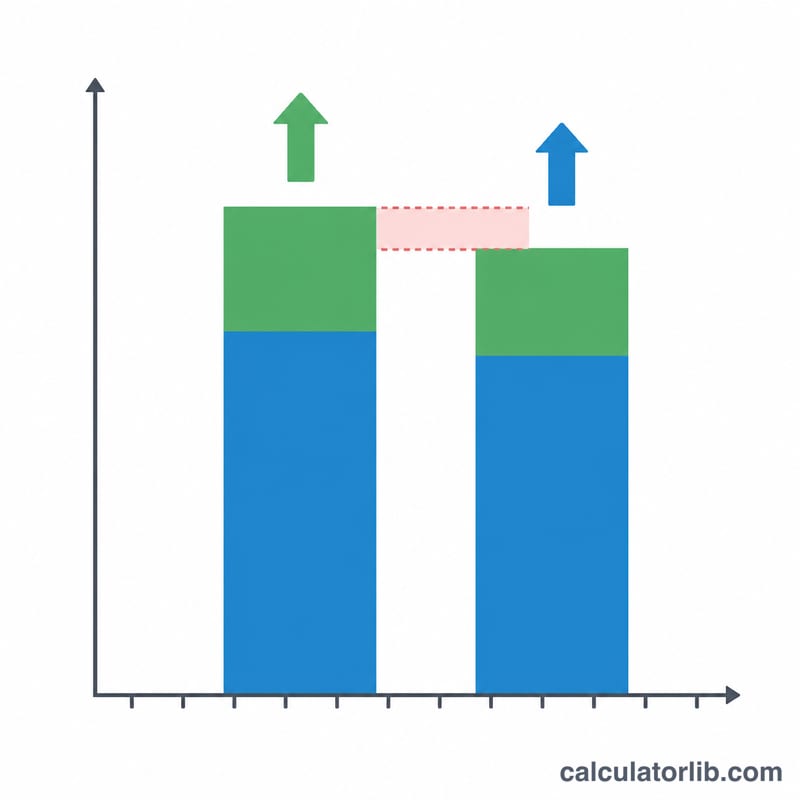
Is a lower expense ratio always better? Generally yes — lower fees mean more of your returns stay invested. Index funds often charge under 0.10%, while actively managed funds can exceed 1%.
Are expense ratios charged on gains or total balance? They are charged on your total assets in the fund, not just your gains.
Do I pay the fee separately? No. It is deducted internally from the fund, lowering its net return rather than appearing as a direct charge.