
What this calculator does
This tool estimates how many hours of exercise you would need to burn a chosen amount of body fat. It combines two well-known fitness figures: the MET (metabolic equivalent) energy formula and the rule that burning 1 kilogram of body fat requires roughly 7200 kcal. The calculation is universal physiology and is not specific to any country; inputs use metric kilograms.
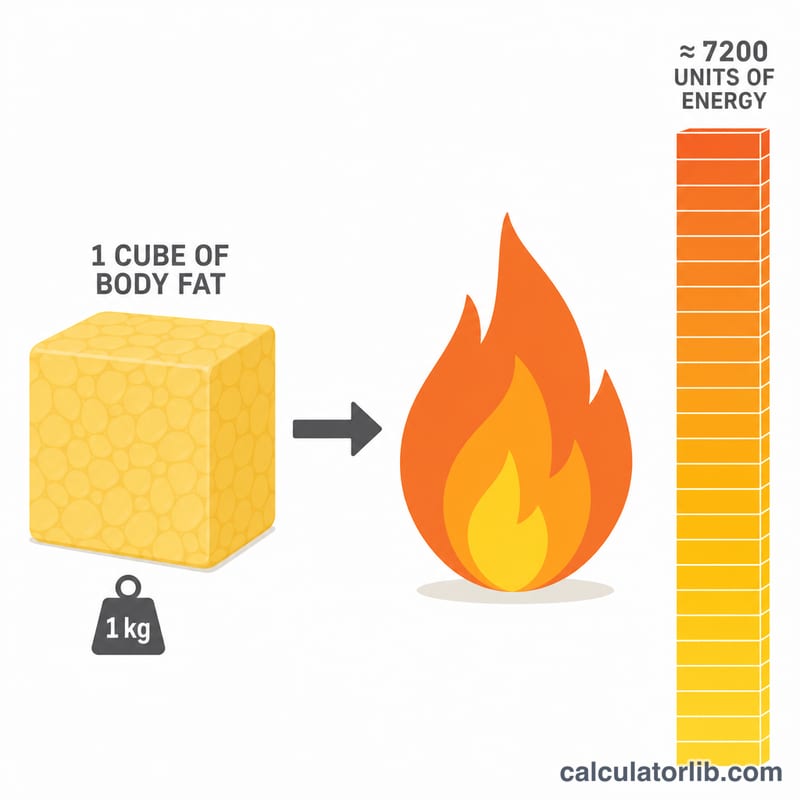
Why 7200 kcal per kilogram?
One gram of pure fat releases about 9 kcal, so 1 kg of pure fat holds about 9000 kcal. Body fat tissue is roughly 20% water, leaving about 80% energy-bearing fat: \(9000 \times 0.8 = 7200\) kcal. That is why burning 1 kg of body fat is modeled as needing about 7200 kcal of energy expenditure.
How to use it
Enter your body weight in kg, the weight of fat you want to lose in kg, and the intensity of your activity in METs. Common MET values: walking 3-4, cycling or swimming 6-8, jogging about 7, running 8-10. Then set how many hours per day you plan to exercise to see the total time spread across days and months.
The formula
Calories burned per hour = METs x bodyWeight(kg) x 1.05. Total calories to burn = fatToLose(kg) x 7200. Total hours = total calories / calories per hour. Days = total hours / daily hours; months use a 30-day month.
$$T = \frac{7200 \times \text{Fat to Lose (kg)}}{1.05 \times \text{METs} \times \text{Body Weight (kg)}}$$$$\text{Days} = \frac{T}{\text{Daily Hours}}$$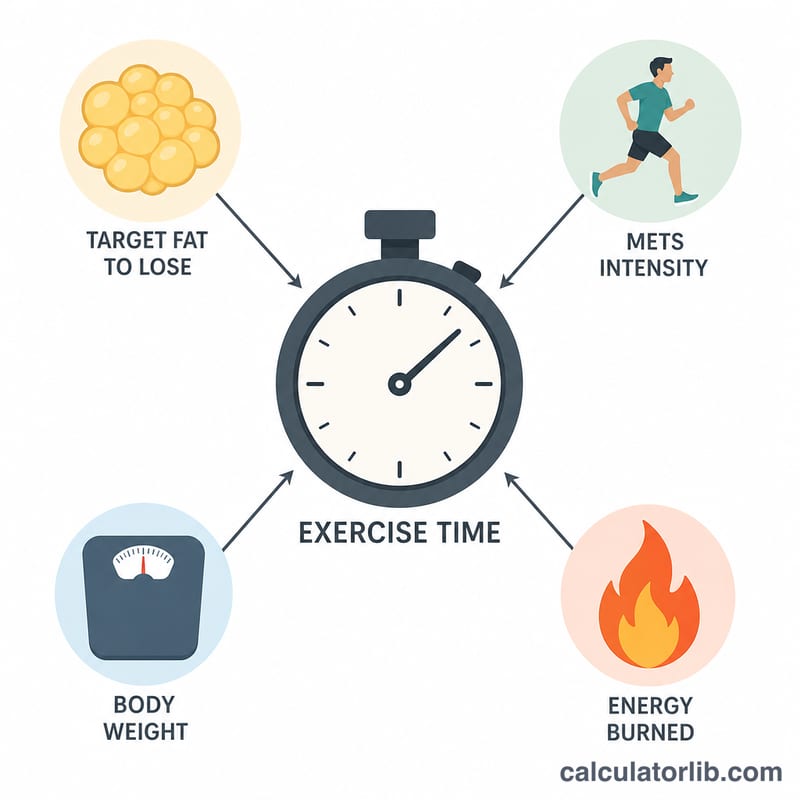
Worked example
For a 60 kg person aiming to lose 5 kg of fat by brisk walking (4 METs): calories per hour = \(4 \times 60 \times 1.05 = 252\) kcal/h. Total calories = \(5 \times 7200 = 36000\) kcal. Total time = \(36000 / 252 =\) about 142.86 hours. At 1 hour per day that is roughly 143 days, or about 4.8 months.
FAQ
Is this accurate? No, it is an idealized estimate. It assumes every calorie burned comes from fat and that you do not eat more to compensate, which is rarely true in practice.
What MET value should I pick? Use the activity that matches your routine; higher intensity burns more per hour and shortens the total time.
Is fast fat loss good? Slow, gradual loss is generally healthier and more sustainable than aggressive targets.