
What this calculator does
This tool estimates how much milk or formula a baby needs each day and at each feed, based on body weight. It uses the widely cited guideline of about 150 mL of milk per kilogram of body weight per day for healthy, full-term infants. This is a general guide only — always follow the advice of your pediatrician or health visitor, especially for newborns, premature babies, or those with medical conditions.
How to use it
Enter your baby's weight in kilograms, the number of feeds you give in a 24-hour period, and the mL-per-kg rate (the default is 150). The calculator returns the total daily amount and the amount per feed, in both millilitres and fluid ounces (1 oz ≈ 29.5735 mL).
The formula explained
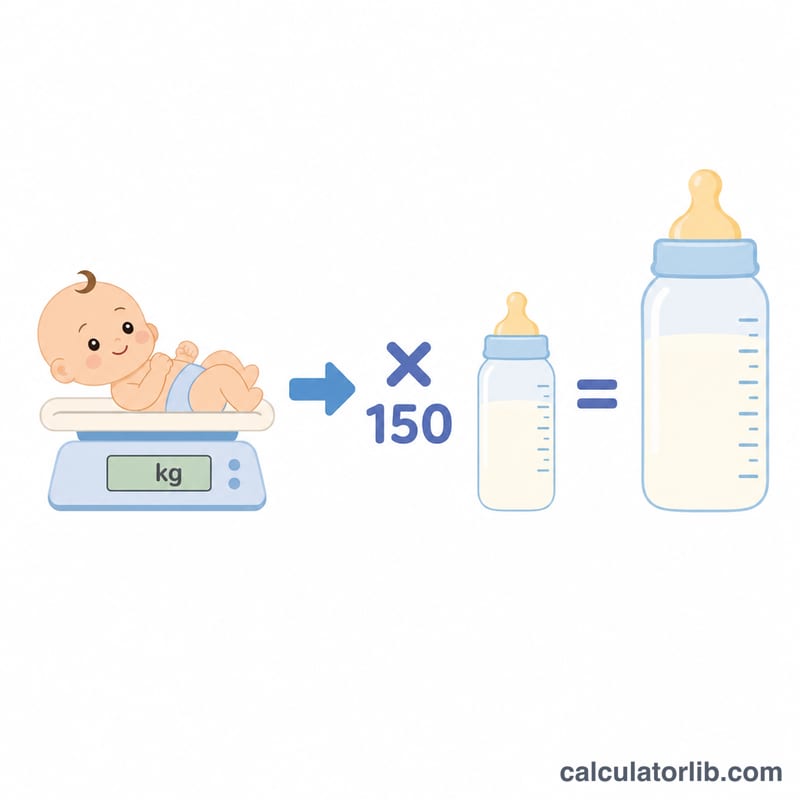
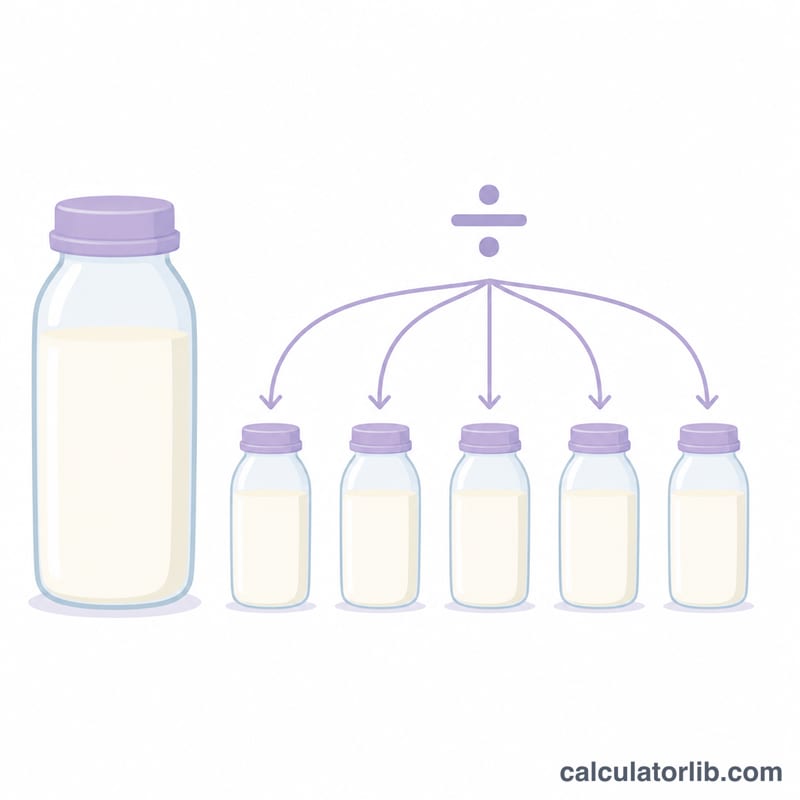
Daily amount = weight (kg) × rate (mL/kg/day). For example, the default rate is 150 mL/kg/day. The per-feed amount is simply the daily total divided by the number of feeds. Some babies feed more often with smaller amounts; others less often with larger amounts — the daily total is what matters most.
$$\text{Per Feed (mL)} = \frac{\text{Weight (kg)} \times \text{mL per kg per day}}{\text{Feeds per day}}$$
Worked example
A baby weighing 4 kg at 150 mL/kg/day needs \(4 \times 150 = 600\) mL per day. Split across 8 feeds, that is \(600 \div 8 = 75\) mL per feed, or about 2.54 oz per feed.
FAQ
Is 150 mL/kg right for every baby? It is a common average for full-term infants; some need 120–180 mL/kg. Your doctor may recommend a different rate.
Does this apply to breastfed babies? Breastfed babies usually self-regulate intake. This tool is most useful for bottle/formula feeding.
Why show ounces? Many bottles and formula instructions in some countries use fluid ounces, so both units are provided for convenience.