
What This Calculator Does
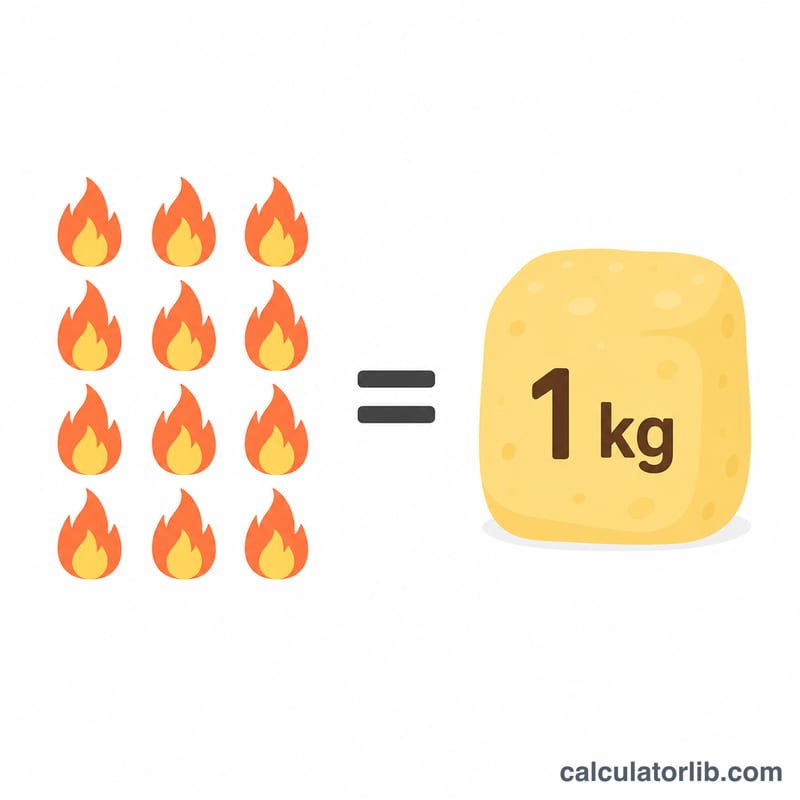
The Weight Loss Calculator turns your daily calorie deficit into an estimate of how much weight you can expect to lose each week and month. It uses the widely cited rule that roughly 7,700 kilocalories equal one kilogram of stored body fat (about 3,500 kcal per pound). This tool is universal — the energy-to-fat relationship is the same everywhere.
How to Use It
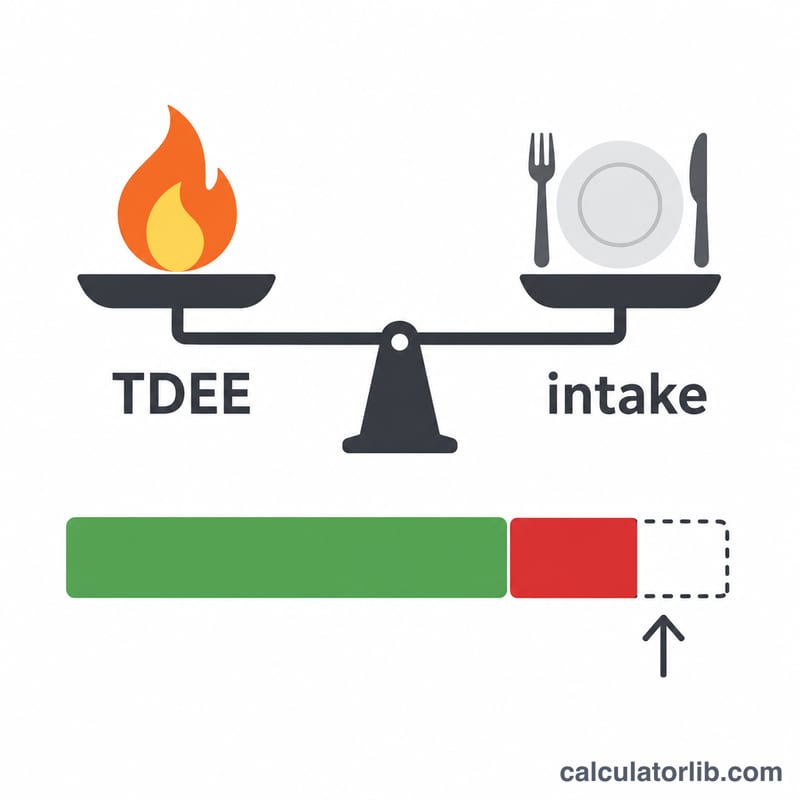
Enter your TDEE (Total Daily Energy Expenditure — the calories your body burns in a day) and your planned daily calorie intake. The calculator subtracts intake from TDEE to find your daily deficit, multiplies it by 7 for the week, then divides by 7,700 to convert energy into kilograms of fat. It also shows the result in pounds and a rough monthly figure.
The Formula Explained
Daily deficit = TDEE − Intake. Weekly loss in kg = (deficit × 7) ÷ 7700.
$$\text{Loss}_{kg/week} = \frac{\left(\text{TDEE} - \text{Intake}\right) \times 7}{7700}$$
Because energy balance drives fat change, a larger sustained deficit means faster loss — but very large deficits are hard to maintain and can cost muscle, so a 300–700 kcal daily deficit is commonly recommended.
Worked Example
Suppose your TDEE is 2,500 kcal and you eat 2,000 kcal per day. Your daily deficit is 500 kcal. Over a week that is 3,500 kcal. Dividing by 7,700 gives about 0.45 kg per week (roughly 1 lb), or about 1.97 kg per month.
$$\text{Loss}_{kg/week} = \frac{\left(2500 - 2000\right) \times 7}{7700} = \frac{3500}{7700} \approx 0.45\ \text{kg/week}$$
FAQ
Is the 7,700 kcal/kg rule exact? No — it's an estimate. Real weight change also reflects water, glycogen, and metabolic adaptation, so actual results vary.
What if my intake is higher than my TDEE? The deficit becomes negative, meaning you'd gain rather than lose weight.
How big a deficit is safe? Many guidelines suggest aiming for around 0.5–1 kg loss per week and not eating below your basic needs without professional advice.