
What is the Ladder Angle Calculator?
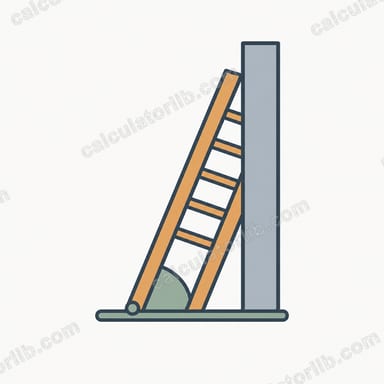
This tool finds the angle a leaning ladder makes with the ground based on its vertical height (how high up the wall the ladder touches) and its base distance (how far the feet sit from the wall). It also tells you the ladder length you need and the base distance that produces the safest setup angle. The math is universal geometry, so it applies anywhere.
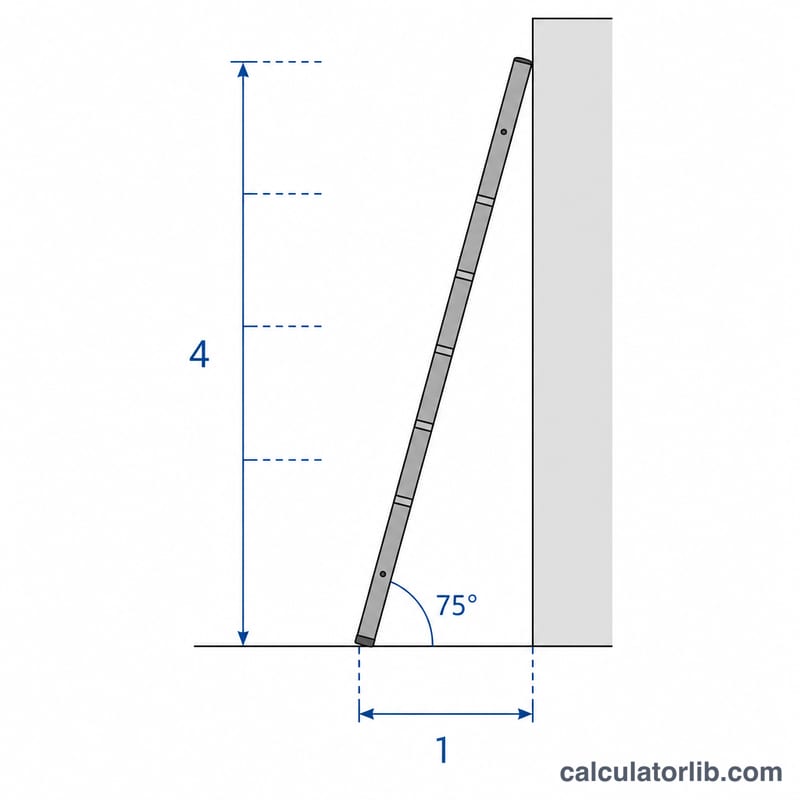
How to use it
Enter the vertical height the ladder reaches and the horizontal distance from the wall to the ladder's feet, using the same unit (metres in this example). The calculator returns the angle in degrees, the total ladder length (the hypotenuse), and the recommended base distance for a safe angle. Aim for an angle close to 75°.
The formula explained
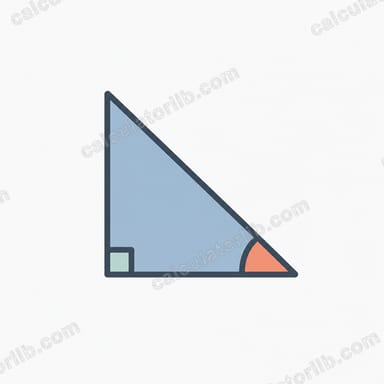
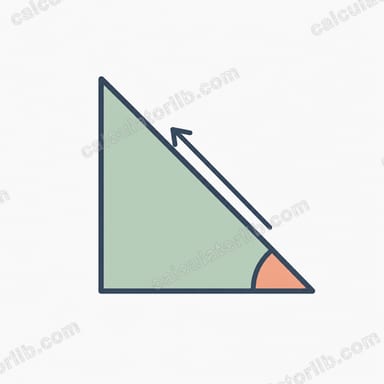
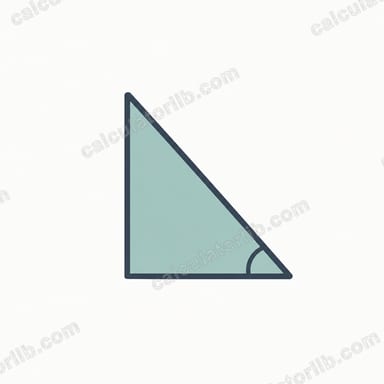
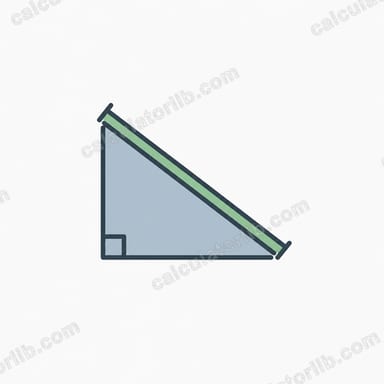
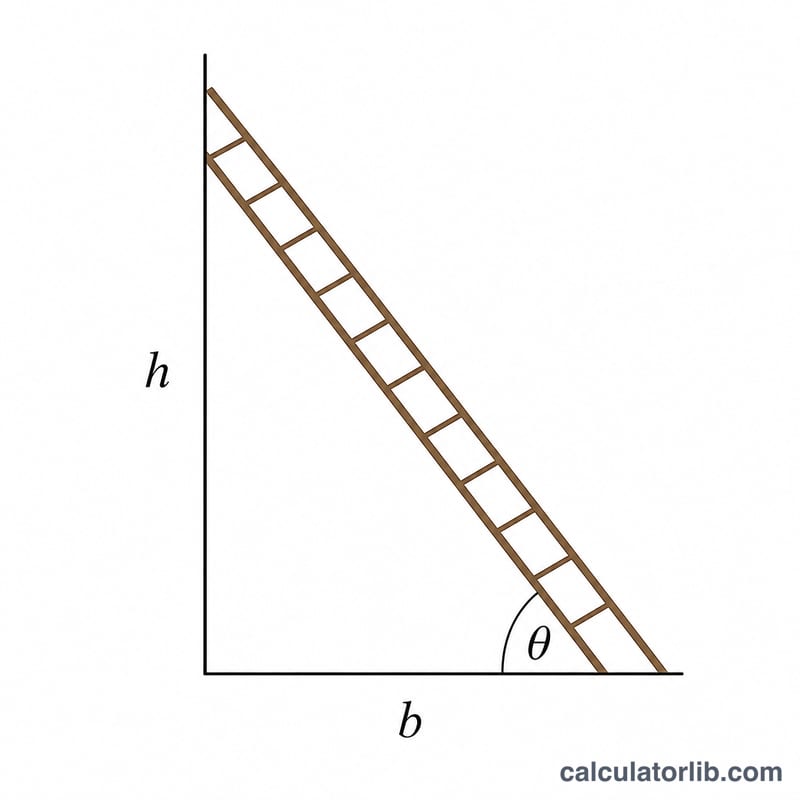
A ladder against a wall forms a right triangle. The wall is the vertical side (height h), the ground is the horizontal side (base b), and the ladder is the hypotenuse. The angle θ at the foot of the ladder is $$\theta = \arctan\left(\frac{h}{b}\right).$$ The ladder length is $$\sqrt{h^{2} + b^{2}}.$$ The widely used "4-to-1 rule" sets the base at one quarter of the working height, giving roughly 75.5°.
Worked example
Suppose a ladder reaches a height of 4 m and its feet are 1 m from the wall. The angle is $$\arctan\left(\frac{4}{1}\right) = 75.96^{\circ}$$ — close to ideal. The ladder length needed is $$\sqrt{16 + 1} = 4.12 \text{ m}.$$ The recommended base distance for a perfect 75.5° angle would be $$\frac{4}{\tan(75.5^{\circ})} \approx 1.04 \text{ m}.$$
FAQ
What angle should a ladder be? About 75° from the ground, which matches the 4-to-1 rule: 1 unit out for every 4 units up.
What if the angle is too steep or too shallow? Too steep (over ~80°) risks tipping backward; too shallow (under ~70°) risks the feet sliding out. Adjust the base distance.
Does the unit matter? No — use any consistent unit for height and base. The angle is the same; the ladder length comes out in that same unit.