
What Is a Loan Origination Fee?
A loan origination fee is an upfront charge a lender collects for processing and underwriting a new loan. It is usually quoted in "points," where one point equals 1% of the loan amount. This calculator converts those points into a precise dollar figure and shows the net proceeds you can expect to receive after the fee is taken out.
How to Use the Calculator
Enter your total loan amount and the origination fee percentage (points) your lender quotes. The tool instantly multiplies them to find the fee in dollars and subtracts it from the loan to reveal your net proceeds. Adjust the points value to compare different lender offers side by side.
The Formula Explained
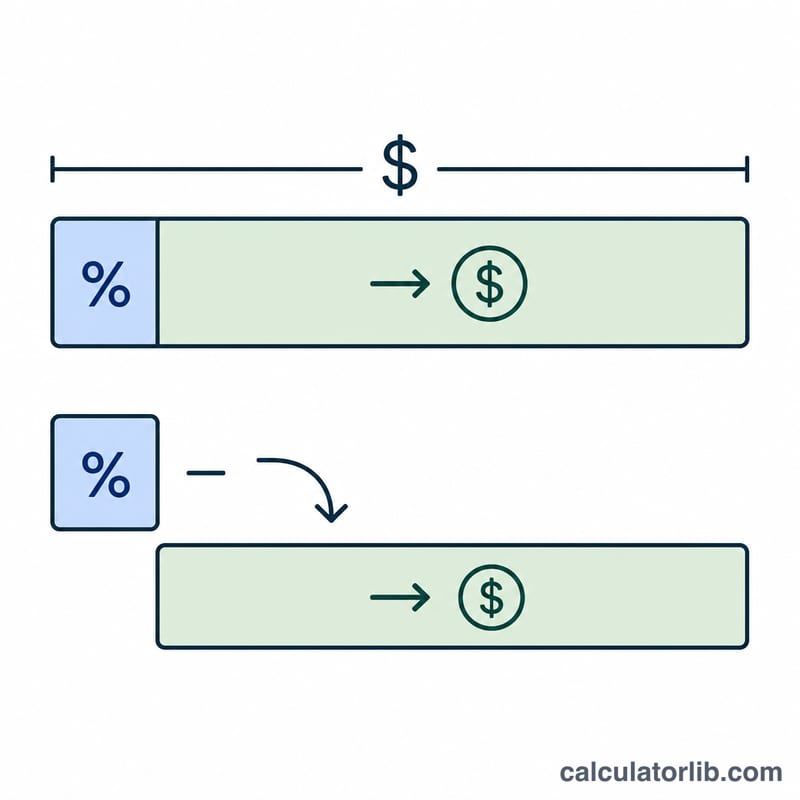
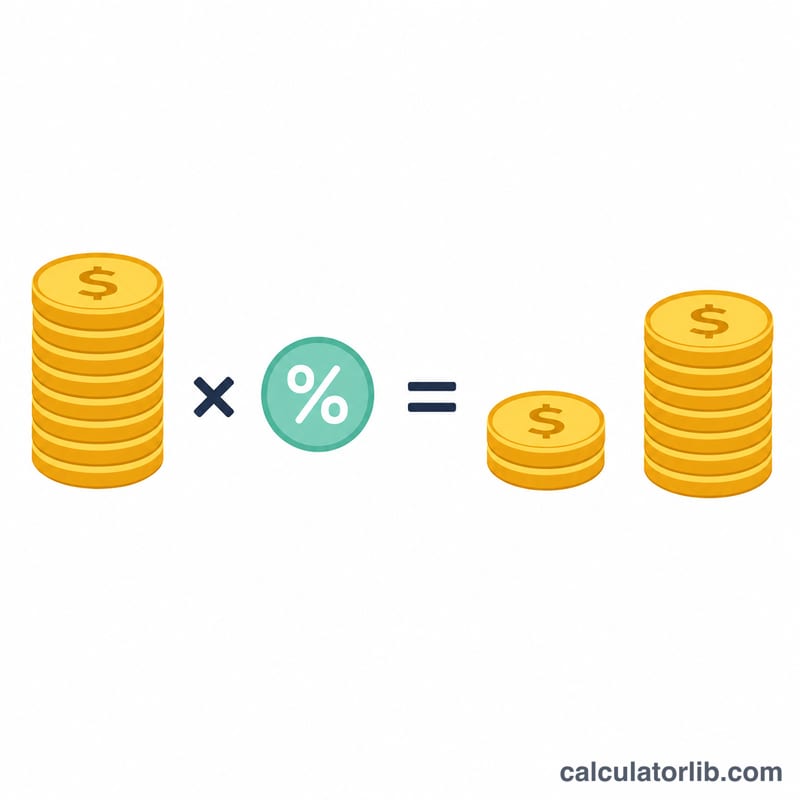
The math is straightforward. The fee equals the loan amount multiplied by the points percentage divided by 100: $$\text{Fee} = \text{Loan Amount} \times \frac{\text{Points \%}}{100}$$ Net proceeds are simply the loan amount minus that fee. Because origination fees are often financed into the loan or deducted from disbursement, knowing the dollar amount helps you compare the true cost of borrowing.
Worked Example
Suppose you take a $250,000 loan with a 1% (1 point) origination fee. The fee is $$\$250{,}000 \times \frac{1}{100} = \$2{,}500$$ Your net proceeds would be $$\$250{,}000 - \$2{,}500 = \$247{,}500$$ If the lender charged 2 points instead, the fee would double to $5,000.
FAQ
Is one point always 1%? Yes — in lending, one origination point equals 1% of the loan principal.
Does this include other closing costs? No. This calculator covers only the origination fee. Appraisal, title, and other closing costs are separate.
Is the fee tax deductible? Sometimes, depending on the loan type and jurisdiction. Consult a tax professional for your specific situation.