

How the translation works
Type letters and you get Morse; type dots and dashes and you get letters. Detect decides by itself; pick Text to Morse or Morse to text to force a direction. In Morse, letters are separated by a space and words by a slash. When decoding, the look-alike signs · • − – and _ are accepted, and three spaces also separate words.
The Latin (ITU) alphabet is Recommendation ITU-R M.1677-1: the 26 letters, the digits, the punctuation it defines and É, the one accented letter in it (..-..). Other accents are dropped before encoding, so "é" in Spanish or "ă" in Vietnamese become their base letter. Cyrillic (Russian) uses the Russian telegraph table. Signs that are not in either table are shown as # and listed under the result.
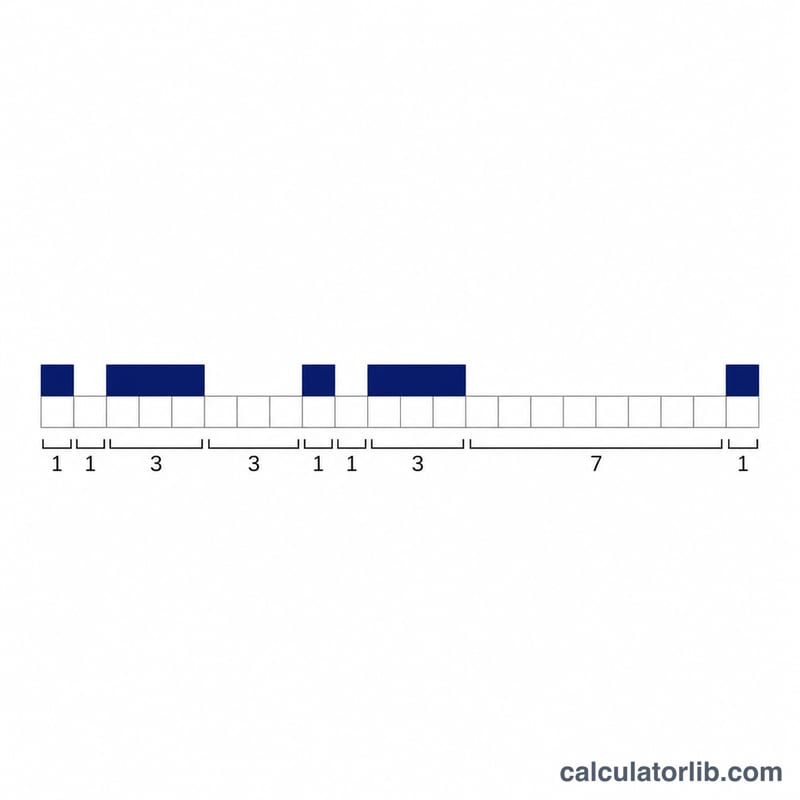
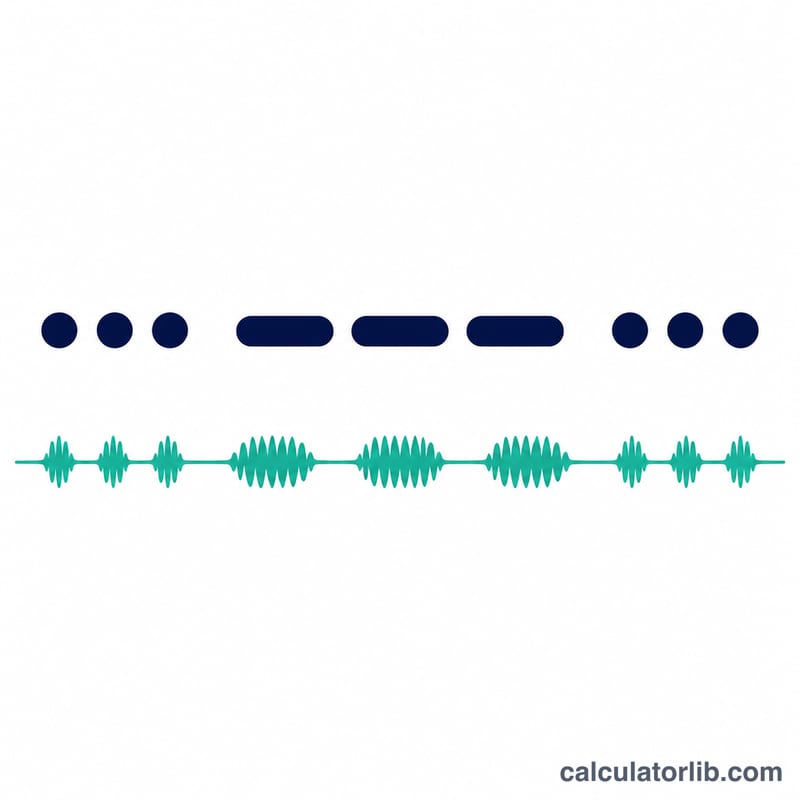
Play sounds the code at 600 Hz with standard PARIS timing: a dash is three dots, the gap inside a letter one dot, between letters three dots and between words seven. At 20 words per minute a dot lasts 60 ms.
Examples
“SOS” is ... --- .... “Hello world” is .... . .-.. .-.. --- / .-- --- .-. .-.. -... .-- .- - . .-. decodes to “WATER”.
FAQ
Is my text sent anywhere? No. Translation and sound both run in your browser.
Why does Play not start by itself? Browsers only allow sound after you click, and the code stops when you leave the page.