
What Is the Ordering Decimals Calculator?
This tool takes any list of decimal numbers and arranges them in order — either from smallest to largest (ascending) or largest to smallest (descending). It compares the true numeric value of each entry, so it correctly ranks tricky cases like 0.5 vs 0.45 or 1.2 vs 1.20 that often confuse students when comparing digit by digit.
How to Use It
Type your numbers into the box separated by commas or spaces, for example 3.14, 0.5, 2.718, 1.41. Choose ascending or descending order and view the sorted list along with the count, smallest value, and largest value.
How Ordering Decimals Works
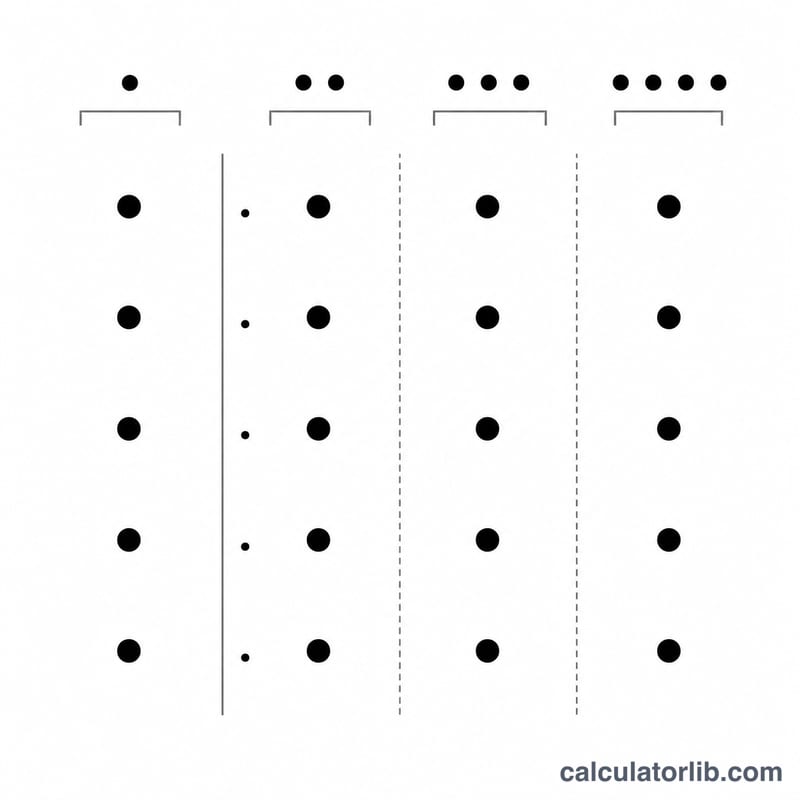
To order decimals correctly, compare them place by place from the left. First compare the whole-number parts. If they are equal, compare the tenths, then the hundredths, and so on. A useful trick is to pad each number with trailing zeros so they all have the same number of decimal places, then compare them as if they were whole numbers. This calculator does the comparison using exact numeric values, removing the guesswork.
$$\text{Sorted} = \operatorname{sort}_{\uparrow}\left(\text{Decimal numbers}\right), \quad a_1 \le a_2 \le \cdots \le a_n$$For descending order, the comparison is reversed:
$$\text{Sorted} = \operatorname{sort}_{\downarrow}\left(\text{Decimal numbers}\right), \quad a_1 \ge a_2 \ge \cdots \ge a_n$$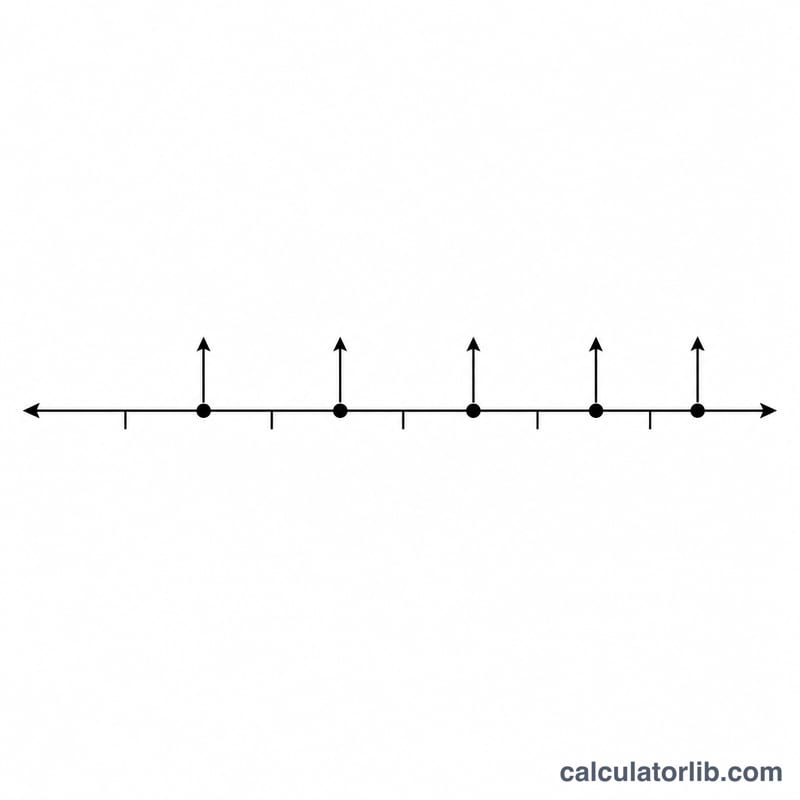
Worked Example
Order these ascending: 3.14, 0.5, 2.718, 1.41. Compare whole-number parts: \(0 < 1 < 2 < 3\). Since each whole part is different, the order follows directly: 0.5, 1.41, 2.718, 3.14. The smallest is 0.5 and the largest is 3.14.
FAQ
Does 0.5 equal 0.50? Yes. Trailing zeros do not change a decimal's value, so 0.5 and 0.50 are treated as equal.
Can I mix whole numbers and decimals? Absolutely. Whole numbers like 4 are ranked exactly where their value falls, e.g. between 3.9 and 4.1.
Does it handle negative decimals? Yes. Negative numbers are smaller than positive ones, so \(-0.3\) comes before \(0.1\) in ascending order.