
What Is the Percent of Total Calculator?
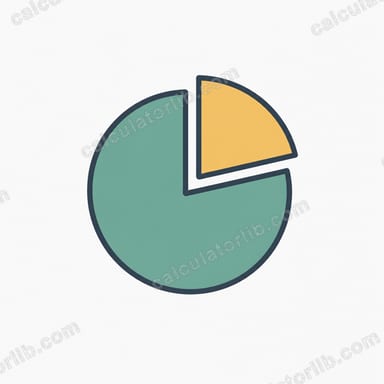
This calculator answers a common everyday question: "What percent is one number of another?" Given a part and a total, it tells you what percentage the part represents of the whole. It works for any pair of numbers — test scores, budgets, sales figures, survey results, or progress toward a goal.
How to Use It
Enter two values: the Part (the smaller piece or value you're measuring) and the Total (the whole or maximum). Click calculate and the tool returns the percentage instantly. For example, if you scored 45 out of 50 on a test, the part is 45 and the total is 50.
The Formula Explained
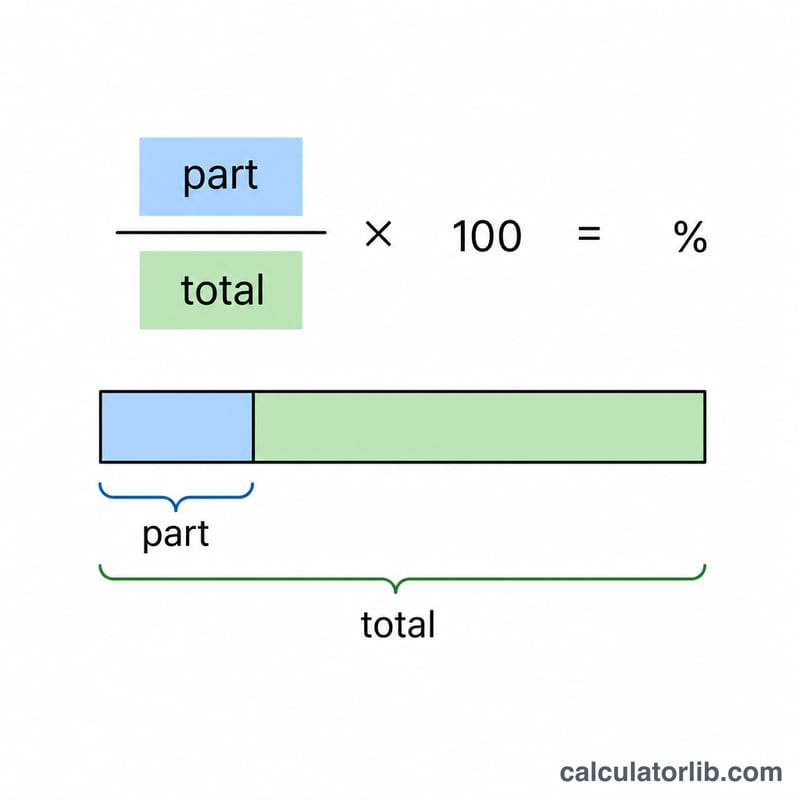
The math is simple:
$$\text{percent} = \frac{\text{part}}{\text{total}} \times 100$$
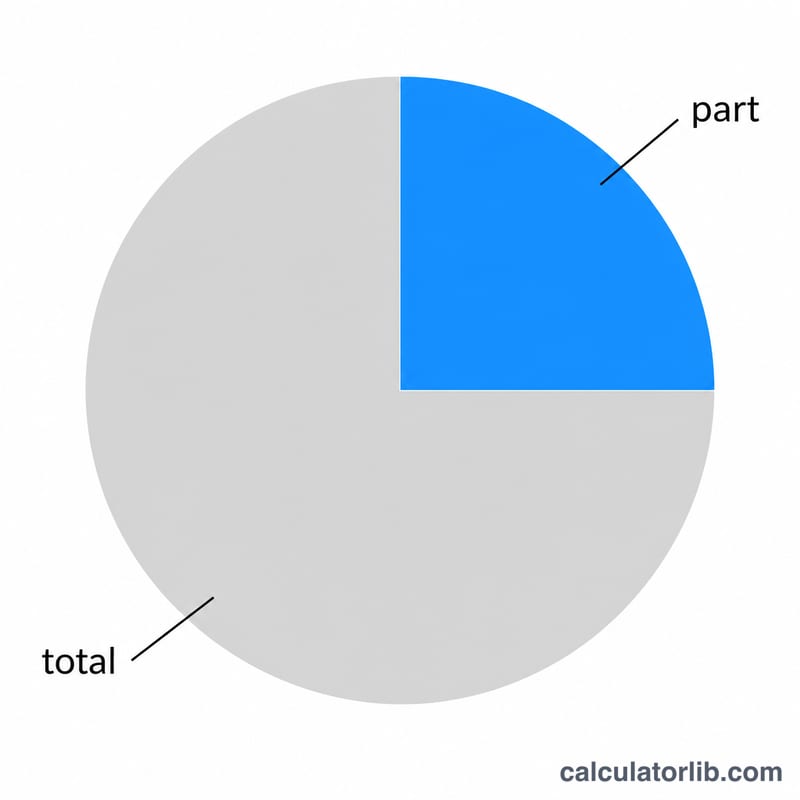
You divide the part by the total to get a decimal fraction, then multiply by 100 to convert it into a percentage. Dividing first answers "what fraction of the whole is this?" and multiplying by 100 expresses that fraction in the familiar percent format.
Worked Example
Suppose a company sold 25 units out of a target of 200. The part is 25 and the total is 200.
$$\text{percent} = \frac{25}{200} \times 100 = 0.125 \times 100 = \mathbf{12.5\%}$$
So 25 is 12.5% of 200.
FAQ
What if the part is bigger than the total? You'll get a percentage greater than 100%. For example, 250 out of 200 is 125% — useful when something exceeds a goal or budget.
Can the total be zero? No. Dividing by zero is undefined, so the total must be a non-zero number. This calculator returns 0% if the total is left at zero.
How is this different from percentage change? This finds what fraction one number is of another. Percentage change measures the difference between an old and new value relative to the old value.