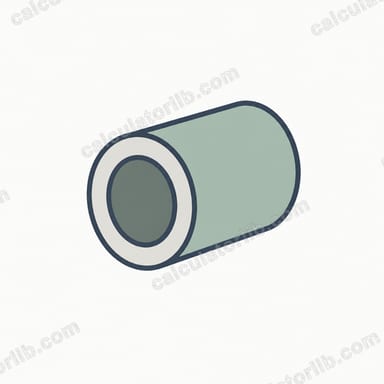

What the Pipe Volume Calculator Does
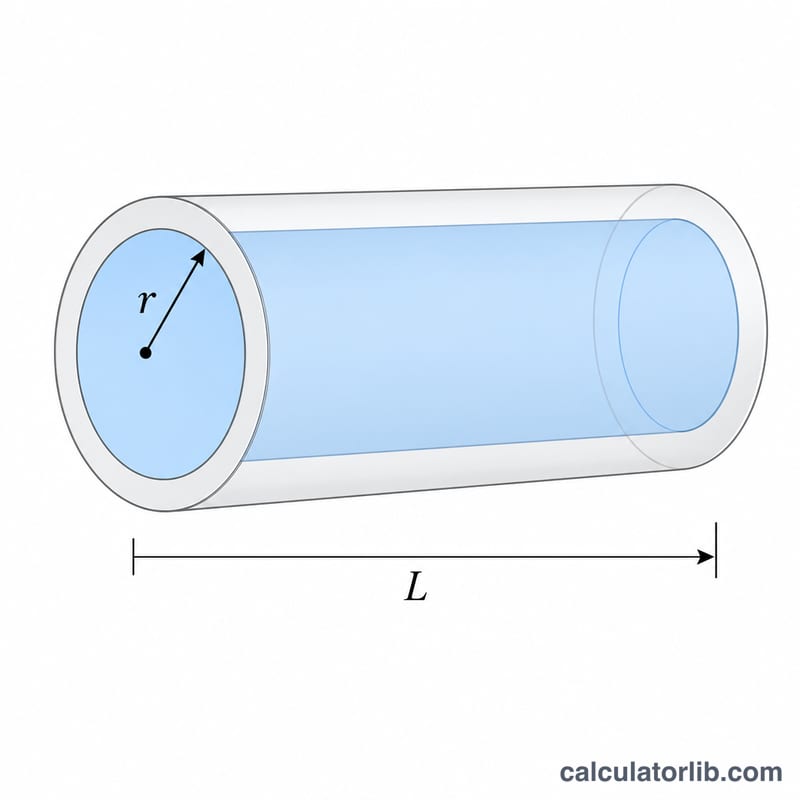
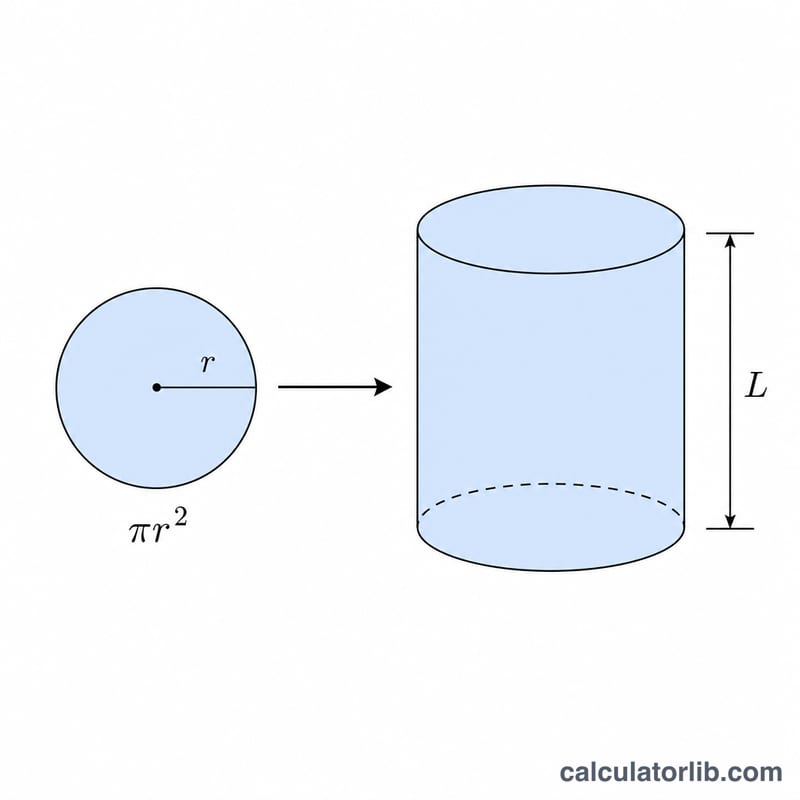
This calculator works out the internal volume of a cylindrical pipe from two simple measurements: the pipe's inner radius and its length. Because a pipe is just a long cylinder, its volume is found by multiplying the area of the circular cross-section by the length. The tool accepts measurements in millimetres, centimetres, metres, inches or feet, converts everything to a common base, and returns the volume in several units at once — including litres, which is especially handy for plumbing, irrigation and tank-filling work.
How to Use It
- Pipe Radius — enter the inner radius (half the inside diameter). If you only know the diameter, divide it by two first.
- Radius Unit — choose mm, cm, m, in or ft to match how you measured.
- Pipe Length — enter the run length of the pipe.
- Length Unit — pick the unit for the length (it can differ from the radius unit).
Internally each value is converted to metres (mm ÷ 1000, cm ÷ 100, in × 0.0254, ft × 0.3048), so mixed units are handled correctly.
The Formula
The calculator uses the standard cylinder volume equation:
V = π × r² × L
Here r is the radius and L is the length, both in metres after conversion. The result is then expressed in cubic millimetres, cubic centimetres, cubic metres, cubic inches, cubic feet and litres.
Worked Example
Suppose a pipe has a radius of 50 mm and a length of 3 m.
- Convert radius: 50 mm ÷ 1000 = 0.05 m
- Length is already 3 m
- V = π × (0.05)² × 3 = π × 0.0025 × 3 ≈ 0.02356 m³
That equals about 23.56 litres (0.02356 × 1000), or roughly 0.832 cubic feet.
FAQ
Should I use the inner or outer radius? For the volume of liquid a pipe can hold, always use the inner radius. The outer radius would overstate capacity by including the wall thickness.
Can I mix units, like radius in inches and length in feet? Yes. Each input is converted to metres separately before the volume is calculated, so any combination works.
How do I find volume in litres? The calculator does this automatically: 1 cubic metre = 1000 litres. In the example above, 0.02356 m³ becomes 23.56 litres.