
What Is a PPM Calculator?
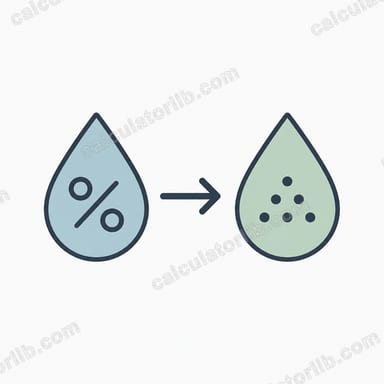
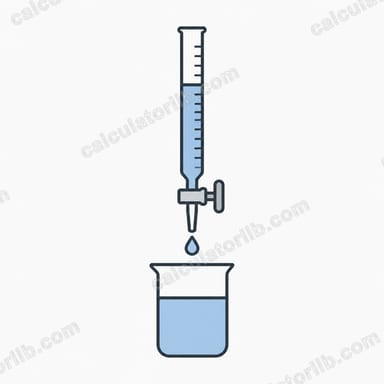
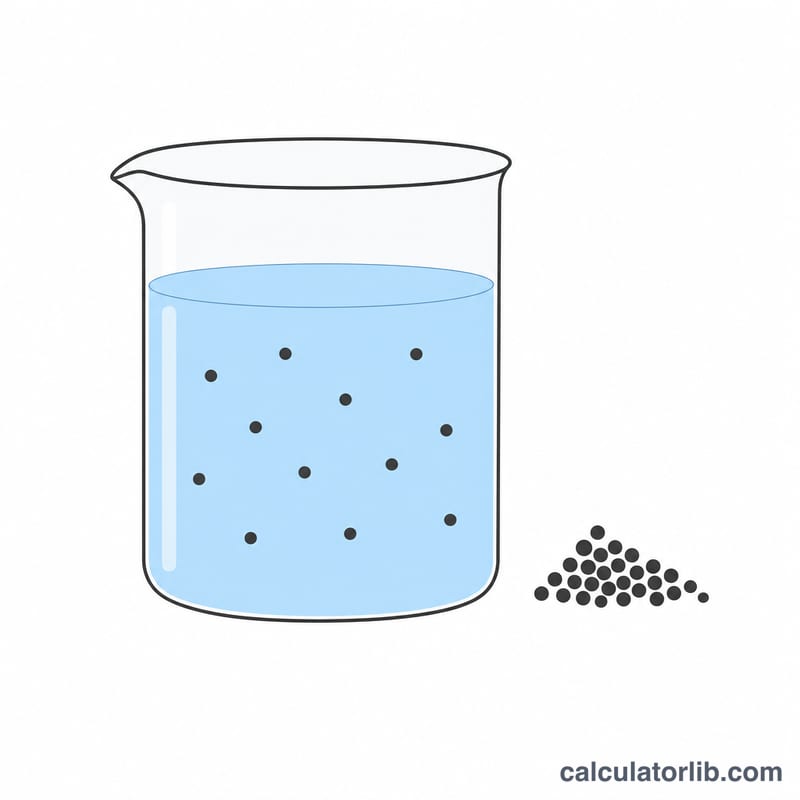
Parts per million (ppm) is a unit used to express very dilute concentrations of one substance within another. One ppm means one part of solute for every one million parts of total solution. This PPM calculator converts a mass of solute and a mass of solution into a concentration in ppm, which is widely used in chemistry, water-quality testing, environmental science, and food safety.
How to Use It
Enter the mass of the solute (the dissolved substance) and the mass of the total solution. Make sure both values use the same unit — grams with grams, or milligrams with milligrams. The result is dimensionless, so the units cancel. The calculator instantly returns the concentration in ppm along with the equivalent mass percentage.
The Formula Explained
The core relationship is:
$$\text{ppm} = \frac{\text{mass of solute}}{\text{mass of solution}} \times 1{,}000{,}000$$
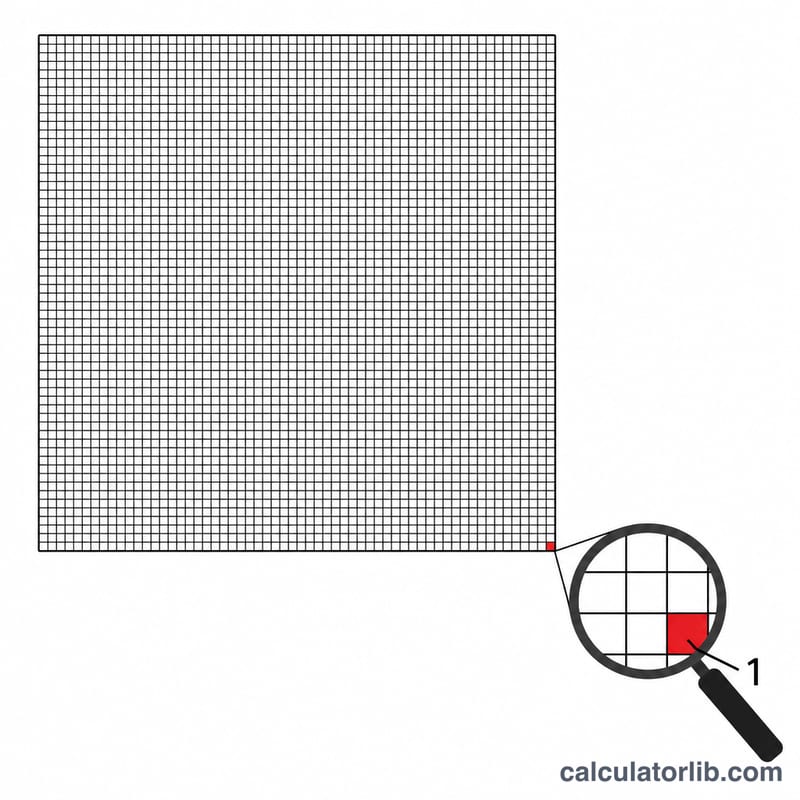
Because ppm is a ratio scaled by one million, 1 ppm is equal to 0.0001%. For dilute water-based solutions, 1 ppm is also roughly equal to 1 mg per liter, since 1 liter of water weighs about 1,000,000 mg.
Worked Example
Suppose you dissolve 5 grams of salt in 995 grams of water, giving a total solution mass of 1,000 grams. The concentration is:
$$\text{ppm} = \left(\frac{5}{1000}\right) \times 1{,}000{,}000 = 5{,}000 \text{ ppm}$$ That is equivalent to 0.5%.
FAQ
Does the solution mass include the solute? Yes. The mass of solution is the total mass — solute plus solvent combined.
Can I use different units? Both inputs must share the same unit. Because ppm is a ratio, the units cancel out, so the answer is the same whether you use grams or kilograms, as long as you are consistent.
How do I convert ppm to mg/L? For dilute aqueous solutions where the density is about 1 g/mL, ppm and mg/L are numerically equal.