

What Is the Price-to-Book (P/B) Ratio?
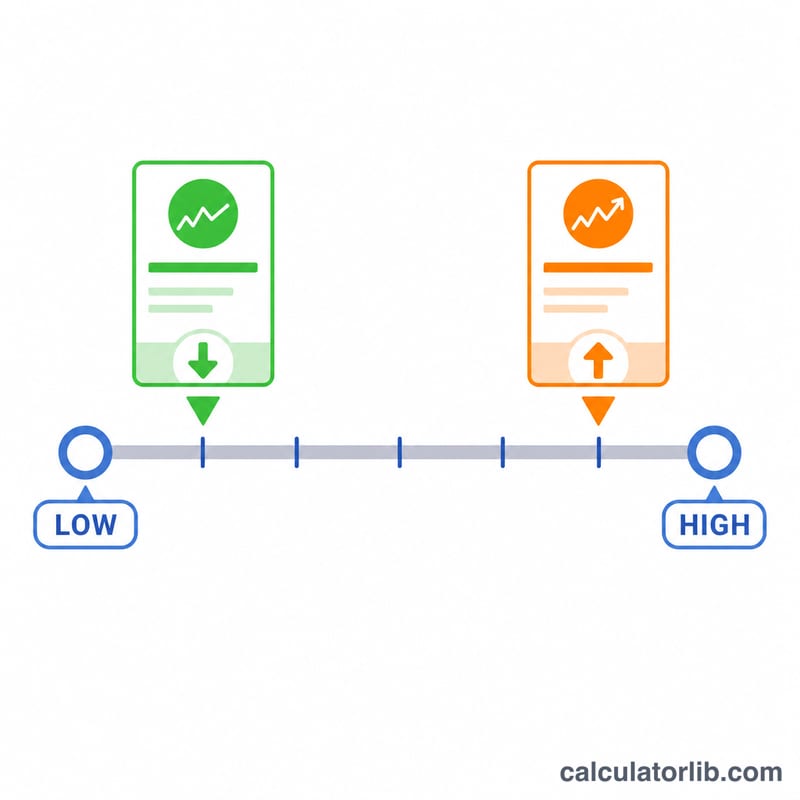
The price-to-book ratio compares a company's market value to its book value. It tells you how much investors are willing to pay for each dollar of net assets. A P/B of 1.0 means the stock trades at exactly its book value; below 1.0 may signal undervaluation, while a high P/B can indicate strong growth expectations — or overvaluation.
How to Use This Calculator
Enter the current price per share (the market price) and the book value per share (total shareholder equity divided by shares outstanding). The calculator divides one by the other to return the P/B multiple instantly.
The Formula Explained
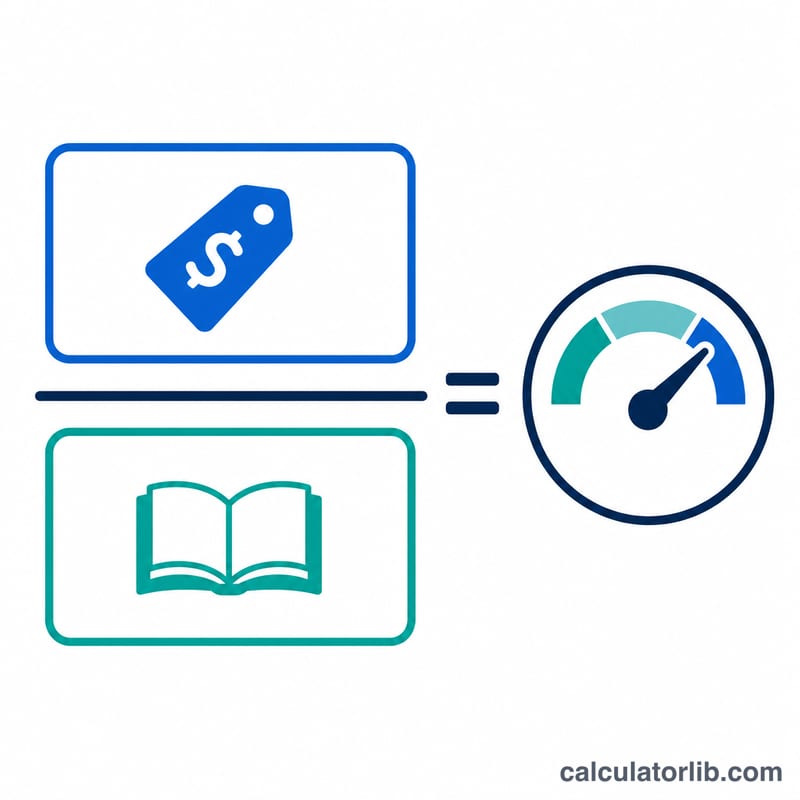
$$\text{P/B} = \frac{\text{Price per Share}}{\text{Book Value per Share}}$$ Book value per share equals total equity (assets minus liabilities) divided by the number of outstanding shares. The ratio normalizes price against the accounting net worth of the business, making it useful for comparing capital-intensive companies and financial firms.
Worked Example
Suppose a stock trades at $50 per share and its book value per share is $25. The P/B ratio is $$50 \div 25 = \mathbf{2.0}$$ Investors are paying twice the company's net asset value per share.
FAQ
What is a good P/B ratio? Traditionally a P/B under 1.0 is considered undervalued, but "good" varies widely by industry. Compare against sector peers.
Can book value per share be negative? Yes, if liabilities exceed assets. A negative book value makes the P/B ratio meaningless.
Is a high P/B always bad? No. High-growth or asset-light companies often justify high P/B ratios with strong returns on equity.