
What Is Net Profit Margin?
Net profit margin is one of the most important profitability metrics in business. It tells you what percentage of your total revenue remains as profit after all expenses — including cost of goods sold, operating costs, interest, and taxes — have been deducted. A higher margin means a more efficient, profitable business.
How to Use This Calculator
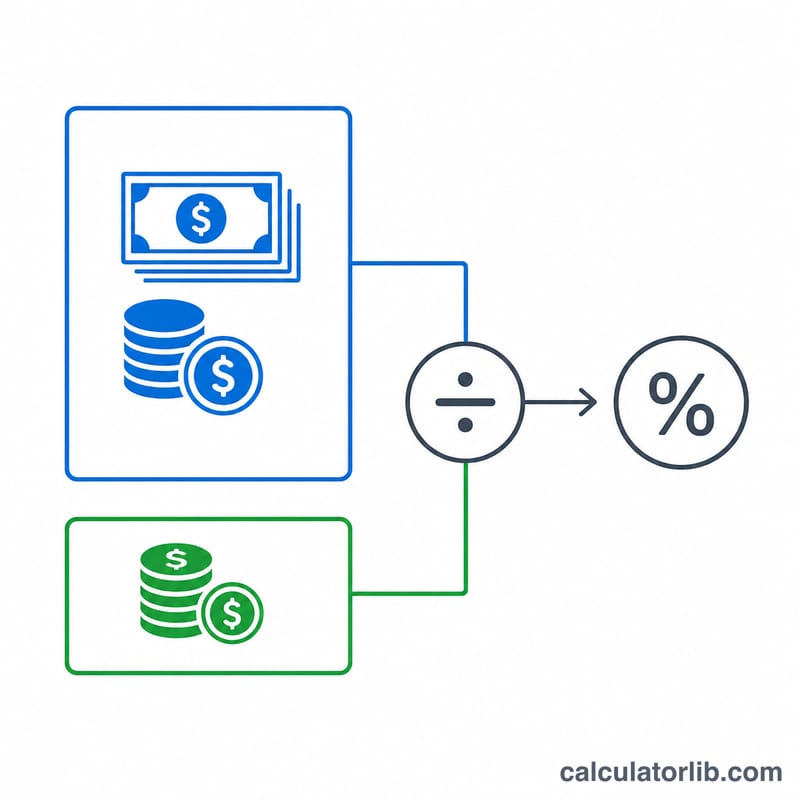
Enter your total Revenue (all sales or income before any costs) and your Net Profit (what's left after every expense). The calculator instantly divides net profit by revenue and multiplies by 100 to give you the margin as a percentage.
The Formula Explained
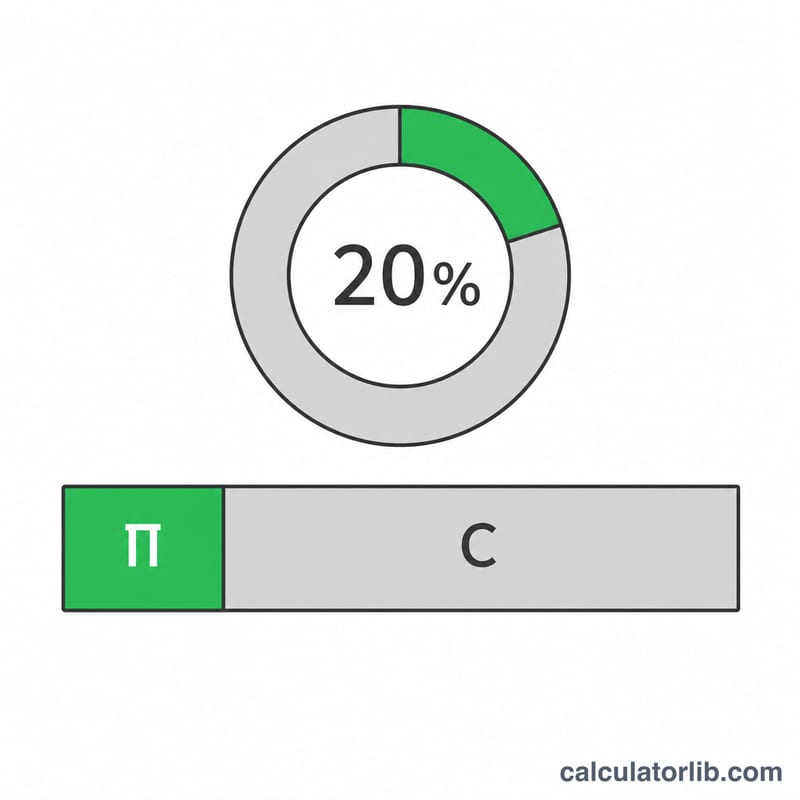
The net profit margin formula is: $$\text{Margin \%} = \frac{\text{Net Profit}}{\text{Revenue}} \times 100$$ For example, if a company earns $100,000 in revenue and keeps $15,000 as net profit, the margin is $$\left(\frac{15{,}000}{100{,}000}\right) \times 100 = 15\%$$ This means 15 cents of every dollar of sales is actual profit.
Worked Example
A small shop has $250,000 in annual revenue and a net profit of $40,000. Its net profit margin is $$\left(\frac{40{,}000}{250{,}000}\right) \times 100 = 16\%$$ Comparing this figure year over year, or against competitors, reveals whether the business is becoming more or less efficient.
FAQ
What is a good net profit margin? It varies by industry. Retail often runs 2–5%, while software companies can exceed 20%. Compare against peers in your sector rather than a universal benchmark.
What's the difference between gross and net margin? Gross margin only subtracts the cost of goods sold, while net margin subtracts all expenses, giving the truest picture of profitability.
Can the margin be negative? Yes. If net profit is negative (a loss), the margin will be negative, indicating the business spent more than it earned.