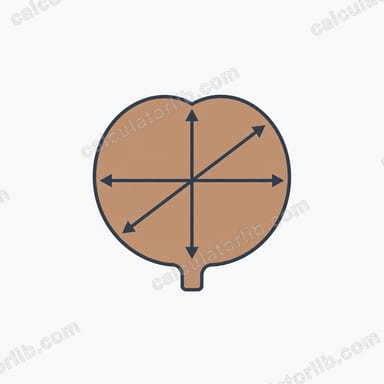

What the Prostate Volume Calculator Does
This calculator estimates the size of the prostate gland in cubic centimetres (cm³, equivalent to millilitres) using three simple measurements taken from imaging, usually transrectal ultrasound (TRUS) or MRI. It applies the widely used prolate ellipsoid formula and also gives you reference PSA density thresholds, which clinicians worldwide use to interpret prostate-specific antigen results in context. It is an educational and clinical-support tool, not a diagnosis.
The Inputs You Need
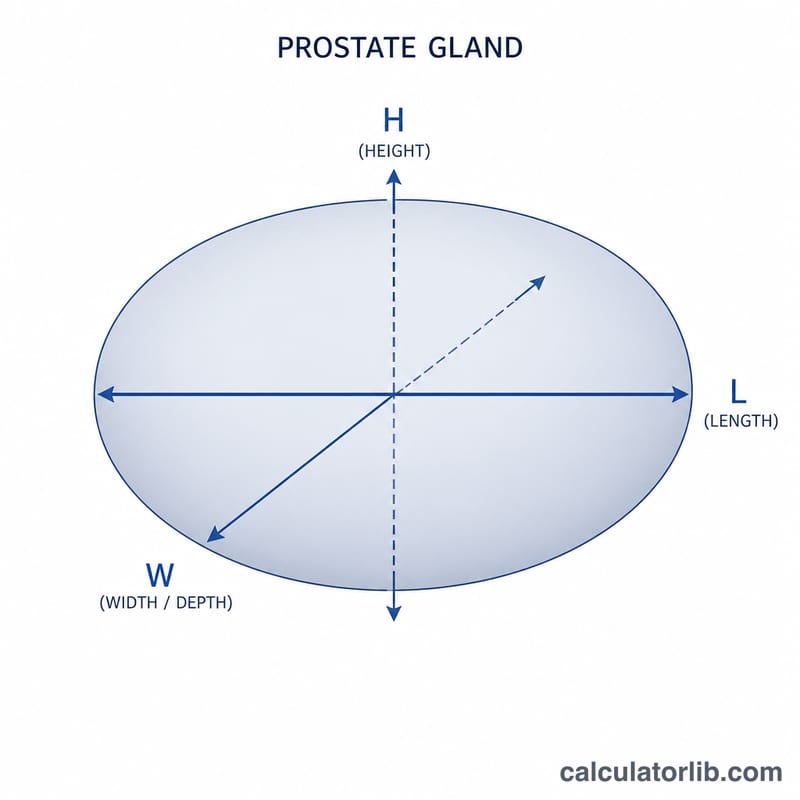
- Length (cm): the longest measurement of the prostate, typically front-to-back (anteroposterior) or top-to-bottom (craniocaudal).
- Width (cm): the transverse measurement, side to side.
- Height (cm): the remaining perpendicular dimension.
All three values must be in centimetres. They are usually reported directly on an ultrasound or MRI scan report.
The Formula Explained
The calculator uses the prolate ellipsoid approximation:
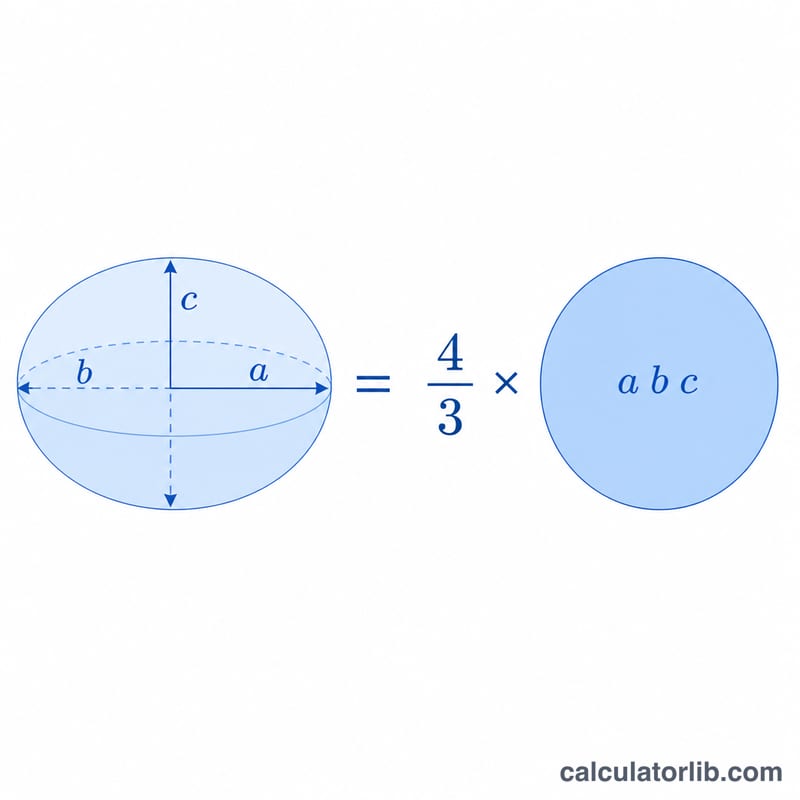
Volume = Length × Width × Height × 0.523
The constant 0.523 is π/6 (≈0.5236), which converts the bounding box of the three diameters into the volume of an ellipsoid — the shape that best approximates a healthy prostate.
From the volume, the tool also derives two PSA density reference points so you can compare them with a measured PSA:
- Normal upper limit: Volume × 0.067
- Suspicious threshold: Volume × 0.15
PSA density is calculated by dividing a patient's serum PSA by the prostate volume; values around 0.15 ng/mL/cm³ or higher are generally considered more concerning for clinically significant disease.
Worked Example
Suppose a TRUS report gives Length = 4.5 cm, Width = 4.0 cm, and Height = 3.5 cm.
Volume = 4.5 × 4.0 × 3.5 × 0.523 = 32.9 cm³.
The reference PSA figures would be: normal-range PSA up to about 32.9 × 0.067 ≈ 2.2 ng/mL, with a suspicious level near 32.9 × 0.15 ≈ 4.9 ng/mL.
Frequently Asked Questions
What is a normal prostate volume? A typical adult prostate is around 20–30 cm³. Volumes above roughly 30–40 cm³ suggest enlargement (benign prostatic hyperplasia), though normal size increases with age.
Why 0.523 and not 0.52? The constant is π/6, approximately 0.5236. Many calculators round to 0.52 or 0.523; the small difference has minimal impact on the result.
Can I use this to diagnose cancer? No. Volume and PSA density are supportive indicators only. Always discuss results with a qualified urologist or healthcare provider for interpretation and any further testing.