
What This Calculator Does
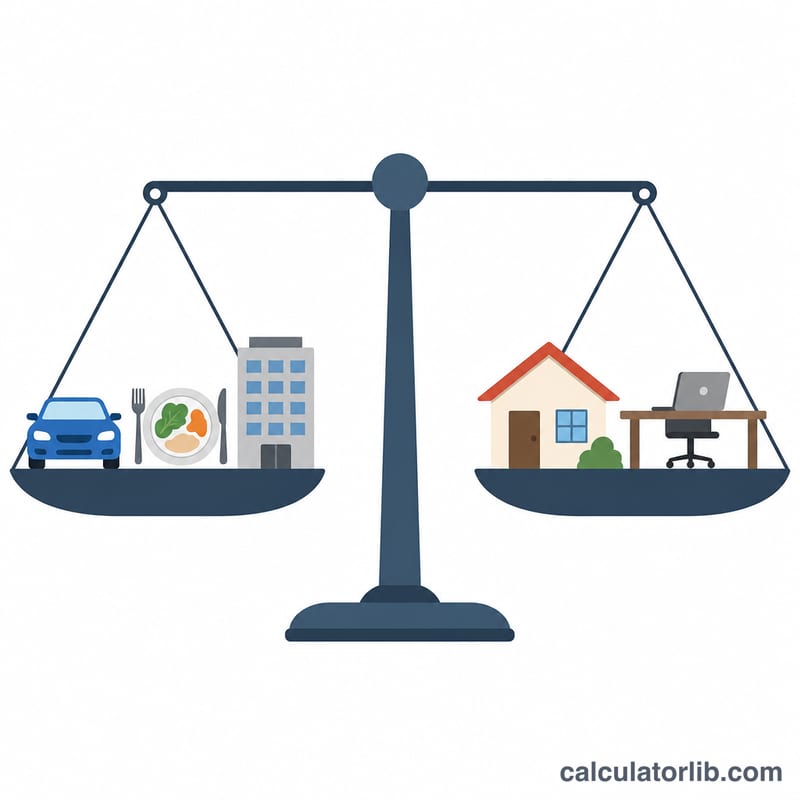
The Remote vs On-Location Work Cost Calculator helps you compare the day-to-day expenses of commuting to a workplace against the costs of working from home. By adding up your daily commuting costs and on-site extras (such as lunches, coffee, or parking) and subtracting any extra costs you incur while working remotely (like higher utility bills or a co-working subscription), it shows your real monthly and yearly savings.
How to Use It
Enter your average commute cost per day (fuel, transit fare, tolls, parking). Add other on-location costs per day, such as bought lunches or office coffee. Enter the number of work days in a typical month. Finally, enter any additional monthly costs you only pay when working remotely — extra electricity, internet upgrades, or equipment. The calculator returns your net monthly and annual savings.
The Formula Explained
The core equation is:
$$\text{Savings} = (\text{commute\_cost\_per\_day} + \text{onsite\_extra\_costs}) \times \text{work\_days} - \text{remote\_extra\_costs}$$
The daily commuting and on-site extras are multiplied by the number of work days to get your total on-location cost. From this we subtract the extra monthly cost of working remotely. A positive result means remote work saves you money; a negative result means it actually costs more.
Worked Example
Suppose you spend $12 per day commuting and $10 per day on lunch and coffee, working 20 days a month, with $30 of extra remote costs. On-location cost = $$(12 + 10) \times 20 = 440$$ dollars. Subtract $30 remote costs: $$440 - 30 = 410$$ saved per month, or about $4,920 per year.

FAQ
Should I include rent or mortgage? No — those are fixed whether you work remotely or not. Only include costs that change based on where you work.
What counts as remote extra costs? Additional home electricity, heating, faster internet, office supplies, or a co-working membership you wouldn't pay otherwise.
Why is my result negative? A negative figure means remote work is more expensive for you — your extra home costs outweigh your commuting savings.