
What Is the Shock Index?
The Shock Index (SI) is a simple bedside metric calculated by dividing heart rate (HR, beats per minute) by systolic blood pressure (SBP, mmHg). It was first described by Allgöwer and Burri in 1967 as an early indicator of hemodynamic instability. Because both an elevated heart rate and a falling blood pressure are early signs of circulatory compromise, the ratio can flag deterioration before either value alone crosses a critical threshold. This tool is intended for educational use and does not replace clinical judgment.
How to Use This Calculator
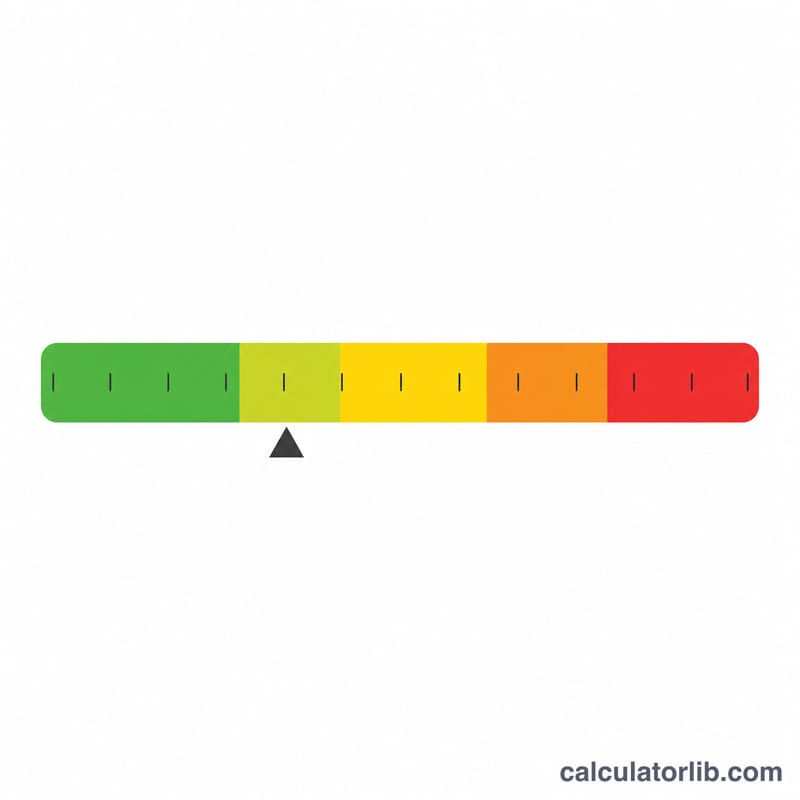
Enter the patient's heart rate in beats per minute and systolic blood pressure in mmHg, then read the resulting Shock Index. The calculator also classifies the value: a normal SI sits between 0.5 and 0.7. Values approaching or exceeding 0.9 may signal occult shock and warrant closer evaluation.
The Formula Explained
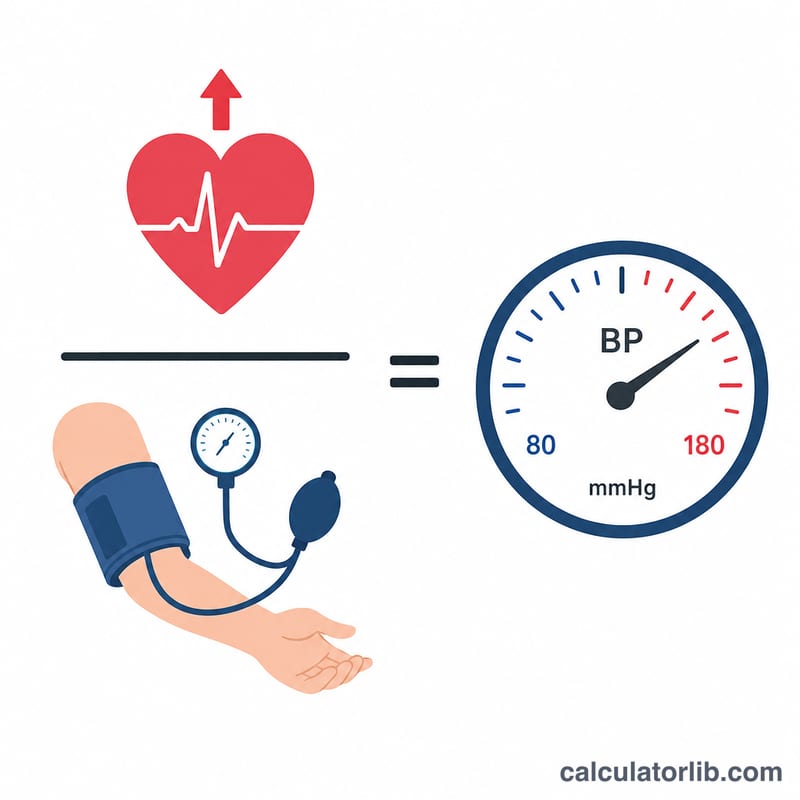
The equation is simply $$\text{SI} = \frac{\text{HR}}{\text{SBP}}$$ For example, a heart rate of 120 bpm and a systolic blood pressure of 80 mmHg give an SI of \(120 \div 80 = 1.5\) — markedly elevated and consistent with significant shock. A healthy adult at rest with HR 70 and SBP 120 has an SI of \(0.58\), well within the normal range.
Worked Example
Suppose a trauma patient presents with a heart rate of 110 bpm and a systolic blood pressure of 90 mmHg. $$\text{SI} = 110 \div 90 \approx 1.22$$ This elevated value suggests the patient may be developing shock despite a blood pressure that is not yet frankly hypotensive.
FAQ
What is a normal Shock Index? Generally 0.5 to 0.7 in healthy adults.
What SI indicates shock? Values of 0.9 or higher are commonly associated with hemodynamic compromise and increased risk.
Can I use SI in children? Pediatric thresholds differ; age-adjusted shock indices exist and should be used instead of the adult version.