
What Is the Oxygenation Index?
The Oxygenation Index (OI) is a clinical measure used in critically ill, mechanically ventilated patients to gauge the severity of hypoxemic respiratory failure. Unlike the simple PaO₂/FiO₂ ratio, the OI incorporates the mean airway pressure (MAP) applied by the ventilator, so it reflects how much ventilatory support is needed to achieve a given level of oxygenation. It is widely used in neonatal and pediatric intensive care, and is a key criterion in decisions such as initiating extracorporeal membrane oxygenation (ECMO).
The Formula
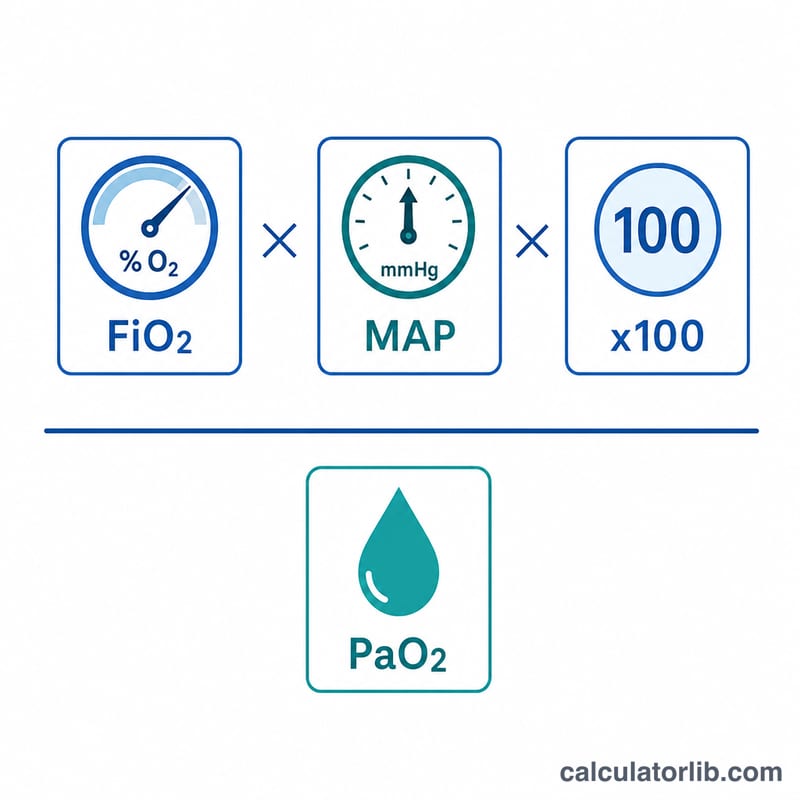
$$\text{OI} = \frac{\text{FiO}_2 \times \text{MAP} \times 100}{\text{PaO}_2}$$ where FiO₂ is the fraction of inspired oxygen (entered here as a percentage and converted to a fraction), MAP is the mean airway pressure in cmH₂O, and PaO₂ is the arterial partial pressure of oxygen in mmHg. Because higher airway pressures and lower oxygen tensions both raise the value, a higher OI indicates worse oxygenation.
How to Use It
Enter the FiO₂ as a percentage (21–100), the mean airway pressure in cmH₂O from the ventilator, and the most recent arterial PaO₂ in mmHg from a blood gas. The calculator converts FiO₂ to a fraction and returns the OI instantly.
Worked Example
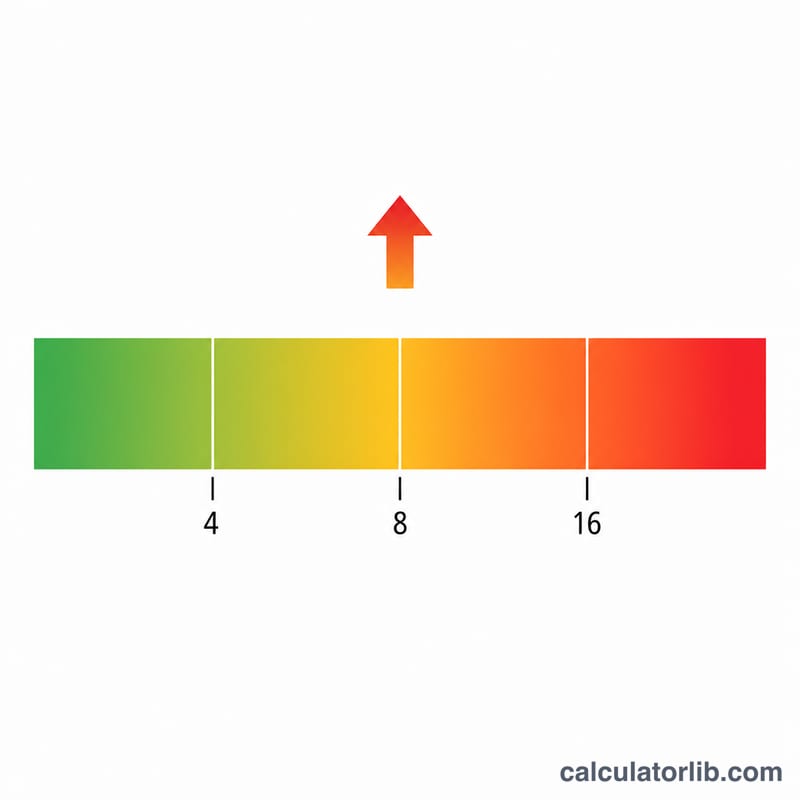
For a patient on FiO₂ 60% (0.60), MAP of 15 cmH₂O, and a PaO₂ of 80 mmHg: $$\text{OI} = \frac{0.60 \times 15 \times 100}{80} = \frac{900}{80} = 11.25$$ As a rough guide, an OI under 8 is mild, 8–25 is moderate to severe, and values above 25–40 are often used as thresholds for advanced support such as ECMO.
FAQ
Should FiO₂ be a percentage or a fraction? Enter it as a percentage (e.g. 60); the tool converts it to the fraction 0.60 used in the formula.
What units does the result have? The OI is dimensionless. Higher numbers mean more severe oxygenation impairment.
Is this a substitute for clinical judgment? No. The OI is one of many tools; always interpret it alongside the full clinical picture and local protocols.