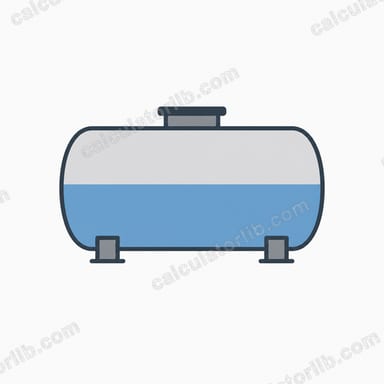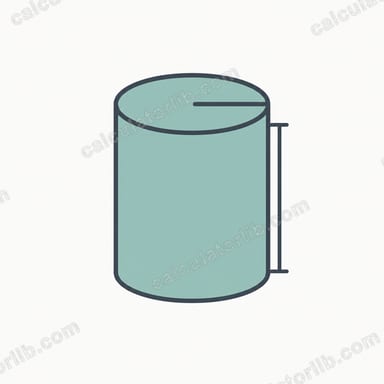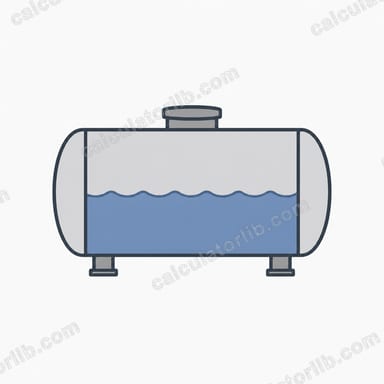

What Is the Tank Volume Calculator?
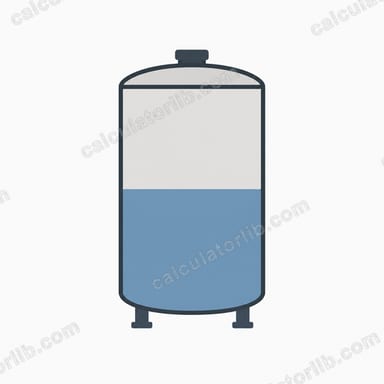
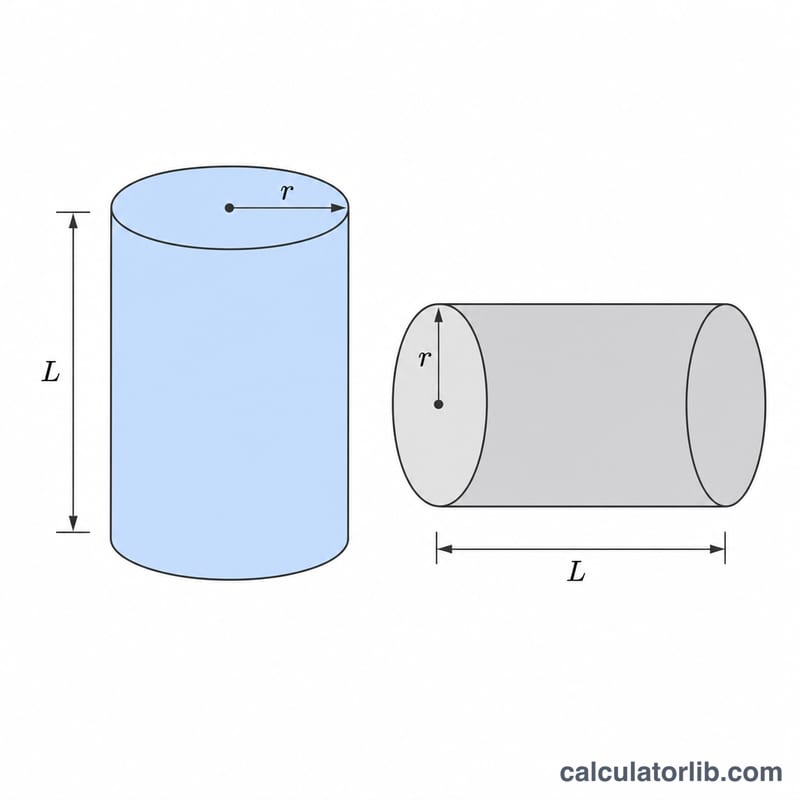
This calculator finds the total volume (capacity) of a cylindrical storage tank, whether it sits upright (vertical) or on its side (horizontal). For a full cylinder the orientation does not change the total volume — both use the same formula — but the labels help you describe your tank correctly. Enter the diameter and the length (or height) and you get the capacity in cubic meters, liters, and US gallons.
How to Use It
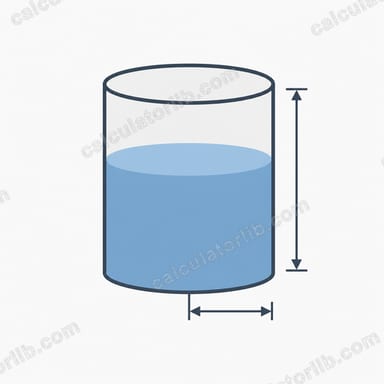
Select whether your tank is vertical or horizontal, then enter the diameter across the circular end and the length (for horizontal) or height (for vertical). All measurements should be in meters. The calculator instantly reports the full-tank volume in three common units so you can plan fluid storage, ordering, or transport.
The Formula Explained
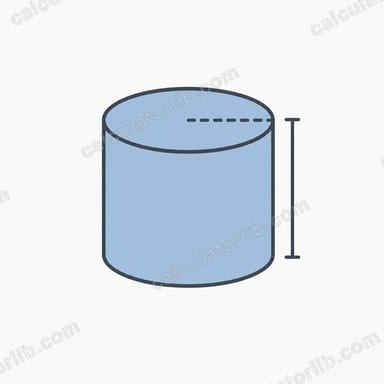
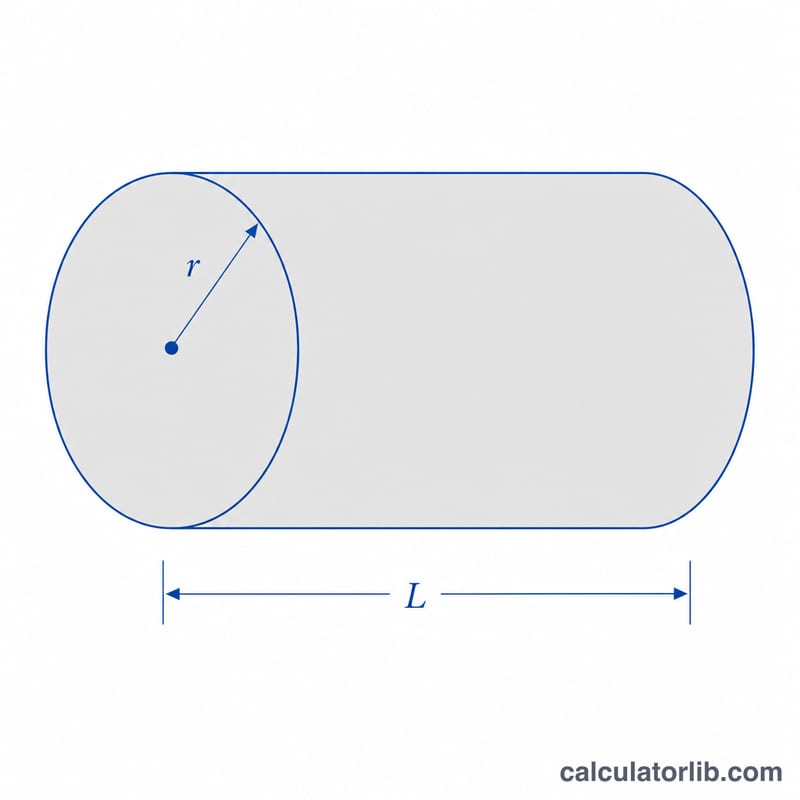
A cylinder's volume is the area of its circular cross-section multiplied by its length:
$$V = \pi r^2 L$$where \(r\) is the radius (half the diameter) and \(L\) is the length or height. To convert cubic meters to liters, multiply by 1,000. To get US gallons, multiply cubic meters by 264.172.
Worked Example
Suppose a vertical tank has a diameter of 2 m and a height of 5 m. The radius is 1 m, so
$$V = \pi \times 1^2 \times 5 = 15.708 \text{ m}^3$$That equals 15,708 liters or about 4,150 US gallons.
FAQ
Does orientation change the total volume? No. A completely full cylinder holds the same amount whether vertical or horizontal. Orientation matters only for partial-fill (dipstick) calculations.
What units should I use? Enter measurements in meters. The results give cubic meters, liters, and US gallons.
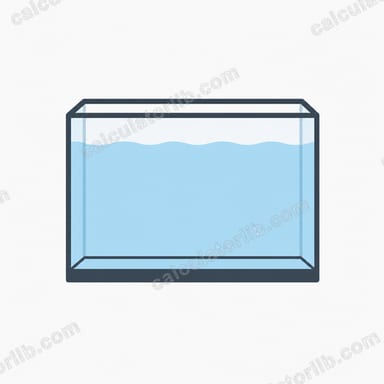
Can I use it for rectangular tanks? No — this tool assumes a circular cylinder. Rectangular tanks use length \(\times\) width \(\times\) height instead.