
What Is the Area of a Right Triangle?
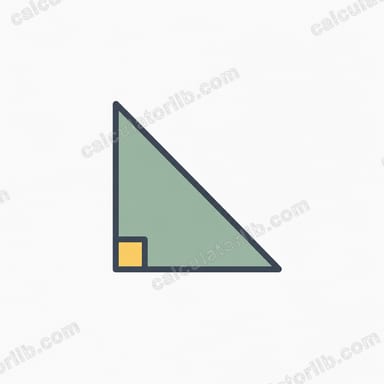
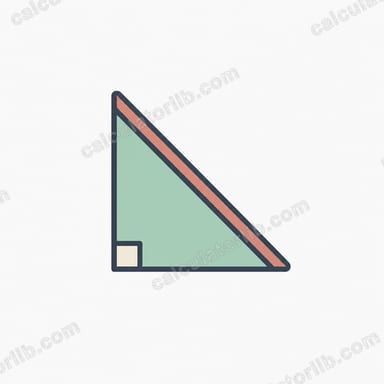
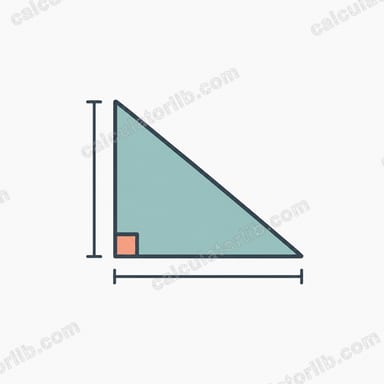
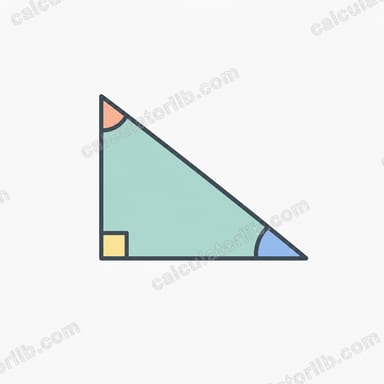
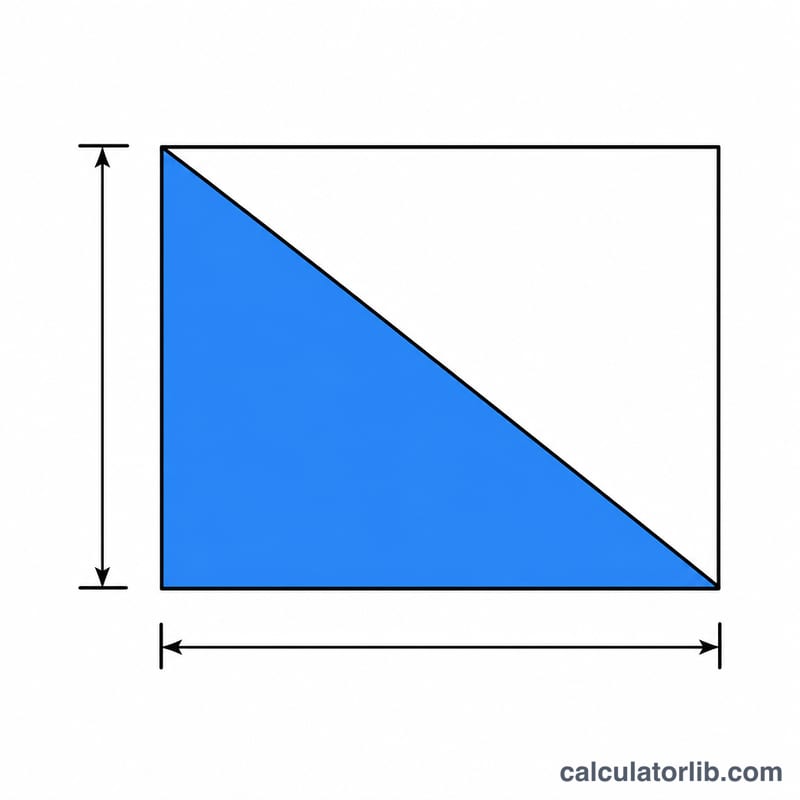
A right triangle is a triangle with one 90° angle. The two sides that form this right angle are called the legs, and they conveniently act as the base and the height of the triangle. Because the legs are perpendicular to each other, the area is simply half their product — no extra trigonometry needed.
How to Use This Calculator
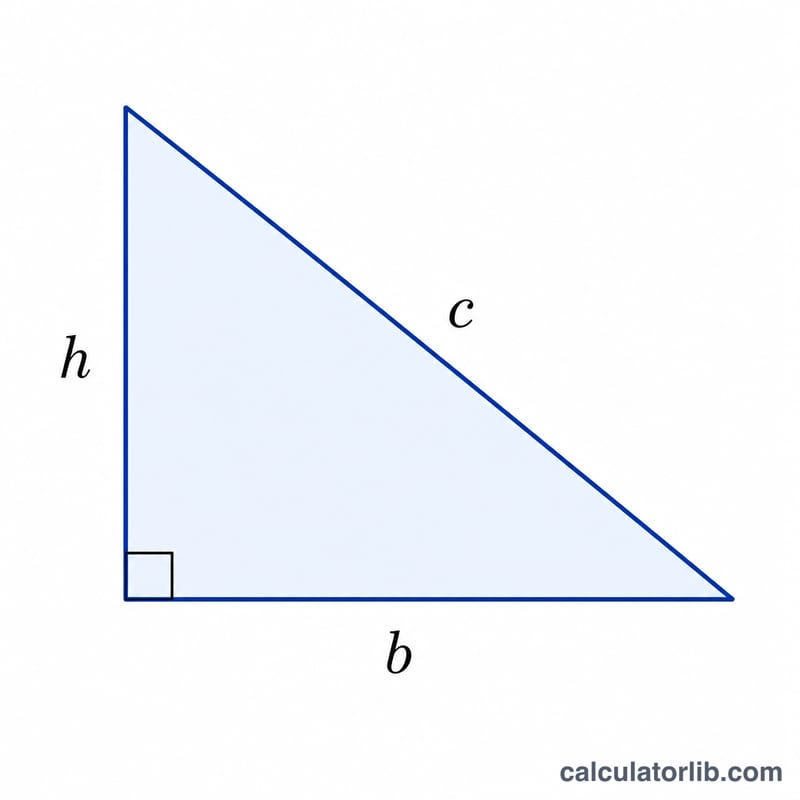
Enter the length of the two legs (the base and the height). The calculator instantly returns the area in square units, along with the hypotenuse (the longest side opposite the right angle) and the full perimeter. Use any consistent unit — cm, m, inches — and your result will be in those units squared.
The Formula Explained
The area is $$A = \frac{1}{2} \times \text{base} \times \text{height}$$. This works because a right triangle is exactly half of a rectangle with sides equal to the two legs. The hypotenuse comes from the Pythagorean theorem, $$c = \sqrt{b^2 + h^2}$$, and the perimeter is the sum of all three sides: base + height + hypotenuse.
Worked Example
Suppose a right triangle has a base of 6 and a height of 8. The area is $$\frac{1}{2} \times 6 \times 8 = 24$$ square units. The hypotenuse is $$\sqrt{6^2 + 8^2} = \sqrt{36 + 64} = \sqrt{100} = 10.$$ The perimeter is \(6 + 8 + 10 = 24\) units.
FAQ
Which sides are the base and height? In a right triangle, the two legs (the sides meeting at the 90° angle) serve as the base and height — they are perpendicular, so either can be the base.
Can I use the hypotenuse as the height? No. The hypotenuse is not perpendicular to either leg, so it cannot be used directly in the \(\frac{1}{2} \times \text{base} \times \text{height}\) formula.
What units does the area use? If you enter lengths in centimeters, the area is in square centimeters. The result is always in the square of whatever unit you input.