
What is the Carboplatin Dose Calculator?
This tool calculates the total dose of carboplatin, a platinum-based chemotherapy agent, using the Calvert formula. Unlike many cytotoxic drugs that are dosed by body surface area, carboplatin is dosed to achieve a target area under the concentration–time curve (AUC), because its clearance correlates closely with renal function. This calculator is intended as an educational and clinical aid; all doses must be verified by a qualified oncology pharmacist or physician before administration.
How to use it
Enter the target AUC (commonly 4–6 mg/mL·min depending on the regimen and whether carboplatin is given as a single agent or in combination) and the patient's GFR (glomerular filtration rate, in mL/min, often estimated by the Cockcroft–Gault equation). The calculator multiplies and adds to return the total dose in milligrams.
The formula explained
The Calvert formula is: $$\text{Dose (mg)} = \text{AUC} \times \left( \text{GFR} + 25 \right)$$. The constant 25 represents the non-renal clearance of carboplatin. GFR is expressed in mL/min and AUC in mg/mL·min, so the product yields milligrams. Many institutions cap the GFR used in the formula (e.g. at 125 mL/min) to avoid overdosing patients with overestimated renal function.
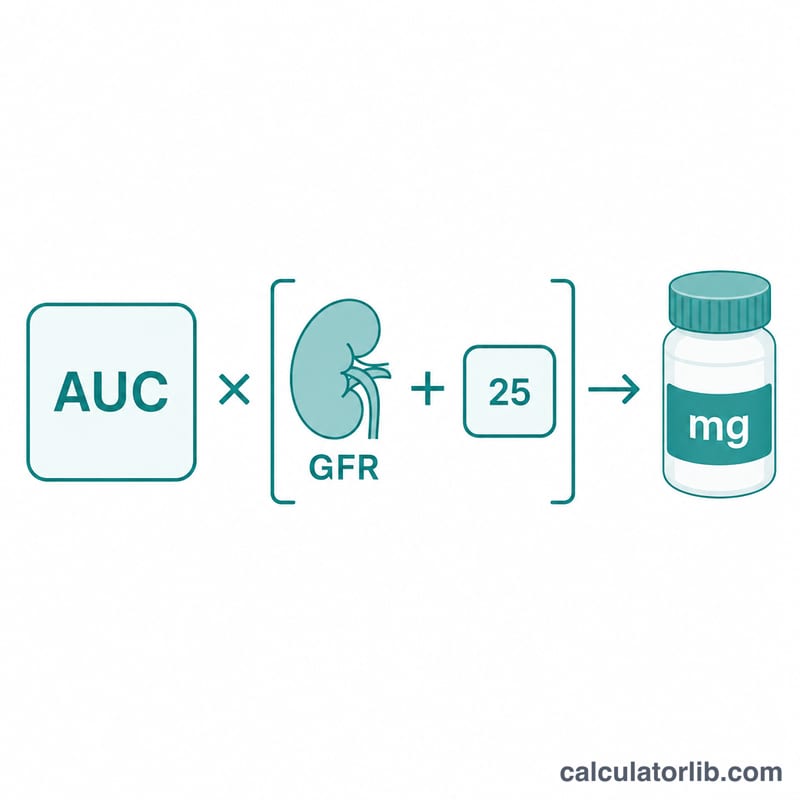
Worked example
For a patient with a target AUC of 5 and a GFR of 80 mL/min: $$\text{Dose} = 5 \times (80 + 25) = 5 \times 105 = 525 \text{ mg}$$
FAQ
What AUC should I use? Typical values are AUC 5–6 for single-agent therapy and AUC 4–5 in combination regimens; follow your local protocol.
Should I cap the GFR? Many guidelines recommend capping calculated GFR at 125 mL/min to prevent overdosing. This calculator uses the GFR you enter directly.
Is this a substitute for clinical judgement? No. Always confirm the dose against patient-specific factors and institutional policy.