
What This Calculator Does
The Local Anesthetic Maximum Dose Calculator estimates the largest safe quantity of a local anesthetic — such as lidocaine, bupivacaine, ropivacaine or mepivacaine — that may be administered to a patient based on their body weight, the chosen agent, and the concentration of the solution used. It reports both the maximum dose in milligrams and the equivalent maximum injectable volume in millilitres. This is an educational reference tool and does not replace clinical judgement, local protocols, or a prescriber's order.
How to Use It
Select the anesthetic agent (each carries a built-in mg/kg ceiling), or choose Custom to enter your own limit. Enter the patient's weight in kilograms and the solution concentration as a percentage (for example, 1% or 0.5%). The calculator multiplies the per-kilogram limit by the weight to find the maximum dose, then divides by the concentration in mg/mL to find the maximum volume you could draw up.
The Formula Explained
Maximum dose is simply mg/kg × weight. To convert a dose to a volume you need the concentration in mg/mL. A handy rule: a 1% solution contains 10 mg/mL, so multiply the percentage by 10. The maximum volume is therefore Max Dose ÷ (Concentration% × 10).
$$\text{Max Dose (mg)} = \text{Max (mg/kg)} \times \text{Weight (kg)}$$$$\text{Max Volume (mL)} = \frac{\text{Max Dose}}{10 \times \text{Conc (\%)}}$$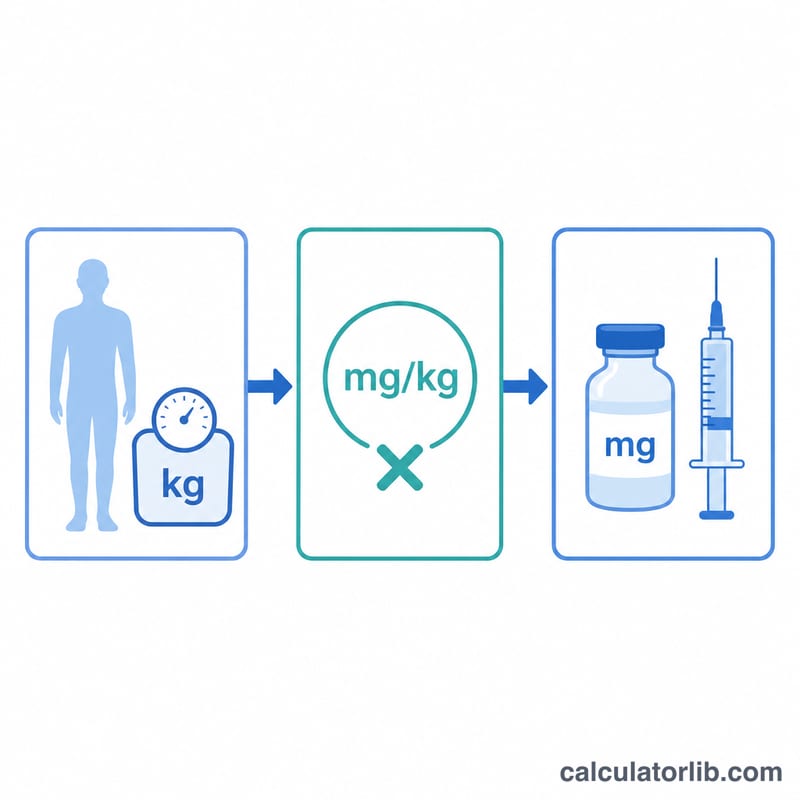
Worked Example
Consider plain lidocaine (limit 4.5 mg/kg) for a 70 kg patient using a 1% solution. Max dose = \(4.5 \times 70 = \textbf{315 mg}\). A 1% solution is 10 mg/mL, so max volume = \(315 \div 10 = \textbf{31.5 mL}\).
$$\text{Max Dose} = 4.5 \times 70 = 315\ \text{mg}$$$$\text{Max Volume} = \frac{315}{10} = 31.5\ \text{mL}$$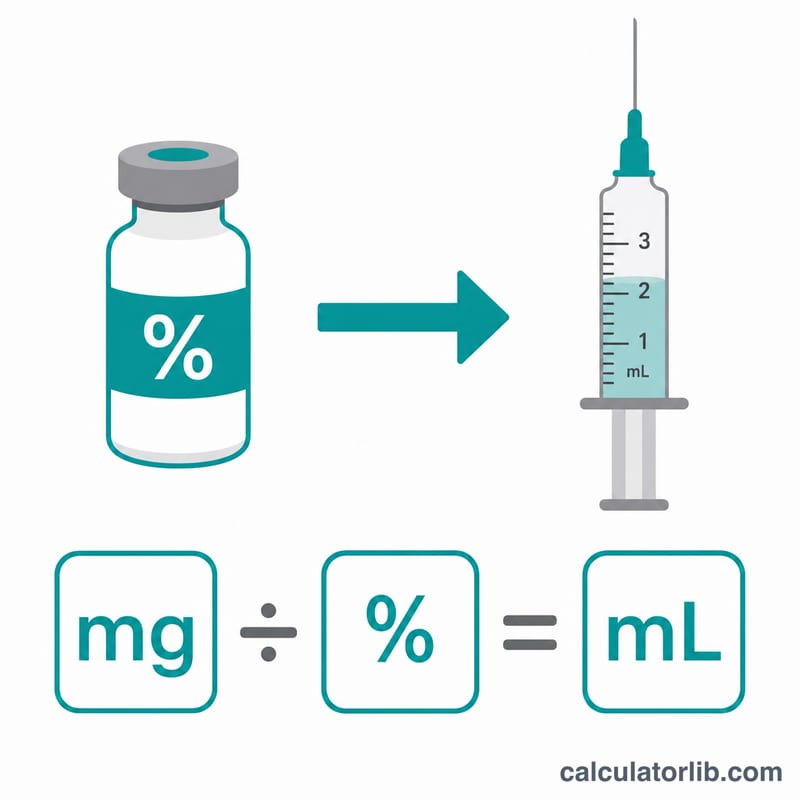
FAQ
Does epinephrine change the limit? Yes — adding epinephrine slows absorption and raises the safe ceiling (e.g. lidocaine rises from 4.5 to 7 mg/kg). Select the matching option.
What weight should I use? Lean/ideal body weight is generally recommended, especially in obese patients, to avoid overestimating the safe dose.
Are these limits absolute? No. They are common reference values; always follow your institution's protocols and current pharmacology references.