
What This Calculator Does
This Lidocaine Maximum Dose Calculator estimates the largest safe single dose of lidocaine (in milligrams) for a patient based on body weight, and converts it to the maximum injectable volume (in mL) for a given solution concentration. It is intended as an educational and clinical reference aid only and does not replace professional clinical judgment, product labeling, or local protocols. Dosing limits vary by source, patient comorbidities, and clinical setting.
How to Use It
Enter the patient's weight in kilograms, choose the formulation (plain lidocaine or lidocaine with epinephrine, which permits a higher limit), and select the solution concentration. The tool returns the maximum total dose in milligrams and the corresponding maximum volume in milliliters.
The Formula Explained
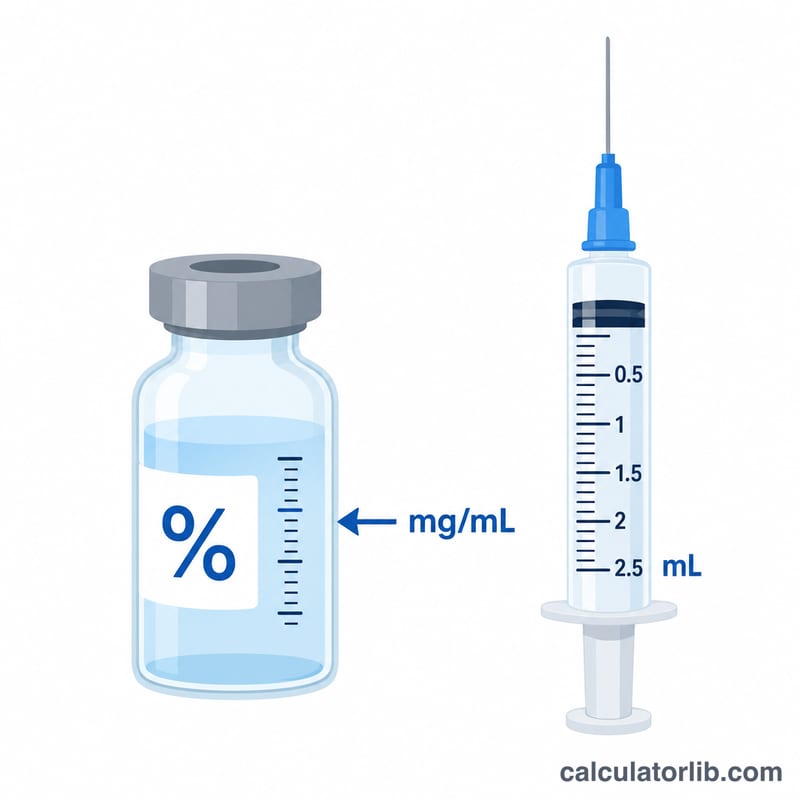
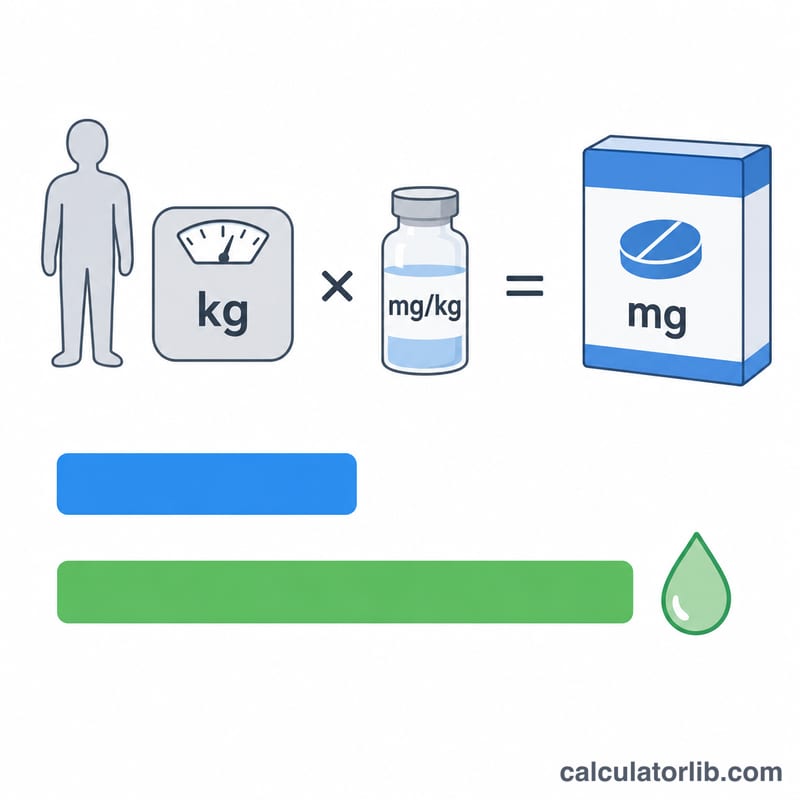
The maximum dose is the allowable amount per kilogram multiplied by weight. Common reference limits are 4.5 mg/kg for plain lidocaine and 7 mg/kg when combined with epinephrine. To convert milligrams to volume, note that a 1% solution contains 10 mg of drug per milliliter, so a concentration of C% provides \(C \times 10\) mg/mL. Dividing the maximum dose by this strength yields the maximum volume.
$$\text{Max Volume (mL)} = \frac{4.5 \times \text{Weight (kg)}}{10 \times \text{Concentration (\%)}}$$
$$\text{where}\quad \text{Max Dose (mg)} = 4.5 \times \text{Weight (kg)}$$
Worked Example
For a 70 kg patient receiving plain 1% lidocaine: Max Dose = 4.5 × 70 = 315 mg. The 1% solution is 10 mg/mL, so Max Volume = 315 ÷ 10 = 31.5 mL.
$$\text{Max Dose} = 4.5 \times 70 = 315 \text{ mg}$$
$$\text{Max Volume} = 315 \div 10 = 31.5 \text{ mL}$$
FAQ
Why does epinephrine raise the limit? Epinephrine causes local vasoconstriction, slowing systemic absorption and allowing a higher total dose.
What does the concentration percentage mean? A 1% solution equals 10 mg/mL, 2% equals 20 mg/mL, and so on.
Is this a substitute for clinical guidance? No. Always confirm dosing against current product labeling, patient factors, and institutional protocols.