
What Is a Unit Rate?
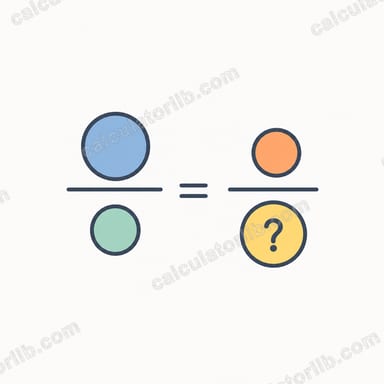
A unit rate expresses how much of one quantity corresponds to exactly one unit of another. It is a ratio with a denominator of 1 — for example 60 miles per hour, $2.50 per pound, or 15 students per teacher. Unit rates make it easy to compare proportions and find the "best deal" when totals and amounts differ.
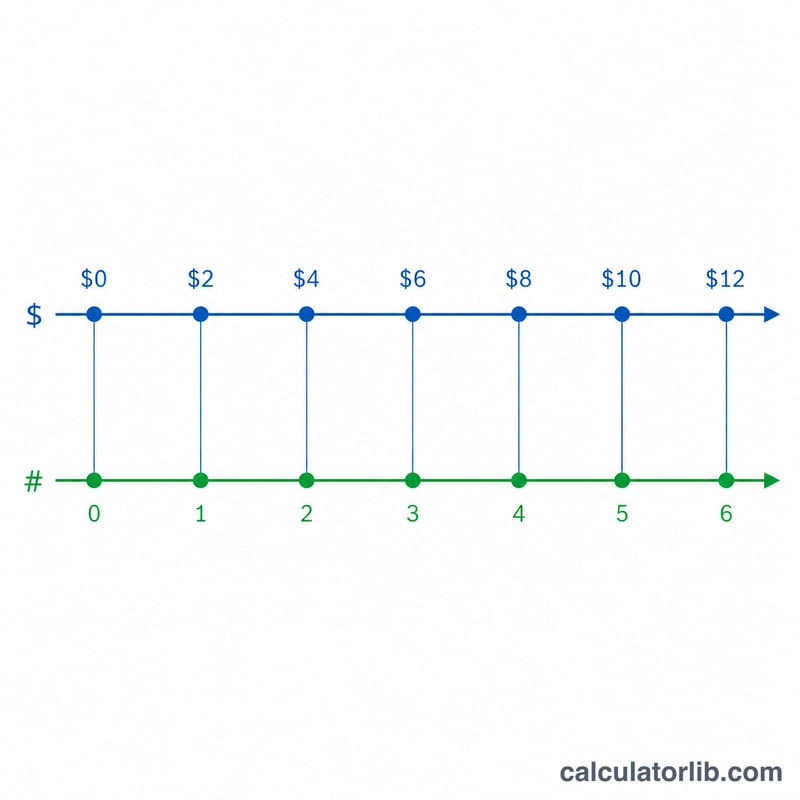
How to Use This Calculator
Enter the total quantity (the thing being measured, such as dollars, miles, or grams) and the number of units (such as items, hours, or servings). The calculator divides the quantity by the units to produce the unit rate. It also shows the inverse rate, the number of units per single unit of quantity, which is useful for double number line and proportion problems.
The Formula Explained
The core formula is unit rate = quantity / units.
$$\text{Unit Rate} = \frac{\text{Total Quantity}}{\text{Number of Units}}$$Because division by zero is undefined, the units value must be greater than zero. The inverse rate is simply units / quantity, the reciprocal relationship used on the second line of a double number line model.
$$\text{Inverse Rate} = \frac{\text{Number of Units}}{\text{Total Quantity}}$$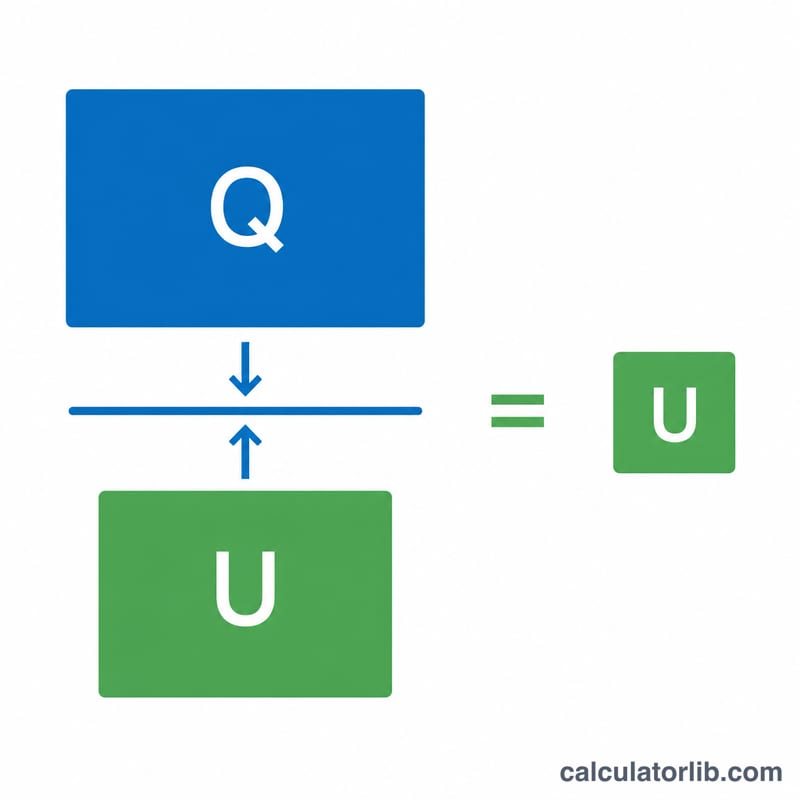
Worked Example
Suppose a 120-mile trip takes 8 hours. The unit rate is
$$120 / 8 = \textbf{15 miles per hour}$$The inverse rate is
$$8 / 120 = 0.0667 \text{ hours per mile}$$On a double number line you would line up 120 miles with 8 hours, then scale down to find that 15 miles aligns with 1 hour.
FAQ
What is the difference between a ratio and a unit rate? A ratio compares two quantities in any form (120:8), while a unit rate scales it so the second value is 1 (15:1).
Can I use decimals? Yes. Both fields accept decimal values, so $7.49 for 3 items gives about $2.50 each.
Why does the calculator also show an inverse rate? Many proportion and double number line problems ask for the reciprocal — how many units per single quantity — so both directions are provided.