
What This Calculator Does
The Hourly to Paycheck Calculator converts an hourly wage into the gross amount you can expect on each paycheck. It works for any pay schedule — weekly, bi-weekly, semi-monthly, or monthly — so you can see exactly how your hourly rate translates into the deposit that hits your account (before taxes and deductions).
How to Use It
Enter your hourly rate, the number of hours you typically work per week, and how often you get paid. The calculator first finds your annual gross pay, then divides it by the number of paychecks you receive in a year to show your gross pay per period. It also displays your total annual gross for reference.
The Formula Explained
First, annual gross pay is your hourly rate times weekly hours times 52 weeks. Then, per-paycheck pay is that annual figure divided by paychecks per year: 52 for weekly, 26 for bi-weekly, 24 for semi-monthly, and 12 for monthly. This consistent annualize-then-divide approach keeps every frequency directly comparable.
$$\text{Paycheck} = \frac{\text{Hourly Rate} \times \text{Hours/Week} \times 52}{26}$$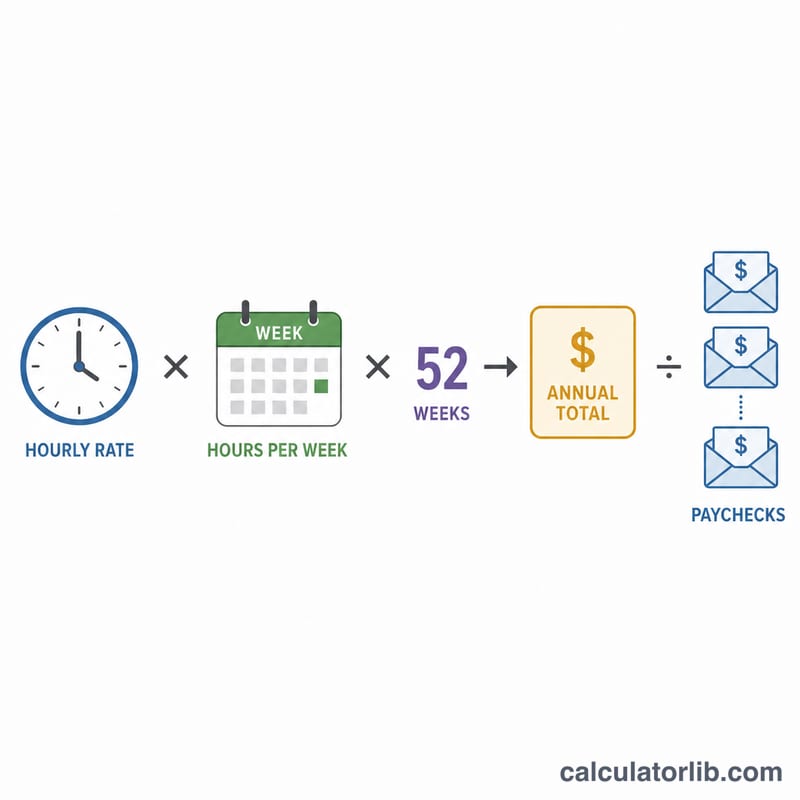
Worked Example
Suppose you earn $25 per hour and work 40 hours a week, paid bi-weekly. Annual gross = \(25 \times 40 \times 52 = \$52{,}000\). Bi-weekly means 26 paychecks per year, so each gross paycheck =
$$52{,}000 \div 26 = \$2{,}000$$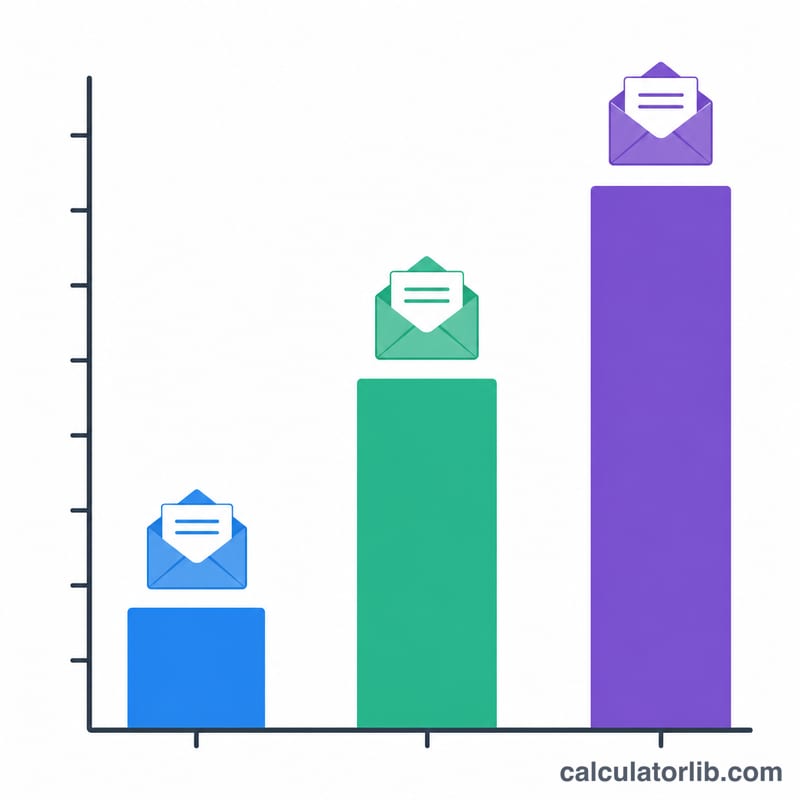
FAQ
Is this take-home pay? No. This shows gross pay before income tax, Social Security, Medicare, health insurance, and retirement contributions are withheld.
Why is semi-monthly different from bi-weekly? Bi-weekly pays every two weeks (26 checks/year), while semi-monthly pays twice a month (24 checks/year), so the per-check amount differs slightly.
Does it include overtime? Not automatically. If you regularly work overtime, increase your hours per week or add overtime-adjusted hours to capture it.