
What Is the Effective Tax Rate on Salary?
Your effective tax rate is the average percentage of your gross salary that you actually pay in tax. Unlike a marginal tax rate (the rate applied to your last dollar earned), the effective rate blends all your tax brackets, deductions, and credits into a single, easy-to-understand figure. This calculator is jurisdiction-neutral: simply enter your total tax bill for the period — whatever it works out to under your local rules — and your gross salary, and it returns the percentage.
How to Use This Calculator
Enter your gross salary (your total pay before any tax is deducted) and the total tax you paid over the same period. The calculator divides tax by gross salary and multiplies by 100 to give your effective rate. It also shows your net take-home salary and what percentage of your gross pay you keep.
The Formula Explained
The math is straightforward:
$$\text{Effective Rate} = \frac{\text{Total Tax}}{\text{Gross Salary}} \times 100$$
If you earned 60,000 and paid 12,000 in total tax, your effective rate is \((12{,}000 \div 60{,}000) \times 100 = 20\%\). Your net take-home is \(60{,}000 - 12{,}000 = 48{,}000\), which is 80% of your gross.
Worked Example
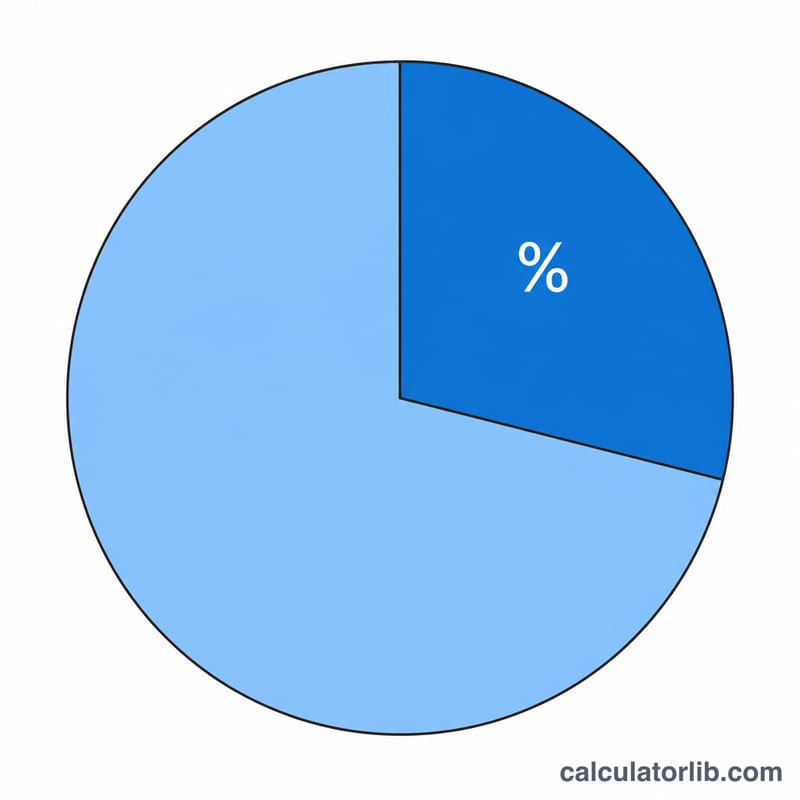
Suppose your gross salary is 85,000 and you paid 17,850 in income tax and other payroll deductions. The effective rate is \((17{,}850 \div 85{,}000) \times 100 = 21\%\). You keep 67,150, or 79% of your gross salary.
FAQ
Is the effective rate the same as my tax bracket? No. Your top bracket (marginal rate) is usually higher than your effective rate, because lower portions of your income are taxed at lower rates.
What should I include in "total tax"? Include whatever taxes you want to measure — income tax alone, or income tax plus social security/payroll contributions for a fuller picture.
Can the rate exceed 100%? Only if your tax somehow exceeds your gross salary, which is unusual. Normally the rate sits between 0% and your top marginal bracket.