

What Is the Overtime Paycheck Calculator?
This calculator estimates your gross (pre-tax) pay for a single pay period by combining your regular earnings with your overtime earnings. Overtime is typically paid at a higher rate than regular hours — commonly "time and a half" (1.5×) or "double time" (2×). By entering your hourly rate, the hours you worked, and your overtime multiplier, you instantly see how much you should earn before deductions.
How to Use It
Enter your hourly rate (your standard pay per hour), the number of regular hours worked, the number of overtime hours worked, and your overtime multiplier. The multiplier is usually 1.5 for time-and-a-half or 2 for double time, but you can use any value your employer or jurisdiction applies. The result shows total gross pay along with a breakdown of regular and overtime portions.
The Formula Explained
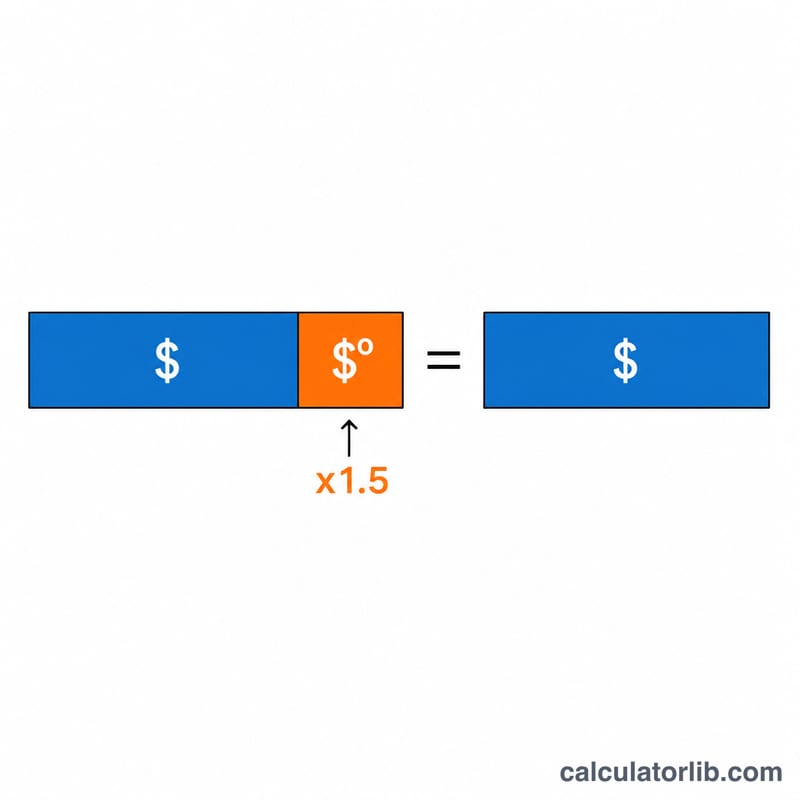
Total pay is the sum of two parts: regular pay (regular hours × hourly rate) and overtime pay (overtime hours × hourly rate × overtime multiplier). For example, at $20/hour the regular rate is $20, but at a 1.5× multiplier the overtime rate becomes $30 per hour.
$$\text{Total Pay} = (\text{Reg Hours} \times \text{Rate}) + (\text{OT Hours} \times \text{Rate} \times \text{Multiplier})$$
Worked Example
Suppose you earn $20/hour, work 40 regular hours and 5 overtime hours at a 1.5× multiplier. Regular pay = \(40 \times \$20 = \$800\). Overtime pay = \(5 \times \$20 \times 1.5 = \$150\). Total gross pay = \(\$800 + \$150 = \$950\).
$$\text{Total gross pay} = \$800 + \$150 = \$950$$

FAQ
Is this my take-home pay? No — this is gross pay before taxes, insurance, and other deductions are withheld.
What multiplier should I use? In the US, many employees receive 1.5× for hours over 40 per week, but rules vary by country, state, and employer agreement.
Can I use it for salaried pay? It works best for hourly workers; salaried employees may not be eligible for overtime depending on their classification.