

What This Calculator Does
This tool splits your total weekly hours into regular hours (up to 40) and overtime hours (anything over 40), then calculates regular pay, overtime pay and total weekly earnings. The 40-hour weekly threshold reflects the United States Fair Labor Standards Act (FLSA), which generally requires non-exempt employees to receive at least 1.5× their regular rate for hours worked beyond 40 in a workweek. Rules differ by state and country — for example, some U.S. states (such as California) also apply daily overtime — so adjust the multiplier to match your situation.
How to Use It
Enter the total hours you worked in the week, your hourly pay rate, and your overtime multiplier (commonly 1.5 for "time-and-a-half" or 2.0 for "double time"). The calculator instantly shows how your hours and pay break down.
The Formula Explained
Overtime hours are max(totalHours − 40, 0), so no overtime is counted unless you exceed 40. Regular hours are min(totalHours, 40), capping the base-rate portion at 40. Pay is then:
where
$$\left\{ \begin{aligned} H &= \text{Total Hours} \\ R &= \text{Hourly Rate (\$)} \\ M &= \text{OT Multiplier} \end{aligned} \right.$$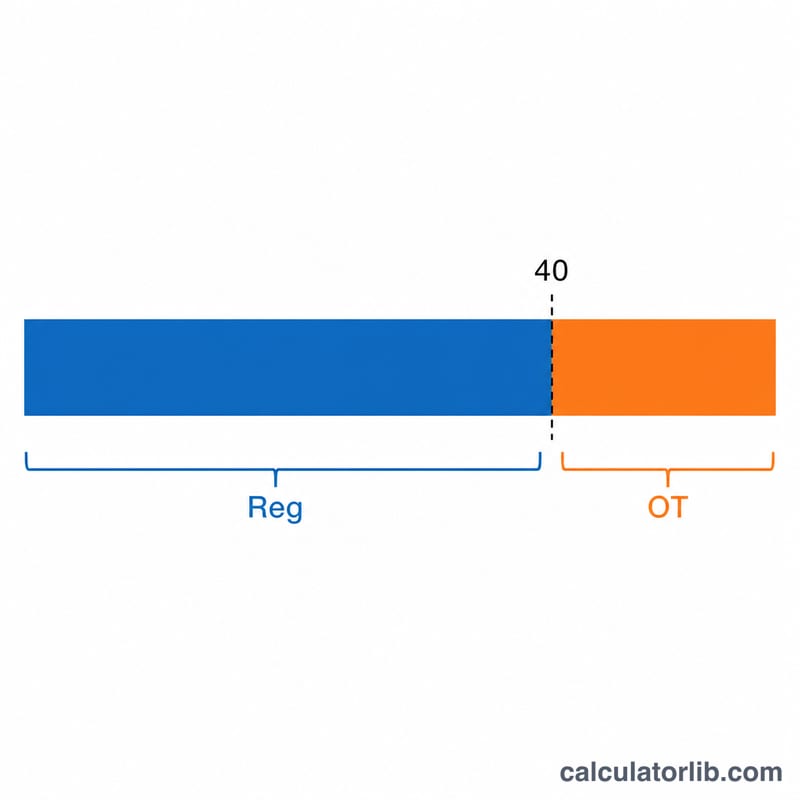
Worked Example
Suppose you worked 45 hours at $20/hour with a 1.5× multiplier. Regular hours = \(\min(45, 40) = 40\), so regular pay = \(40 \times \$20 = \$800\). Overtime hours = \(\max(45 - 40, 0) = 5\), so overtime pay = \(5 \times \$20 \times 1.5 = \$150\). Total weekly pay:
$$\$800 + \$150 = \mathbf{\$950}$$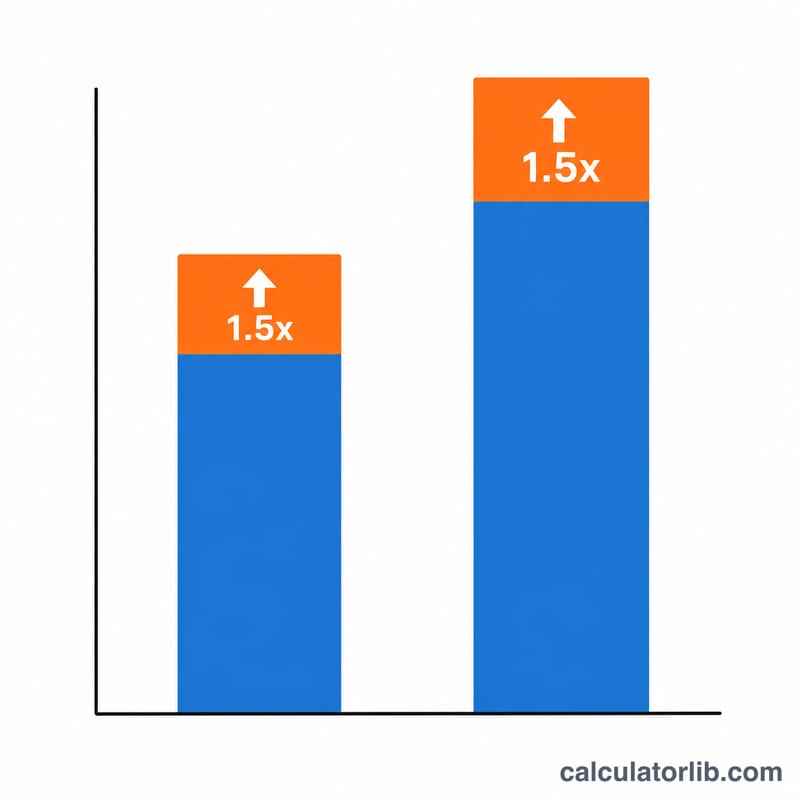
FAQ
Does overtime apply before I reach 40 hours? No. Under the standard weekly rule, overtime only begins after 40 hours in the workweek.
What multiplier should I use? Time-and-a-half (1.5) is the federal U.S. minimum; some employers or jurisdictions pay 2.0 (double time) for certain hours.
Is this legal advice? No. It is an estimate. Check your local labor laws and employment contract, which may include daily overtime or different thresholds.