What Is the LTL Shipping Rate Calculator?
Less-than-truckload (LTL) shipping is used when freight is too large for parcel carriers but does not fill an entire trailer. Pricing depends on how much you ship, how dense and handleable it is (freight class), how far it travels, and the carrier base rate plus a fuel surcharge. This calculator turns those variables into a transparent cost estimate so you can compare lanes and budget shipments.
The Formula
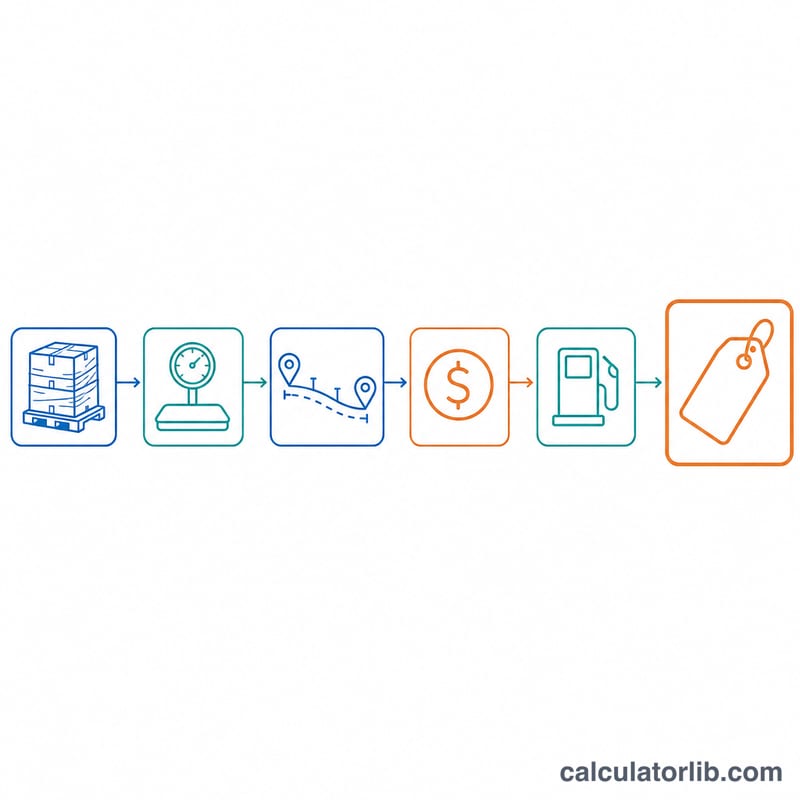
The estimate is built from billable hundredweight (CWT), where \(W\) is weight in pounds, \(R\) the base rate per CWT per 100 miles, \(D\) the distance in miles, \(C\) the freight class, and \(F\) the fuel surcharge percent:
$$\text{Total} = \frac{W}{100} \times R \times \frac{D}{100} \times \frac{C}{100} \times \left(1 + \frac{F}{100}\right)$$Dividing weight by 100 converts pounds to CWT, the unit carriers price against. The class term \(\tfrac{C}{100}\) scales cost with freight class so a class 250 shipment costs more than an equal class 100 load.
How to Use It
Enter the total shipment weight, pick the freight class from the drop-down, then supply the lane distance, your negotiated base rate, and the current fuel surcharge. The result shows billable CWT, the base linehaul cost, the fuel surcharge amount, and the all-in total.
Worked Example
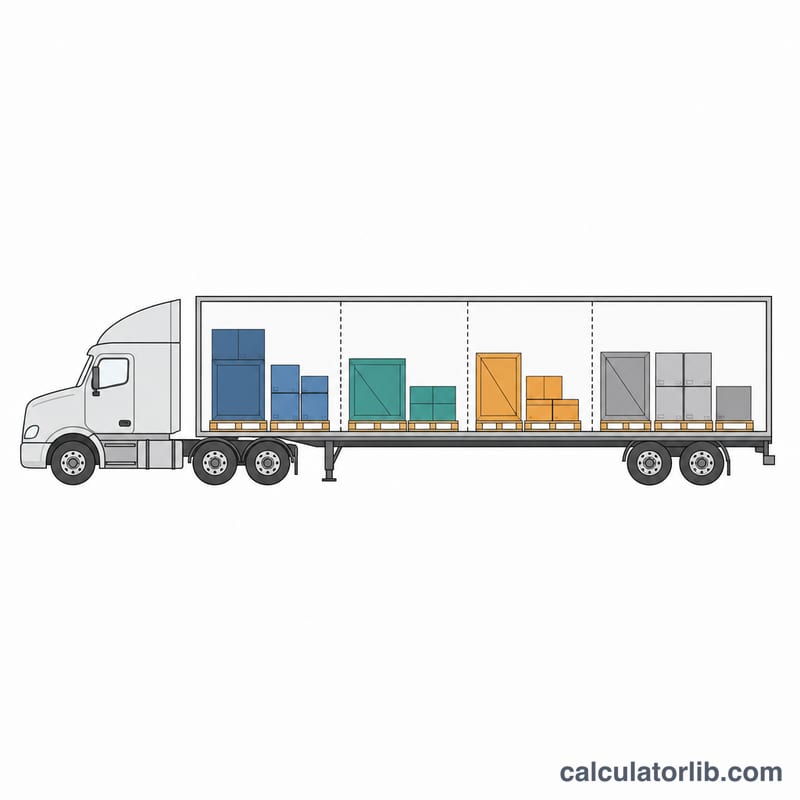
Ship \(1000\) lb of class 100 freight \(500\) miles at a \($10\) base rate with a \(20\%\) fuel surcharge:
$$\text{Base} = \frac{1000}{100} \times 10 \times \frac{500}{100} \times \frac{100}{100} = \$500$$$$\text{Total} = 500 \times (1 + 0.20) = \$600$$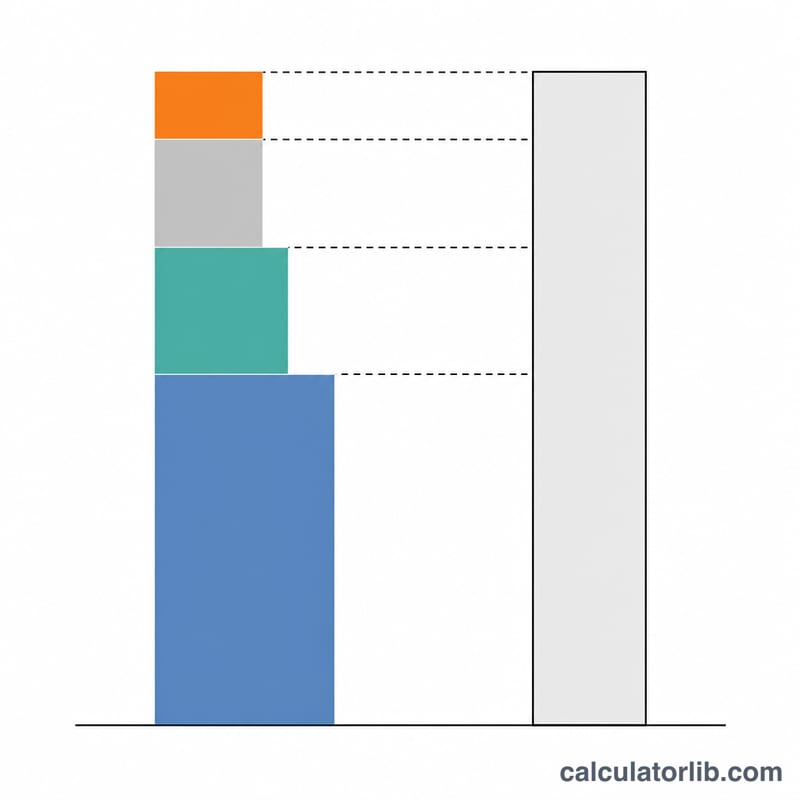
FAQ
What is freight class? A standardized code (50 to 500) based on density, stowability, handling, and liability. Higher classes cost more per pound.
What is a fuel surcharge? A percentage carriers add to offset fuel prices, applied to the base linehaul cost.
Is this an exact quote? No. It is a planning estimate; actual carrier tariffs, accessorials, and minimums may differ.