
What Is the Natural Rate of Unemployment?
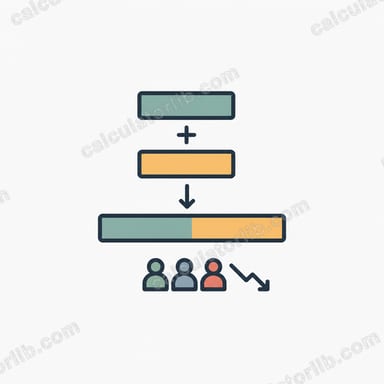
The natural rate of unemployment is the level of unemployment that exists when an economy is operating at its full potential — when there is no cyclical (recession-driven) unemployment. It reflects the unavoidable joblessness present even in a healthy economy, made up of two parts: frictional unemployment (people between jobs or entering the workforce) and structural unemployment (mismatches between worker skills/locations and available jobs).
How to Use This Calculator
Enter the frictional unemployment rate and the structural unemployment rate as percentages. The calculator adds them to give the natural rate of unemployment. These two components are the "non-cyclical" parts of unemployment, so their sum is the rate that persists even at full employment.
The Formula Explained
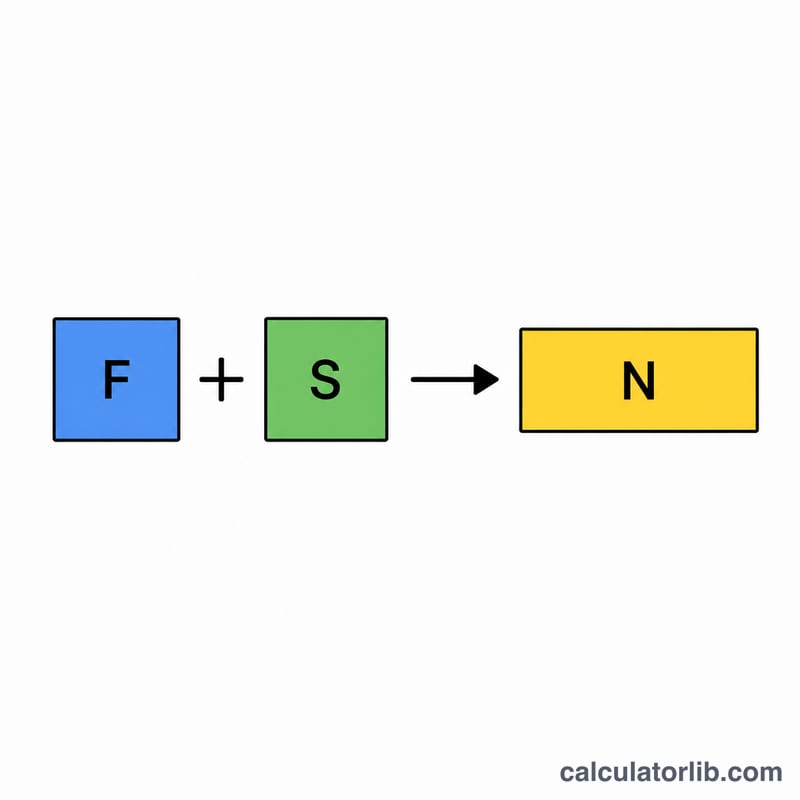
The core relationship is:
$$\text{Natural Rate} = \text{Frictional (\%)} + \text{Structural (\%)}$$
Equivalently, because actual unemployment equals natural plus cyclical unemployment, you can also write: \(\text{Natural Rate} = \text{Actual Rate} - \text{Cyclical Rate}\). Both forms describe the same underlying "full-employment" rate.
Worked Example
Suppose an economy has a frictional unemployment rate of 3% and a structural unemployment rate of 2%. The natural rate of unemployment is \(3\% + 2\% = 5\%\). If actual unemployment were 7%, the cyclical component would be \(7\% - 5\% = 2\%\).
FAQ
Is the natural rate the same as full employment? Yes — "full employment" in economics means unemployment equals the natural rate, not zero unemployment.
Does the natural rate change over time? Yes. Demographics, technology, labor laws, and education shift frictional and structural unemployment, so the natural rate is not fixed.
What is cyclical unemployment? It is unemployment caused by economic downturns. It is not part of the natural rate and falls to roughly zero at full employment.