
What This Calculator Does
This tool computes the arc length of a circle given its radius and a central angle measured in degrees. It also tells you what fraction and percentage of the complete circumference that arc represents, so you can immediately see how much of the circle the angle sweeps out.
How to Use It
Enter the circle's radius (in any unit) and the central angle in degrees (0 to 360). The calculator returns the arc length in the same units as the radius, the total circumference for reference, and the proportion of the circle the arc covers.
The Formula Explained
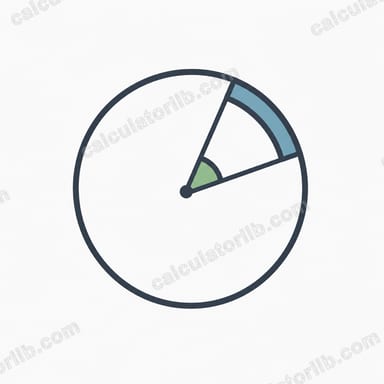
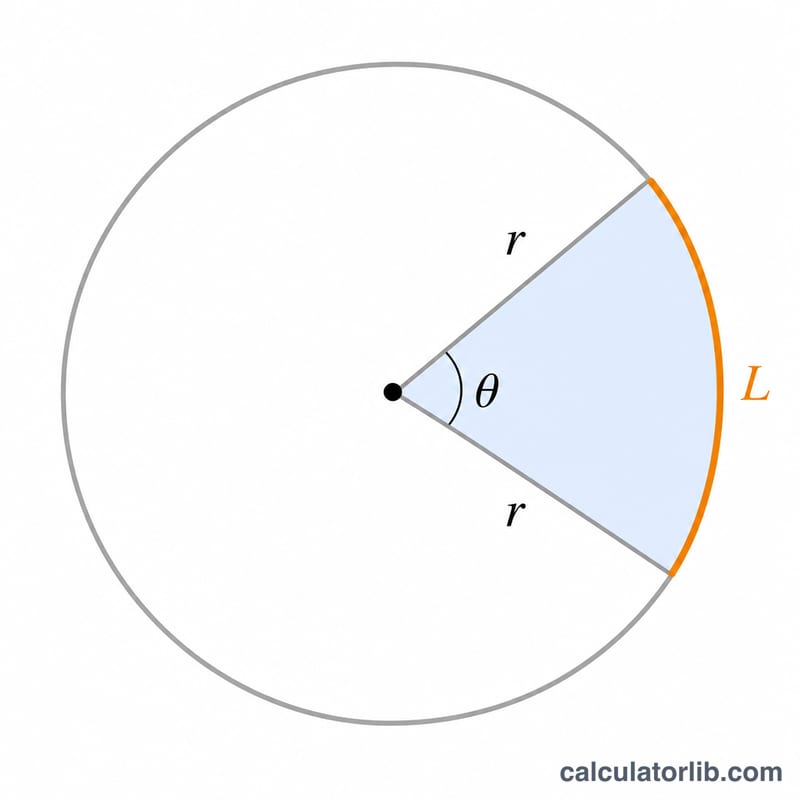
A full circle is 360 degrees and has circumference \(2\pi r\). An arc spanning a central angle \(\theta\) covers the fraction \(\theta/360\) of the circle, so its length is:
$$L = \frac{\theta}{360} \times 2\pi r$$
The fraction of the circumference is simply \(\theta/360\), and multiplying by 100 gives the percentage.
Worked Example
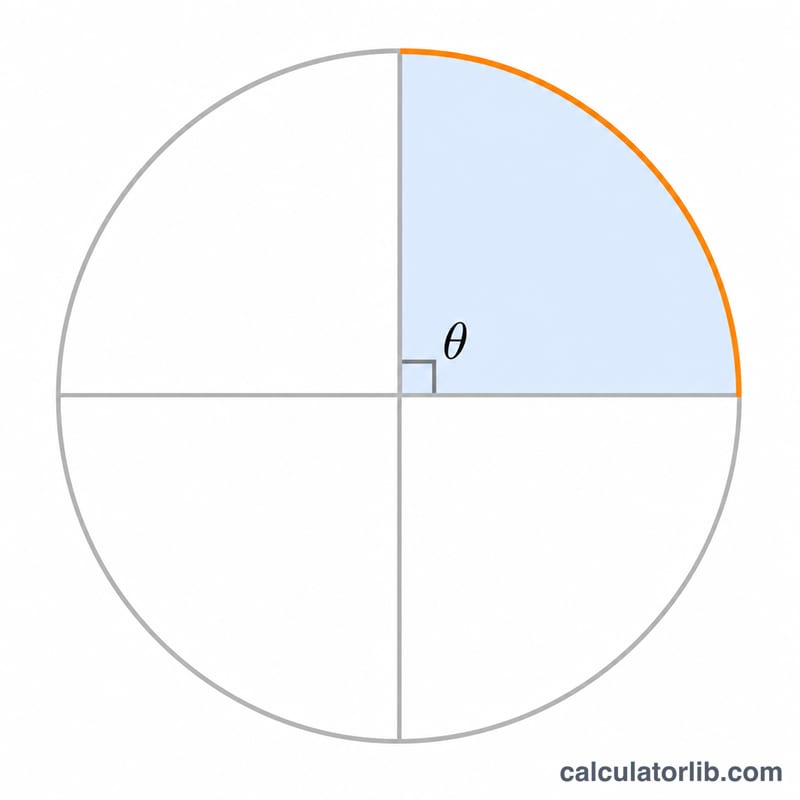
Suppose the radius is 10 and the central angle is 90°. The full circumference is $$2 \times \pi \times 10 \approx 62.832.$$ The arc covers \(90/360 = 0.25\) of the circle, so the arc length is $$0.25 \times 62.832 \approx 15.708$$ — exactly one quarter of the circle, or 25%.
FAQ
What units does the result use? The arc length comes out in the same units you used for the radius (cm, inches, meters, etc.).
Can I use radians? This calculator expects degrees. To convert radians to degrees, multiply by \(180/\pi\).
What if the angle is 360°? The arc length equals the full circumference and the fraction is 1 (100%).