
What This Calculator Does
The Salary Per Pay Period Calculator turns a yearly salary into the gross amount you receive in each paycheck. Because employers pay on different schedules, the same annual figure can produce very different per-check amounts. This tool supports weekly, bi-weekly, semi-monthly, monthly, and quarterly pay so you can see your true paycheck size for any frequency.
How to Use It
Enter your gross annual salary, choose your pay frequency, and read the result. The calculator shows gross pay before any taxes, retirement contributions, or other deductions — it is a starting point for budgeting, not a take-home figure.
The Formula Explained
The math is simple division:
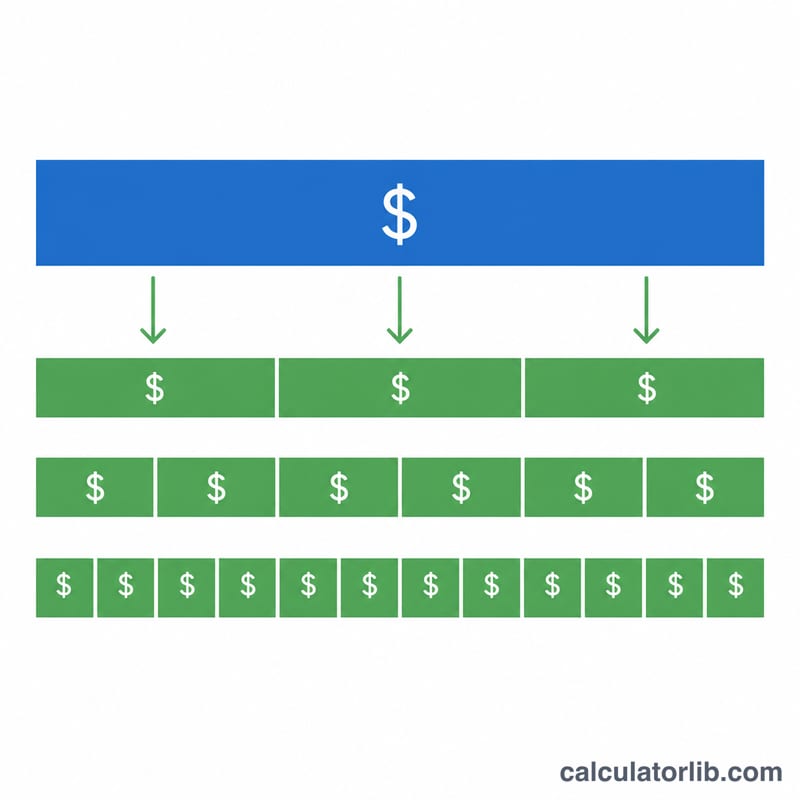
$$\text{Pay Per Period} = \frac{\text{Annual Salary}}{\text{Pay Periods per Year}}$$
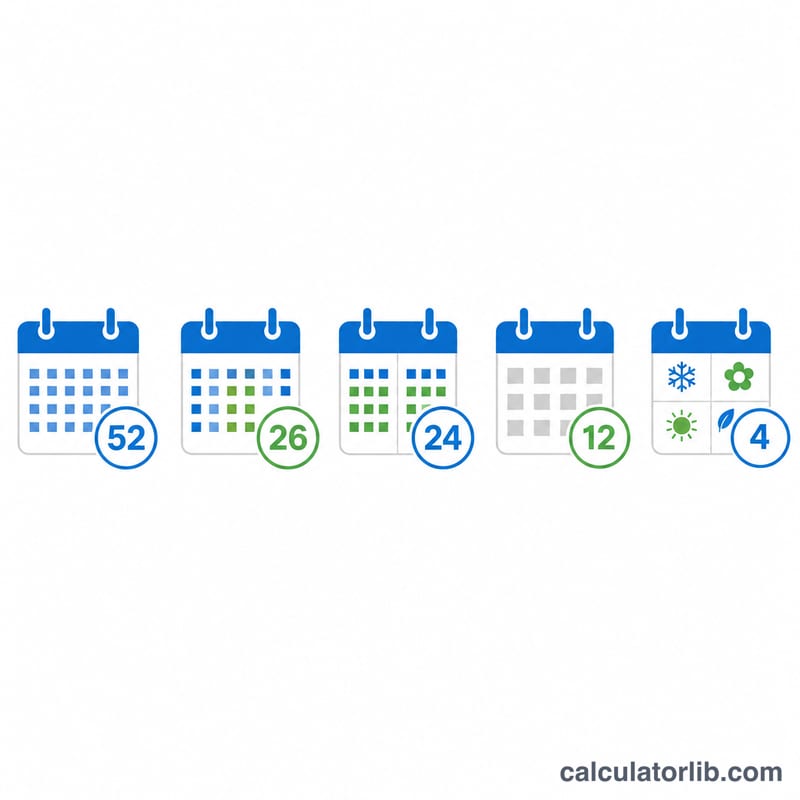
Common pay periods per year are: weekly = 52, bi-weekly = 26, semi-monthly = 24, monthly = 12, and quarterly = 4. Note that bi-weekly (every two weeks, 26 checks) and semi-monthly (twice a month, 24 checks) are not the same — bi-weekly produces two extra paychecks each year that are slightly smaller per check.
Worked Example
Suppose your annual salary is $60,000 and you are paid bi-weekly (26 periods). Then $$\text{perPeriod} = 60{,}000 \div 26 = \$2{,}307.69$$ gross per paycheck. If the same salary were paid monthly (12 periods), each check would be \(60{,}000 \div 12 = \$5{,}000\).
FAQ
Is this gross or net pay? It is gross pay — before taxes and deductions. Actual take-home pay will be lower.
What's the difference between bi-weekly and semi-monthly? Bi-weekly pays every two weeks (26 checks/year); semi-monthly pays twice each month (24 checks/year). Bi-weekly checks are smaller but you get two extra per year.
Does it work in any currency? Yes. The math is pure division, so just enter your salary in whatever currency you use.