

What This Calculator Does
The Salary vs Hourly Pay Comparison Calculator lets you put a fixed annual salary and an hourly wage on equal footing. It converts your salary into an equivalent hourly rate and your hourly wage into an equivalent annual salary, so you can compare two job offers or pay structures directly. This is useful when deciding between a salaried position and contract or part-time work, or when negotiating a raise.
How to Use It
Enter the annual salary you want to evaluate, the hourly wage you want to compare against, and the number of hours you typically work each week. The calculator assumes a standard 52-week year. Results show the hourly rate your salary works out to, the annual salary your hourly wage adds up to, total hours per year, and weekly pay for both options.
The Formula Explained
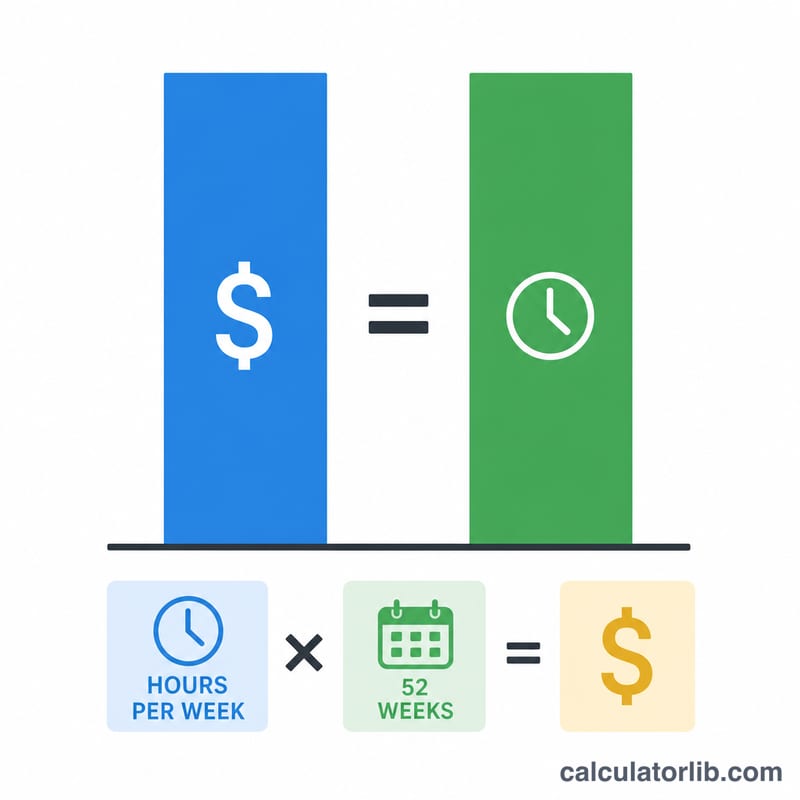
Total hours worked per year equals hours per week multiplied by 52. To find the hourly equivalent of a salary, divide the salary by those yearly hours. To find the annual equivalent of an hourly wage, multiply the wage by the yearly hours. Because both use the same hours figure, the comparison is apples-to-apples.
$$\text{Hourly Equivalent} = \frac{\text{Annual Salary}}{\text{Hours/Week} \times 52}$$$$\text{Salary Equivalent} = \text{Hourly Wage} \times \text{Hours/Week} \times 52$$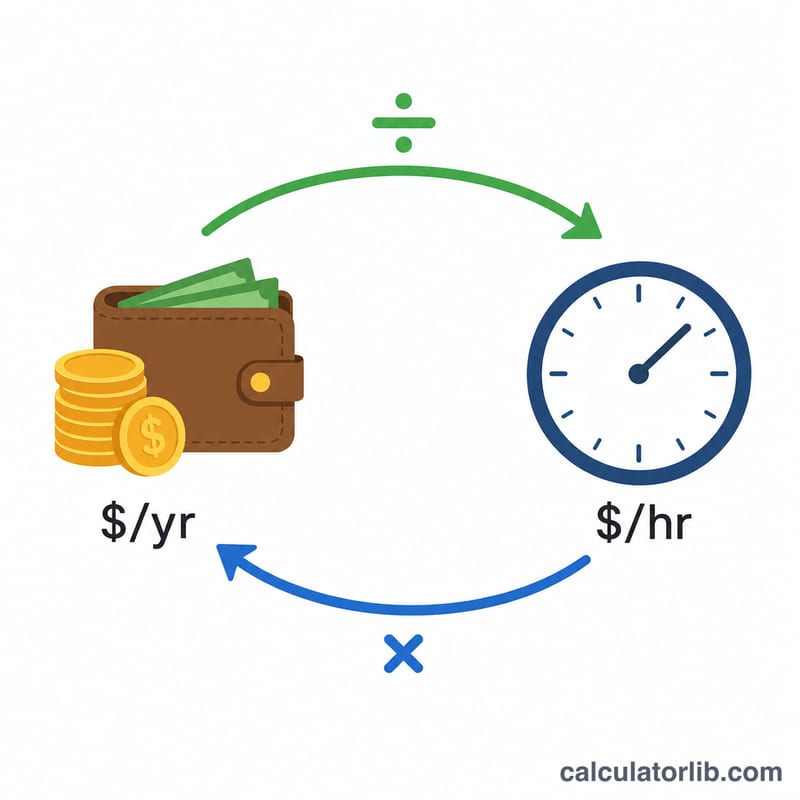
Worked Example
Suppose you earn a $60,000 salary and work 40 hours a week. Yearly hours = \(40 \times 52 = 2{,}080\). Hourly equivalent = \(\$60{,}000 \div 2{,}080 \approx \$28.85\) per hour. If you compare against a $25/hour wage, the annual equivalent = \(\$25 \times 2{,}080 = \$52{,}000\). So the salary is the better deal at 40 hours a week.
FAQ
Does this account for taxes or benefits? No. It compares gross pay only. Benefits like health insurance, paid time off, and retirement matching can significantly change the real value of a salaried role.
Why 52 weeks? A standard year has 52 weeks. If you take unpaid time off, your effective hourly rate from a salary actually rises since you earn the same money for fewer hours.
What if I work overtime? Salaried pay usually stays fixed regardless of extra hours, while hourly workers may earn overtime. Adjust the hours-per-week field to see how your effective salary hourly rate drops as hours increase.