What is the Sewage Connection Cost Calculator?
The Sewage Connection Cost Calculator gives homeowners, developers and contractors a fast, transparent estimate of what it costs to connect a plot of land to the public sewage drainage network. Instead of guessing, you enter a few property details and the tool combines a fixed connection fee with an area-based charge and a pipe-run charge to produce a realistic budget figure.
How to use it
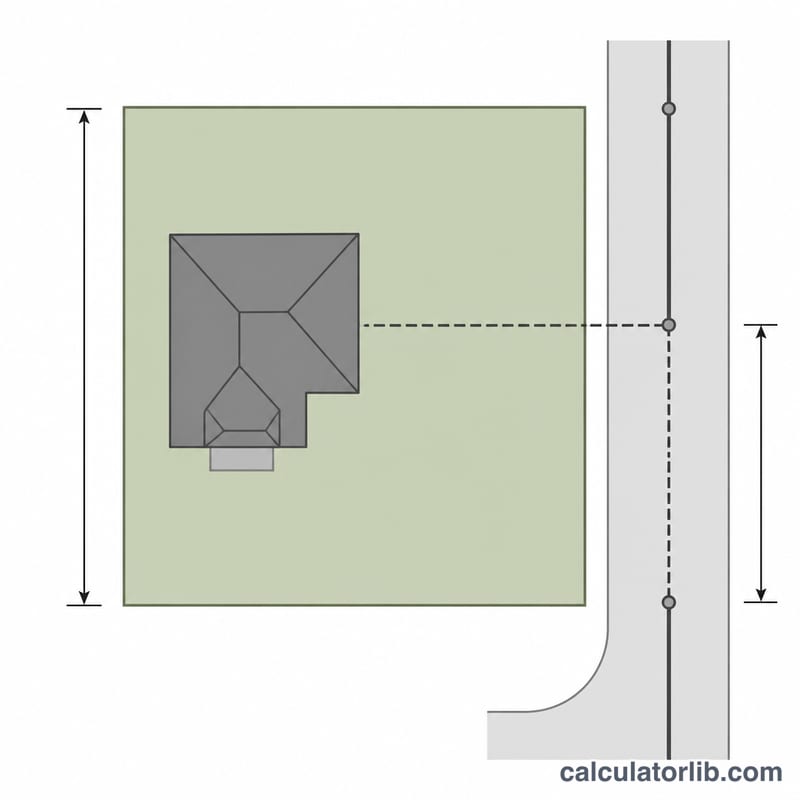
Enter the plot surface area in square metres, the cost per square metre charged by your utility, the distance from the plot to the main sewer line, the pipe cost per metre, and the fixed base connection fee. Press calculate to see the total cost broken down into its components so you can see exactly where the money goes.
The formula explained
The estimate is built from three parts and expressed as:
$$\text{Cost} = F + (A \times r) + (d \times p)$$where \(F\) = fixed base connection fee, \(A\) = plot surface area in m², \(r\) = cost per m², \(d\) = distance to the main sewer in metres, and \(p\) = pipe cost per metre. The area term \(A \times r\) scales the charge with the size of the property, while the pipe term \(d \times p\) accounts for how far the connection has to run.
Worked example
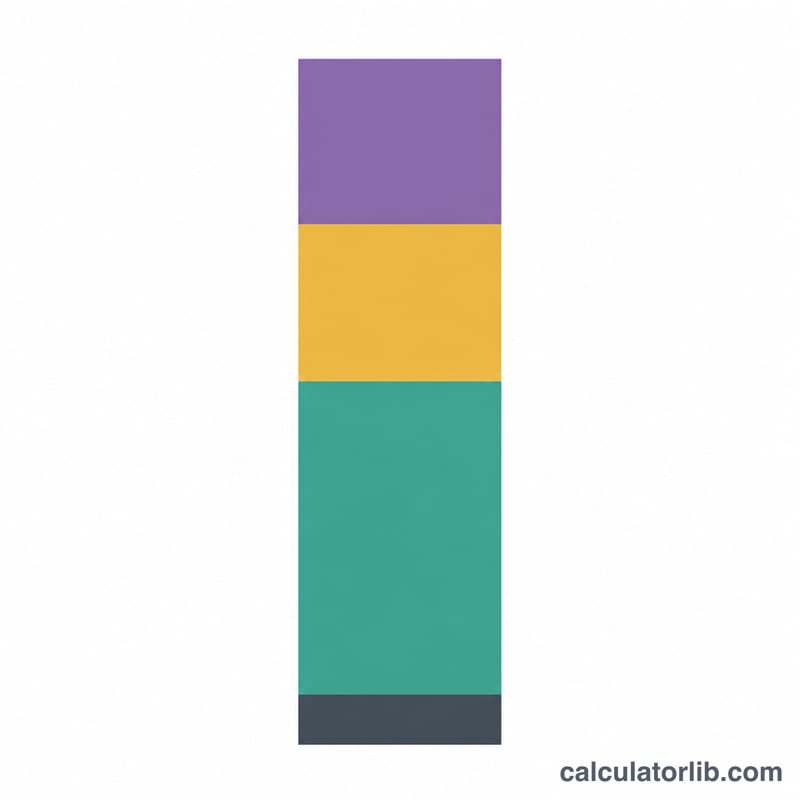
Consider a 200 m² plot at $10 per m², sitting 20 m from the main sewer with pipe at $50 per metre and an $800 base fee:
$$C_{area} = 200 \times 10 = 2000$$$$C_{pipe} = 20 \times 50 = 1000$$$$\text{Cost} = 800 + 2000 + 1000 = 3800$$The total estimated connection cost is $3,800.
Cost Across Common Connection Scenarios
The estimate breaks into three parts: a fixed base connection fee \(F\), an area-based charge \(A \times r\), and a pipe-run charge \(d \times p\), so the total is
$$\text{Total} = F + (A \times r) + (d \times p).$$The table below uses one consistent set of illustrative sample rates — a base fee of $750, an area rate of $12/m², and a pipe cost of $150/m — purely to show how each input moves the total. These are example numbers, not real published rates: actual fees vary widely by country, region and water authority, so replace them with figures confirmed locally (see the next section).
| Scenario | Area A (m²) | Distance d (m) | Area charge (A×r) | Pipe charge (d×p) | Base fee F | Total |
|---|---|---|---|---|---|---|
| Small plot | 100 | 10 | $1,200 | $1,500 | $750 | $3,450 |
| Mid plot | 200 | 20 | $2,400 | $3,000 | $750 | $6,150 |
| Large plot | 400 | 60 | $4,800 | $9,000 | $750 | $14,550 |
Working the small plot in full makes the arithmetic self-evident:
$$\text{Total} = 750 + (100 \times 12) + (10 \times 150) = 750 + 1200 + 1500 = \$3{,}450.$$Two patterns stand out. Because the pipe charge scales with distance, a longer run to the public sewer main often dominates the bill — in the large-plot row the $9,000 pipe charge is larger than the area charge and base fee combined. And the fixed base fee weighs proportionally more on small connections than on large ones.
Practical Next Steps for Budgeting Your Connection
Treat the calculator's output as a pre-quote planning budget, not a final price. The formula deliberately captures only three drivers — base fee, area charge and pipe-run charge — so real invoices will differ once site conditions and local rules are factored in. To turn the estimate into a usable budget:
- Confirm the exact rates with your local water or sewer authority. The per-m² rate, the per-metre pipe cost and the base connection fee all vary by provider, region and country. Ask for their current published schedule and enter those figures rather than the illustrative sample rates used above.
- Verify the real pipe-run distance on site. Measure (or have a surveyor confirm) the actual route from your plot to the connection point on the public main, including bends and depth changes, since the pipe charge scales directly with distance and is easy to underestimate from a map.
- Add a contingency of roughly 10–20%. The formula excludes several real costs — permits and application fees, inspections, excavation, trenching through hard surfaces, traffic management, and reinstatement of driveways, pavements or landscaping. A contingency margin absorbs these and any unexpected ground conditions.
- Get at least one written quote before committing. Use your adjusted estimate to sanity-check contractor and authority quotes, and to spot line items the simple formula does not include.
This is general planning guidance, not professional engineering, legal or financial advice. Rates, permitting rules and connection requirements are set locally and change over time, so confirm the specifics for your address with the relevant authority and a licensed contractor before relying on any number.
FAQ
Is this an official quote? No. It is a planning estimate. Local utilities set their own rates and may add permits, inspection or excavation surcharges.
Why does surface area matter? Larger plots usually need more drainage capacity and longer internal runs, so many authorities scale part of the fee with area.
Can I set my own rates? Yes. Every rate field is editable, so you can plug in the exact figures from your local provider for a tailored estimate.