
What Is the Solar System ROI Calculator?
The Solar System ROI Calculator estimates the financial return of installing a solar photovoltaic (PV) system. By comparing your upfront installation cost against the total energy savings accumulated over the system's lifespan, it tells you the percentage return on your investment, the net profit, and how quickly the system pays for itself. It is a universal tool — currency is generic, so it works for any country (enter values in your local currency).
How to Use It
Enter three numbers: the total system cost (panels, inverter, installation, minus any rebates you have already applied), your estimated annual energy savings (how much your electricity bill drops each year), and the expected system lifespan in years (typically 25–30 years). The calculator returns ROI percentage, lifetime savings, net profit, and payback period.
The Formula Explained
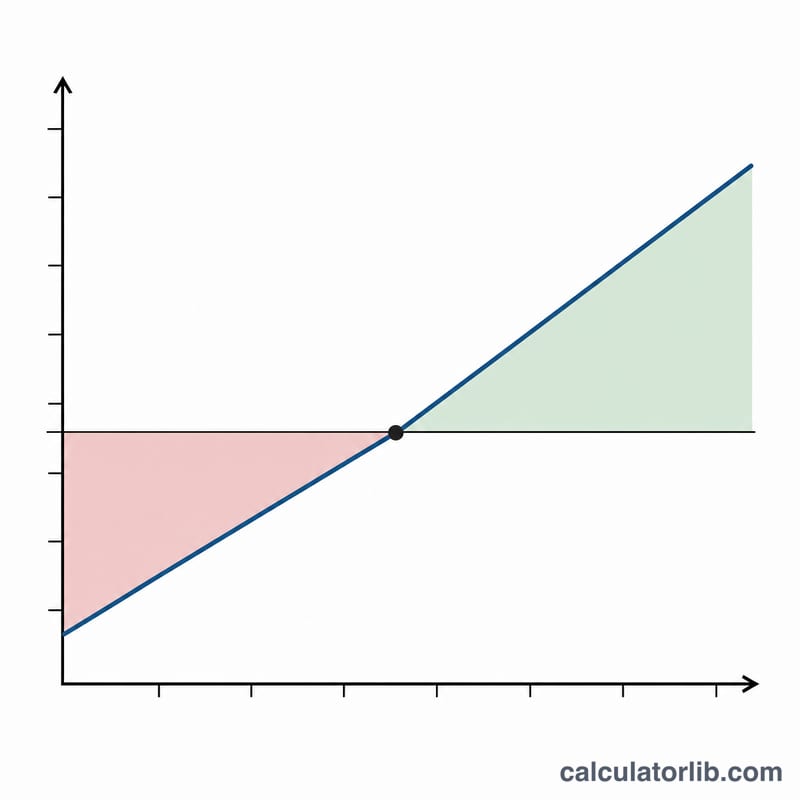
ROI is calculated as: $$\text{ROI} = \frac{\text{Annual Savings} \times \text{Years} - \text{System Cost}}{\text{System Cost}} \times 100$$ The numerator is your net profit — total savings minus what you paid. Dividing by the system cost and multiplying by 100 expresses that profit as a percentage of your investment. A separate payback figure divides system cost by annual savings to show the break-even point: $$\text{Payback} = \frac{\text{System Cost}}{\text{Annual Savings}}$$
Worked Example
Suppose a system costs $20,000, saves $1,800 per year, and lasts 25 years. Lifetime savings = \(1{,}800 \times 25 = \$45{,}000\). Net profit = \(45{,}000 - 20{,}000 = \$25{,}000\). ROI = \(25{,}000 \div 20{,}000 \times 100 =\) 125%. Payback period = \(20{,}000 \div 1{,}800 \approx\) 11.11 years.
FAQ
Does this include electricity price inflation? No — it assumes constant annual savings. Real savings often rise as utility rates increase, so your actual ROI may be higher.
Should I subtract incentives from the system cost? Yes. Enter the net cost after tax credits and rebates for the most accurate result.
What is a good solar ROI? Many residential systems achieve 100–200% lifetime ROI with payback in 7–12 years, depending on local energy prices and sunlight.