
What this calculator does
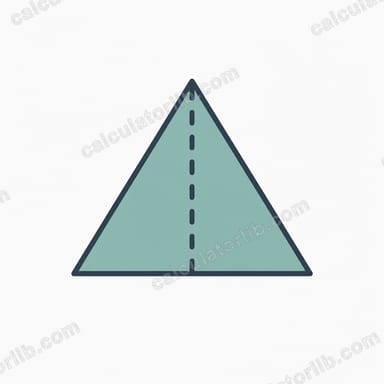
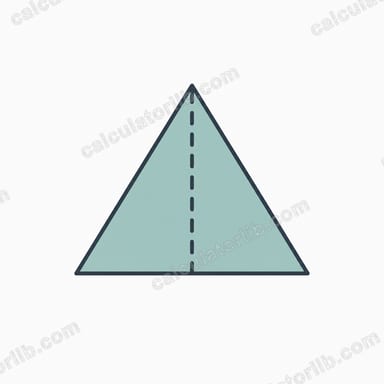
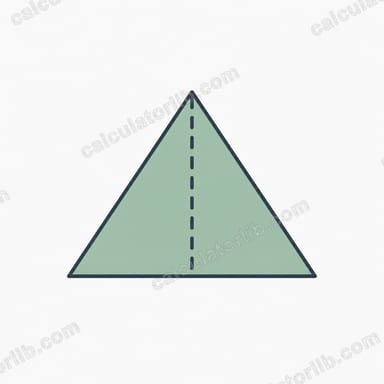
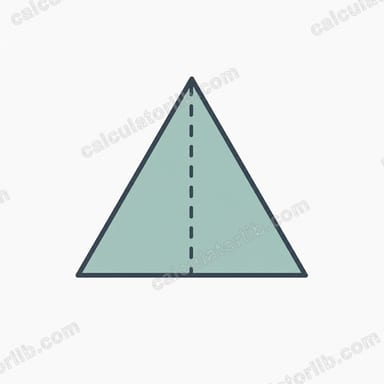
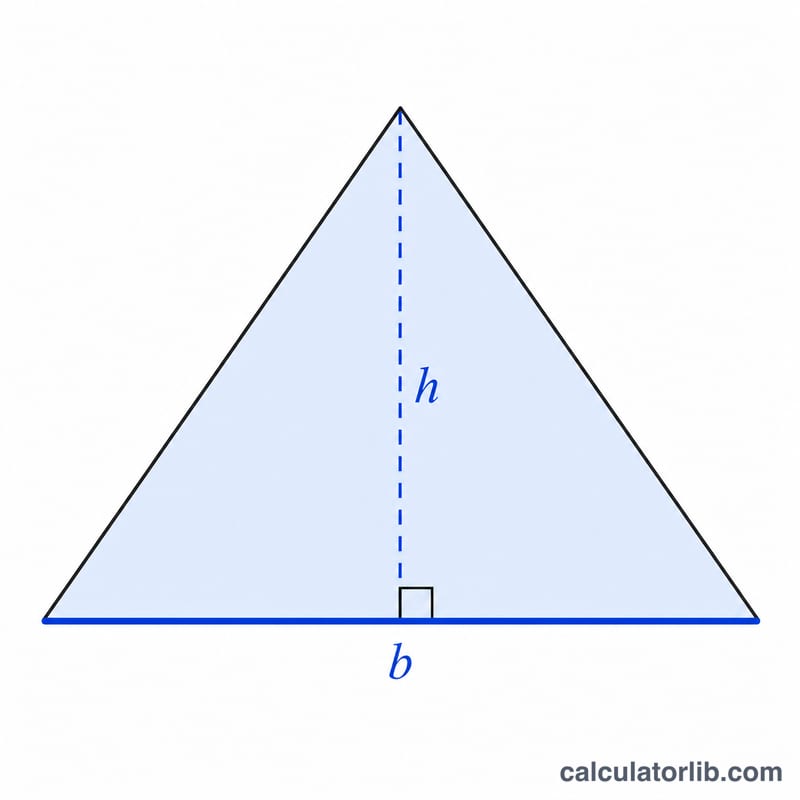
The area of a triangle is given by \(A = \tfrac{1}{2} \times \text{base} \times \text{height}\). If you already know the area and the length of one side (the base), you can rearrange this formula to solve for the corresponding height — the perpendicular distance from that base to the opposite vertex. This calculator does that rearrangement for you instantly.
How to use it
Enter the triangle's area and the length of the base you measured the area against. The calculator returns the height drawn perpendicular to that base. Use any consistent units: if the area is in square centimetres and the base in centimetres, the height comes out in centimetres.
The formula explained
Starting from \(A = \tfrac{1}{2} \times b \times h\), multiply both sides by 2 to get \(2A = b \times h\), then divide by the base \(b\):
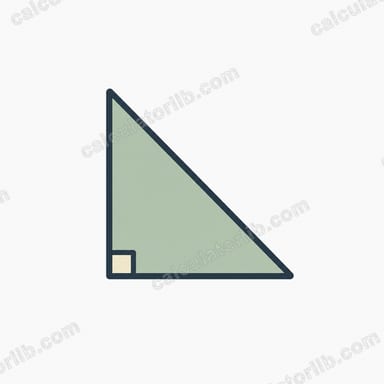
$$h = \frac{2 \times \text{Area}}{\text{Base}}$$This works for any triangle — acute, right, or obtuse — because the standard area formula holds for all of them. The height is always measured perpendicular to the chosen base.
Worked example
Suppose a triangle has an area of 24 square units and a base of 6 units. Then $$h = \frac{2 \times 24}{6} = \frac{48}{6} = 8 \text{ units}.$$ So the height perpendicular to that 6-unit base is 8 units.
FAQ
Does the base have to be the bottom side? No. Any side can be the base — but the height you get is the one perpendicular to whichever side you enter.
What units does the height use? The same linear units as your base. Make sure the area uses the squared version of those units.
Why does dividing by zero fail? A base of zero is not a valid triangle, so the height is undefined; enter a positive base length.