
What This Calculator Does
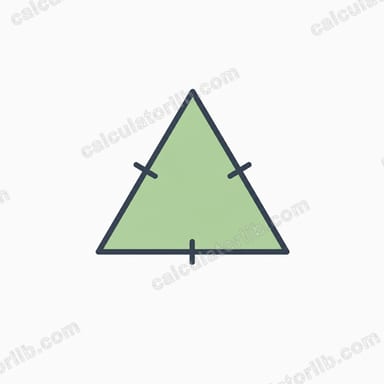
This tool computes the area of a triangle using the classic base-and-height formula. Enter the length of the triangle's base and its perpendicular height, and the calculator instantly returns the enclosed area in square units. It works for any triangle — scalene, isosceles, right, or equilateral — as long as you know the base and the matching height.
How to Use It
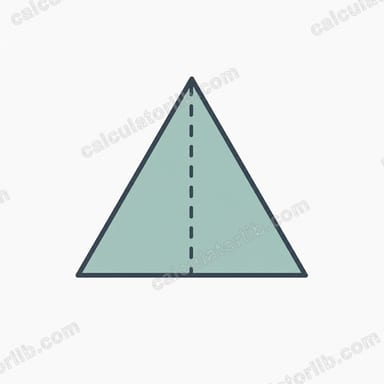
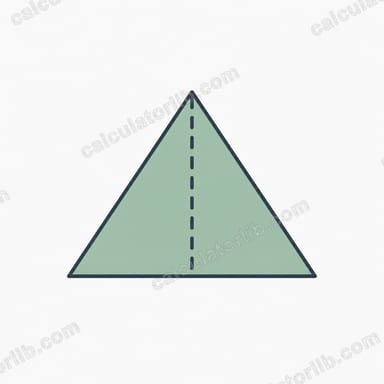
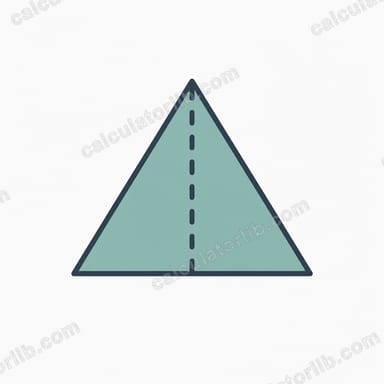
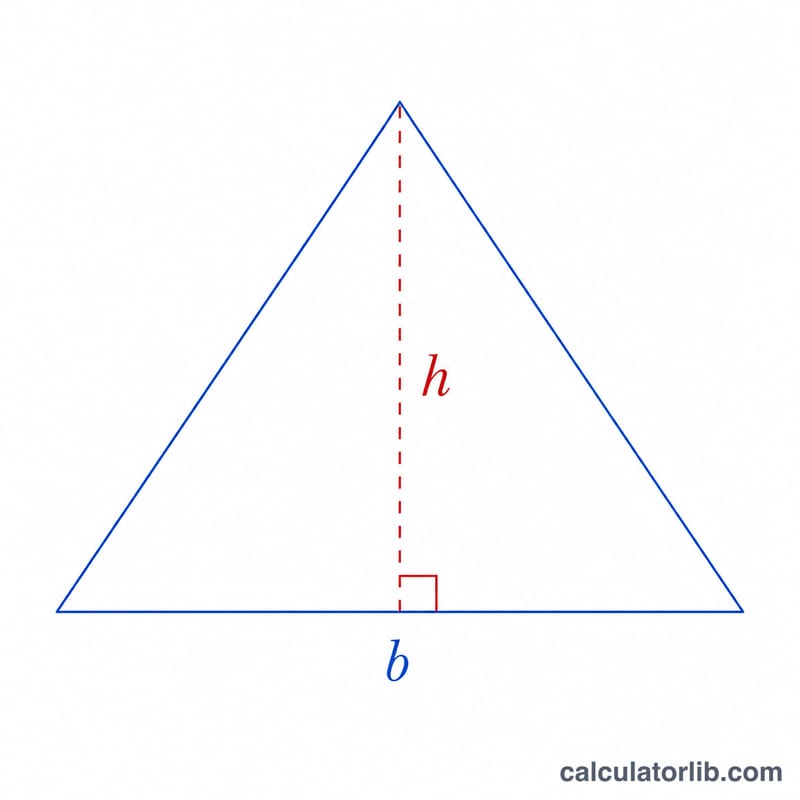
Pick any one side of the triangle to be the base (b). Measure the perpendicular distance from that base to the opposite vertex — this is the height (h). The height must form a right angle with the base, not just be another side. Type both values in the same unit (cm, m, inches, etc.) and read off the area in those units squared.
The Formula Explained
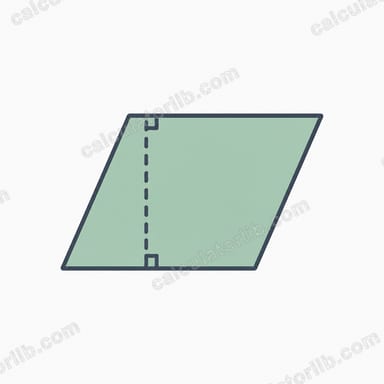
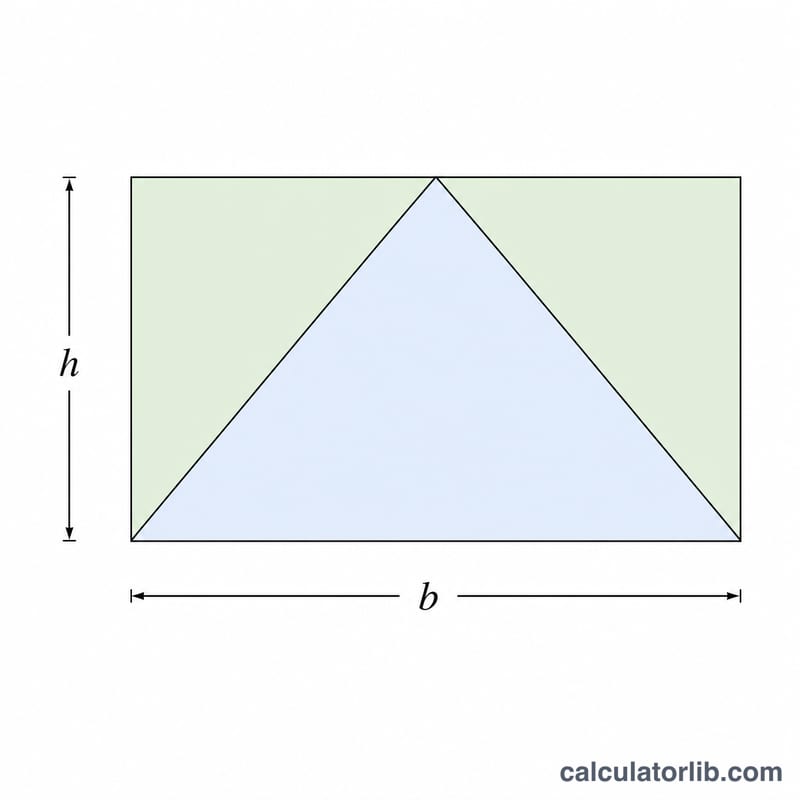
The area of a triangle is $$A = \frac{1}{2} \times b \times h$$. A triangle is exactly half of the rectangle (or parallelogram) that shares the same base and height — which is why the formula multiplies base by height and then halves the result. The units of the answer are always squared: if you enter centimeters, the area is in square centimeters.
Worked Example
Suppose a triangle has a base of 12 units and a perpendicular height of 8 units. Then $$A = \frac{1}{2} \times 12 \times 8 = \frac{1}{2} \times 96 = 48 \text{ square units}.$$ If instead the base were 7 and the height 3, $$A = \frac{1}{2} \times 7 \times 3 = 10.5 \text{ square units}.$$
Square Unit Conversions
Triangle area comes out in square units that match whatever unit you measured the base and height in. To present a result in a different unit system, multiply by the appropriate conversion factor below. Note that for area, the linear factor is squared — for example, since 1 ft = 12 in, it follows that \(1\ \text{ft}^2 = 12^2 = 144\ \text{in}^2\).
| From | To | Multiply by |
|---|---|---|
| 1 m² | cm² | 10,000 |
| 1 cm² | m² | 0.0001 |
| 1 m² | mm² | 1,000,000 |
| 1 ft² | in² | 144 |
| 1 in² | ft² | 0.006944… |
| 1 m² | ft² | ≈ 10.7639 |
| 1 ft² | m² | ≈ 0.092903 |
| 1 cm² | in² | ≈ 0.15500 |
| 1 in² | cm² | 6.4516 |
| 1 yd² | ft² | 9 |
| 1 acre | ft² | 43,560 |
| 1 hectare | m² | 10,000 |
Example: a triangle with base 12 in and height 8 in has an area of \(\tfrac{1}{2}\times12\times8 = 48\ \text{in}^2\). Converting to square feet, \(48 \times 0.006944 \approx 0.333\ \text{ft}^2\). Always convert the base and height to the same unit before applying the formula.
FAQ
Does the base have to be the bottom side? No. Any side can serve as the base, as long as you use the height measured perpendicular to that same side.
What if I only know the three side lengths? Use Heron's formula instead, which finds the area from the three sides without needing the height.
What units does the result use? Whatever unit you input — the area comes out in that unit squared (e.g., meters in → square meters out).